
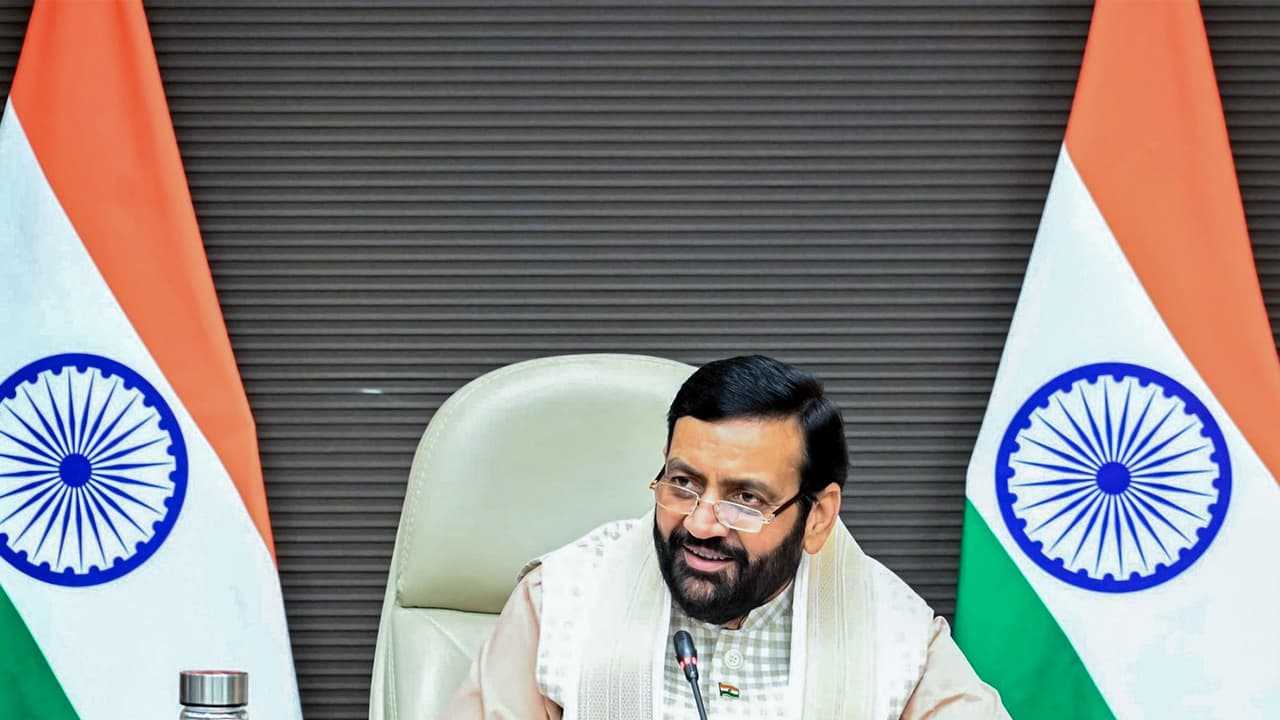
Haryana CM Nayab Singh Saini directs officials to boost farmer income through crop diversification and high-value fruit clusters. He stressed promoting new hybrid varieties, natural farming, and reclaiming waterlogged land to create sustainable income.
Focus on Crop Diversification and High-Value Fruits
Haryana Chief Minister Nayab Singh Saini has laid special emphasis on crop diversification, horticulture and expansion of high-value fruit crops to enhance farmers' income and directed officers to identify suitable areas and develop clusters for key fruit crops such as strawberry, lemon, guava and dragon fruit.
Chairing a review meeting of the officers of the Agriculture and Horticulture Departments, he directed that cluster-based farming models be developed in the state in accordance with soil and climatic conditions to ensure higher productivity and better returns to farmers in a shorter time. The Chief Minister said that alongside traditional crops, fruit cultivation should be promoted on a large scale, according to a release.
"Acknowledging the growing market demand and remunerative prices of these fruits, he stressed linking farmers with production, availability of planting material, processing and marketing to ensure a significant increase in their income," he added. He further directed promotion of tissue culture-based production of crops such as arhar, soybean, groundnut, pulses, fruit crops and sugarcane.
Driving Agricultural Research and Innovation
He said that the agricultural and horticultural potential of each district should be scientifically assessed. The government's objective, he added, is to connect farmers with multi-cropping, multi-product and high-value farming systems to create sustainable income opportunities. The Chief Minister directed that new hybrid and high-yielding varieties of cotton (narma), mustard, arhar, soybean, groundnut and pulses be developed. He also called for promoting research on seeds and planting materials that can withstand hailstorms, climate change and adverse weather conditions.
He said that land available with agricultural universities, colleges and at the panchayat level should be identified for research and trials so that new varieties and technologies can be tested under local conditions and quickly disseminated among farmers. He also directed that students and research institutions be actively involved to accelerate innovation.
Adopting External Innovations
The Chief Minister further directed the officers concerned to study successful hybrid varieties, fruit plants and modern technologies developed in universities of other states and adapt them to Haryana's conditions to ensure the availability of quality seeds and planting material to farmers.
Reclaiming Waterlogged and Saline Land
For the financial year 2026-27, the state government has set a target to reclaim 140,000 acres of waterlogged and saline land. To make this campaign more effective, the Chief Minister directed large-scale plantation of eucalyptus (safeda) trees under bio-drainage along field bunds, canal banks and drains to naturally reduce excess water in waterlogged areas. He said that eucalyptus trees, owing to their deep roots and high water absorption capacity, are highly effective in reclaiming such lands.
Promoting Natural and Sustainable Farming
The Chief Minister directed officers to identify clusters to promote natural farming across the state. Farmers in these clusters should be provided with jeevamrit, organic solutions, drums and other necessary resources, along with practical training.
He said that the natural farming model being implemented by Acharya Devvrat at Gurukul Kurukshetra should be adopted as a base for wider implementation, enabling more farmers to take up low-cost and sustainable farming.
He also directed that if productivity declines during the initial phase of adopting natural farming in any Cluster, the government should compensate farmers for their losses. Financial assistance and technical guidance should be extended to strengthen farmers' confidence so that natural farming can be scaled up as a mass movement.
Ensuring Food Safety and Quality Control
The Chief Minister directed that regular testing of crops, fruits, vegetables and other agricultural produce for pesticides and residues be ensured in laboratories. Chemicals that are harmful to health and increase the risk of serious diseases such as cancer should be immediately prohibited. Samples should be sent regularly for testing, and strict action must be taken against violators.
He further directed the establishment of a state-of-the-art organic laboratory for regular testing of organic products and related samples. Scientific testing of soil, water, organic manure, crops and other components should be ensured in this laboratory to effectively monitor the quality, purity and standards of organic farming. (ANI)
Chief Principal Secretary to the Chief Minister Rajesh Khullar, Additional Chief Secretary, Agriculture and Farmers' Welfare Department, Vijayendra Kumar, Additional Principal Secretary to the Chief Minister, Dr. Saket Kumar, Director General, Agriculture Department, Rajnarayan Kaushik, OSD to the Chief Minister, Virender Badhkhalsa and other senior officers also remained present during the meeting. (ANI)
(Except for the headline, this story has not been edited by Asianet Newsable English staff and is published from a syndicated feed.)