
Gujarat's Special Intensive Revision of electoral rolls saw massive participation, with over 4.34 crore electors submitting forms. The ECI-led exercise, involving officials, parties, and volunteers, aims for maximum inclusion and transparency.
The Election Commission of India (ECI) is implementing the Special Intensive Revision (SIR) of the Electoral Rolls in Gujarat with clearly defined objectives of ensuring maximum participation, complete inclusion of eligible electors, and full transparency at every stage of the process. The revision exercise has been undertaken through a coordinated, multi-level approach involving election officials, political parties and volunteers.
Massive Participation in First Phase
According to the press release, as of December 19, out of a total of 5,08,43,436 electors, as many as 4,34,70,109 electors had submitted their Enumeration Forms, reflecting overwhelming participation in the first phase of SIR. This achievement is the result of concerted efforts by District Election Officers (DEOs) across all 33 districts, 182 Electoral Registration Officers (EROs), 855 Assistant EROs and Booth Level Officers (BLOs) deployed at 50,963 polling booths, with the support of 30,833 volunteers. Field representatives of six nationally recognised political parties, including their district presidents, also actively participated, with 54,443 Booth Level Agents (BLAs) appointed.
Draft Roll Update and Voter Verification
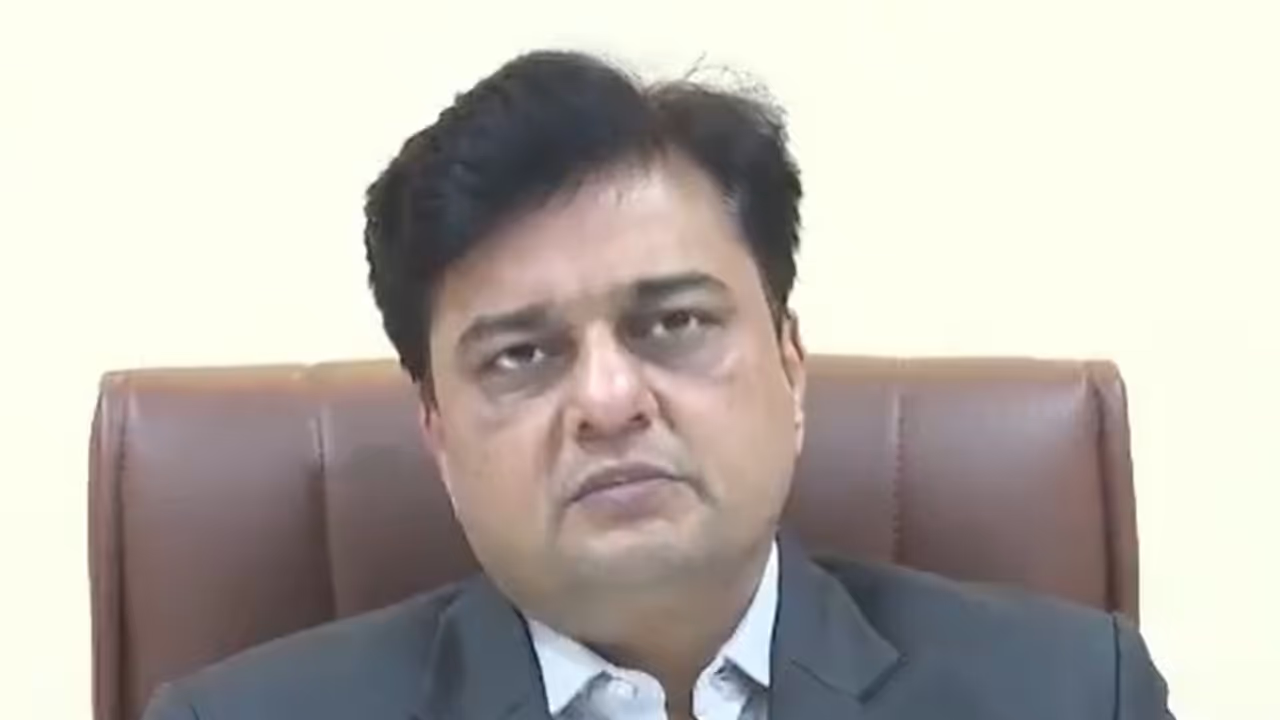
According to the Chief Electoral Officer (CEO) Hareet Shukla, before the publication of the draft electoral roll, a total of 5,08,43,436 voters were registered in the state. However, after the publication of the draft electoral roll, the total number of voters has come down to 4,34,70,109, indicating that 73,73,327 voters' names were removed during the SIR process.
Comprehensive Voter Outreach Initiatives
To ensure that no eligible elector is left behind, Chief Electoral Officers, DEOs and EROs conducted extensive voter awareness campaigns and held multiple meetings with political parties to explain the process and share progress updates. BLOs carried out house-to-house visits to all electors whose names appeared in the rolls as of October 27, distributing Enumeration Forms and making at least three follow-up visits for collection. BLAs and volunteers also undertook dedicated outreach efforts, said the press release.
Special Initiatives and Campaigns
Several special initiatives were taken during the process. Special camps were organised on November 15-16, November 22-23, and November 29-30 at polling stations and block-level locations across all 182 Assembly constituencies to assist voters in filling and submitting forms and verifying entries from the 2002 voter lists. Separate arrangements were made for senior citizens and persons with disabilities. As per the press release, awareness messages were broadcast through garbage collection vans, television channels, newspapers, social media platforms and WhatsApp groups, while regular press notes, podcasts and interviews were issued by election officials.
Targeted Inclusion and Verification
Young electors who have attained or will attain 18 years of age on or before January 1, 2026, are being encouraged to apply for inclusion through Form-6 along with the prescribed declaration. Booth-level lists of electors reported as deceased, permanently shifted, untraceable or whose forms were not received have been shared with political party BLAs for verification. The entire election machinery, supported by volunteers, is assisting electors, particularly senior citizens, persons with disabilities and vulnerable groups, by coordinating with government departments to reduce procedural burdens. DEOs in all 33 districts have personally addressed issues reported through print, television and social media to ensure timely grievance redressal.
Draft Roll Publication and Grievance Redressal
As per the SIR order, the Draft Electoral Roll was published on December 19 and booth-wise copies have been provided to recognised political parties and uploaded on the official website. Lists of absent, shifted, deceased and duplicate electors have also been displayed publicly and made accessible online, along with reasons for non-inclusion.
During the claims and objections period from December 19, 2025, to January 18, 2026, any elector or political party may file claims for inclusion or objections for deletion. The Commission has reiterated that no deletion will take place without due process, notice and a reasoned order. Aggrieved electors may appeal to the District Magistrate and subsequently to the Chief Electoral Officer under the Representation of the People Act, 1950.
The Election Commission has reaffirmed its commitment to a transparent, participative and inclusive revision process, ensuring that no eligible elector is excluded and no ineligible name remains on the electoral rolls. (ANI)
(Except for the headline, this story has not been edited by Asianet Newsable English staff and is published from a syndicated feed.)