
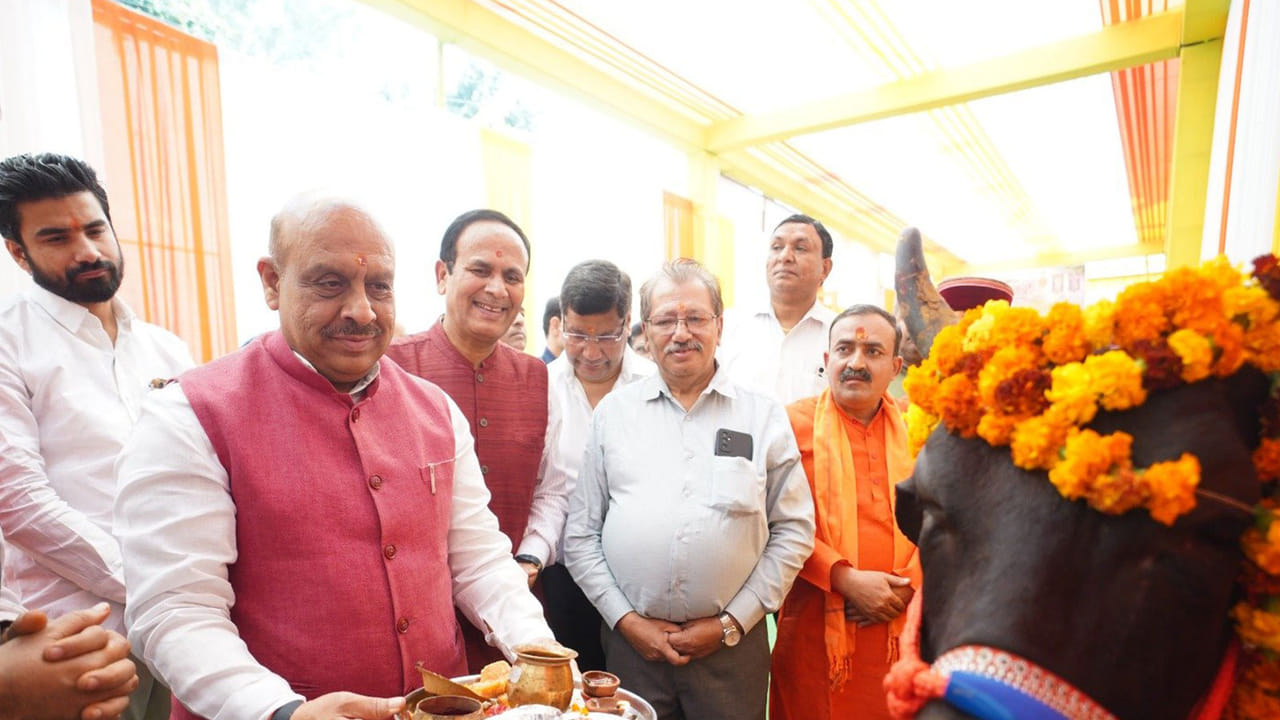
Delhi Assembly Speaker Vijender Gupta marked Gopashtami by stressing the civilisational duty of cow protection, commemorating the 1966 movement where devotees faced police firing while demanding a nationwide ban on cow slaughter.
Gopashtami Reminds Us Of Our Civilisational Duty To Protect Gau Mata
New Delhi [India], November 17 (ANI): Delhi Assembly Speaker Vijender Gupta on Tuesday said Gopashtami was a reminder of the country's civilisational responsibility towards cow protection, while recalling the 1966 police firing on devotees and spiritual leaders demanding a ban on cow slaughter near Parliament.
“Gopashtami is not merely a religious observance; it is a reminder of our civilisational responsibility towards Gau Mata and an occasion to remember those who sacrificed their lives for her protection. Sixty years ago, on November 7, 1966, devotees and spiritual leaders demanding a ban on cow slaughter faced police firing near Parliament. Their sacrifice remains an important chapter in the history of the cow protection movement,” said Gupta, while addressing a gathering organised to mark Gopashtami celebrations in Mayur Vihar (East Delhi), Phase 1.
Gupta said that reverence for Gau Mata transcends religious observance and reflects a profound relationship between India's cultural identity, spiritual traditions and civilisational heritage. Recalling the events of November 7, 1966, Gupta observed that this year's Gopashtami carries particular historical significance as it marks six decades since the agitation near Parliament demanding a nationwide prohibition on cow slaughter. He said that spiritual leaders had endured imprisonment, legal proceedings and considerable hardship while pursuing the cause of cow protection.
“Whenever society has faced a challenge to its deeply held values, saints and spiritual leaders have awakened its collective conscience, often through extraordinary personal sacrifice,” he remarked, underscoring the importance of preserving the memory of such movements for future generations.
Highlighting the spiritual significance of Gopashtami, Gupta said that the festival commemorates the auspicious occasion when Lord Krishna, in Vrindavan, began tending cows, marking his transition from caring for calves to assuming the responsibilities of a cowherd, revered as Gopa and Govinda. He observed that this sacred association reflects the enduring place of Gau Mata in India's religious and cultural consciousness.
Further, placing Gau Seva within the broader context of India's social and economic history, the Speaker said that the cow has traditionally represented both spiritual reverence and rural prosperity. He emphasised that cow protection must extend beyond ceremonial worship to responsible care, improved Gaushala management and sustained public participation. Gupta called upon citizens to reaffirm their commitment to Gau Seva and preserve a tradition deeply intertwined with India's social fabric and civilisational identity.
Commending the organisers for bringing together devotees and community representatives, Gupta appreciated their continued dedication to cow welfare and the preservation of traditional values. He said that initiatives undertaken by Gaushalas and voluntary organisations play an important role in strengthening community participation and promoting compassion towards animals.
Expressing his appreciation for the invitation to participate in the celebrations, the Speaker urged citizens, particularly the younger generation, to recognise Gau Seva as a responsibility rooted in India's civilisational ethos. He concluded by calling for a collective commitment to protecting Gau Mata and carrying forward the country's enduring traditions of service, compassion and cultural continuity. (ANI)








