
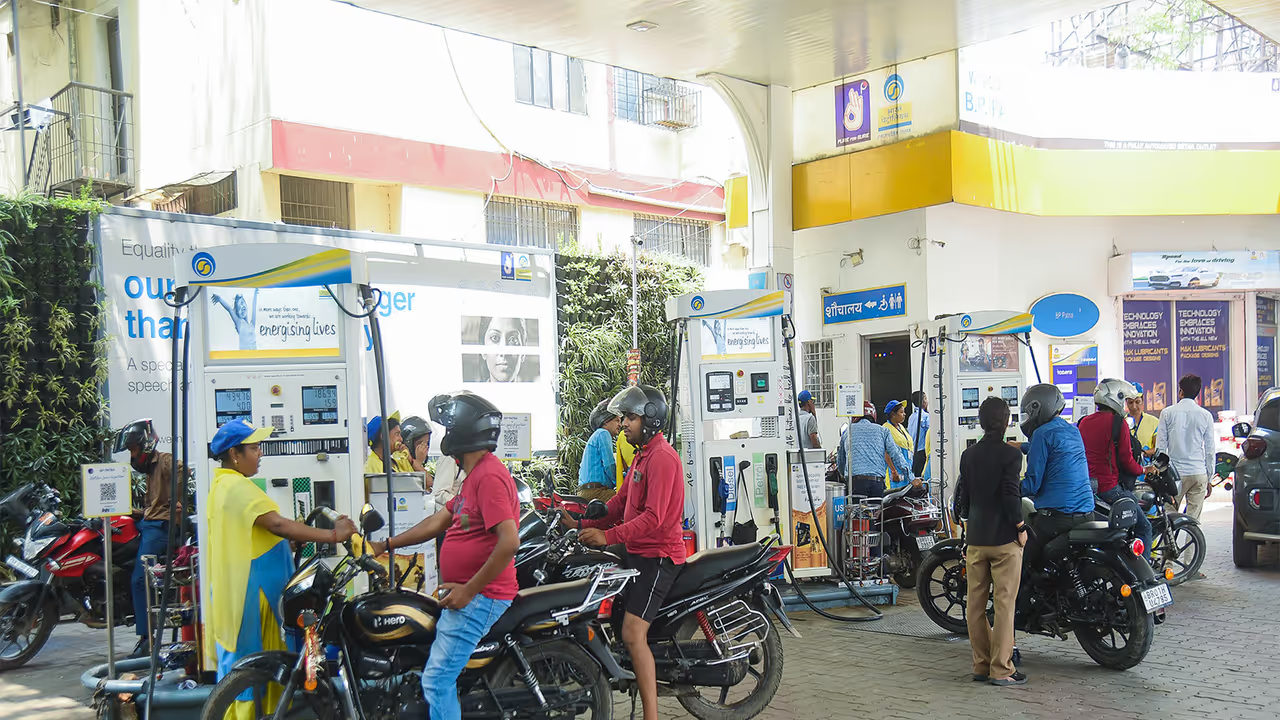
Repeated hikes in petrol, diesel, and CNG prices across India have drawn sharp public criticism. Residents in Delhi and Hyderabad describe the rising costs as a major burden on middle-class families amid stagnant incomes, urging the government to act.
The repeated increase in petrol and diesel prices across the country has drawn sharp reactions from the public, with many people describing it as a major burden on middle-class families and daily commuters while urging the government to regulate fuel prices.
Petrol and diesel prices were increased again across major metropolitan cities on Saturday, marking the third fuel price hike in less than 10 days amid continuing volatility in global energy markets.
Public Outcry in Delhi
Delhi residents raised concerns over the increase in fuel prices, with no effective increase in income. Some held the government responsible for the hike and for dismissing the public concerns.
Speaking with ANI, a local said, "It's affecting the middle class. Petrol prices are increasing. It's a loss. But what can we do? People who have work will have to use a car. People are carpooling as asked. But petrol is expensive. There is no alternative. Electric cars are so expensive. People are not able to buy them."
Another resident highlighted the financial pressure caused by rising fuel costs. "Petrol prices are increasing. We have to travel a lot. We have to pay Rs 200 for petrol daily, so we have to pay Rs.6000 monthly for petrol. What will we manage in Rs.15,000 or Rs.16,000? How will we run our family? There are a lot of problems. We are not able to bear it. Despite working for the central or state government, our salaries are so low. There is no increase in salary," another resident said.
Another local flagged concerns regarding the impact of the fuel prices on the common man, holding the government accountable. "Our government is useless. What will you do? I drive a car. How will it affect the common man? The common man has become a beggar. The common man does not have money. Expenses are increasing. The government is responsible for this," he said
CNG Price Hike Adds to Commuter Woes
Meanwhile, the Compressed Natural Gas (CNG) prices have also been increased by Rs 1 per kg with effect from Saturday, reportedly issued by Indraprastha Gas Limited (IGL), adding to the commuting burden for users of CNG-powered vehicles.
Expressing concerns over the issue, the residents, as well as the taxi drivers in Delhi, raised concerns over the hike. The taxi drivers said that the increase in prices does not mean an increase in fares for them.
Speaking with ANi, a resident said, "The government does whatever it wants anyway. For the common public like us, it feels like we are facing constant blows from all sides. Expenses are rising, but our income isn't increasing at all. It's becoming very difficult to run the household."
Taxi Drivers Face Double Trouble
A taxi driver said that the fare prices have not been revised according to the government's increase in CNG prices. "The problem is that when passengers sit in our vehicles, they argue with us over fares based on the old rates. If we ask for ₹10-20 extra because gas prices have gone up, they flatly refuse to pay and pick fights. The government increases the gas prices, but they don't revise our fares accordingly. Because of this, we face double the trouble. We can't even say anything to the passengers, and we can't do anything about the government either," he said.
Another resident said many people had shifted from petrol and diesel vehicles to CNG, considering it a cheaper alternative, but continuous price hikes were reducing that benefit. "See, it affects everything. A hike of Rs 1 might seem small to some, but when you look at it on a monthly basis for daily commuters, it adds up significantly. Earlier, people used to shift from petrol or diesel to CNG because it was considered a pocket-friendly and budget-friendly option. But looking at the way CNG prices are continuously rising now, it seems like there won't be much of a difference left between petrol and CNG prices in the near future," he said.
Hyderabad Residents Echo Concerns
Meanwhile, residents in Hyderabad, Telangana, also raised concerns over the impact of rising fuel prices on "middle-class families and daily wage workers."
"The government must regulate this because it directly impacts the middle class and daily wage earners. If green fuels like CNG also become unaffordable, people will lose the incentive to switch to cleaner energy, which defeats the whole purpose," another local said.
"The thing to think about is that the people who are in the lower class have nothing to say to the government. I can't say anything more than that. Everything has to be reduced," he said.
Another local expressed grave disappointment over the repeated hikes in fuel prices, stating that it has increased the cost of living. "I think the petrol rate has increased for the third time in the last week. The increase in petrol rates will not only affect the common people. Not only petrol, but people will be affected by everything. Not only petrol, but all the goods that come here and there. In everything, the cost of living is increasing. And if this continues, it will become difficult. It won't be easy to run a household," he said.
Global Factors and Economic Impact
Fuel prices in India are revised based on international crude and gas rates, exchange rates, and local levies. The recent increases come amid elevated global energy prices due to ongoing West Asia tensions and supply concerns, which have kept both crude oil and natural gas markets volatile.
The back-to-back hikes in CNG, petrol, and diesel are set to raise transport and logistics costs, with potential knock-on effects on inflation. For households, the impact will be felt through higher commuting expenses and possible increases in prices of goods transported by road.
(ANI)
(Except for the headline, this story has not been edited by Asianet Newsable English staff and is published from a syndicated feed.)