
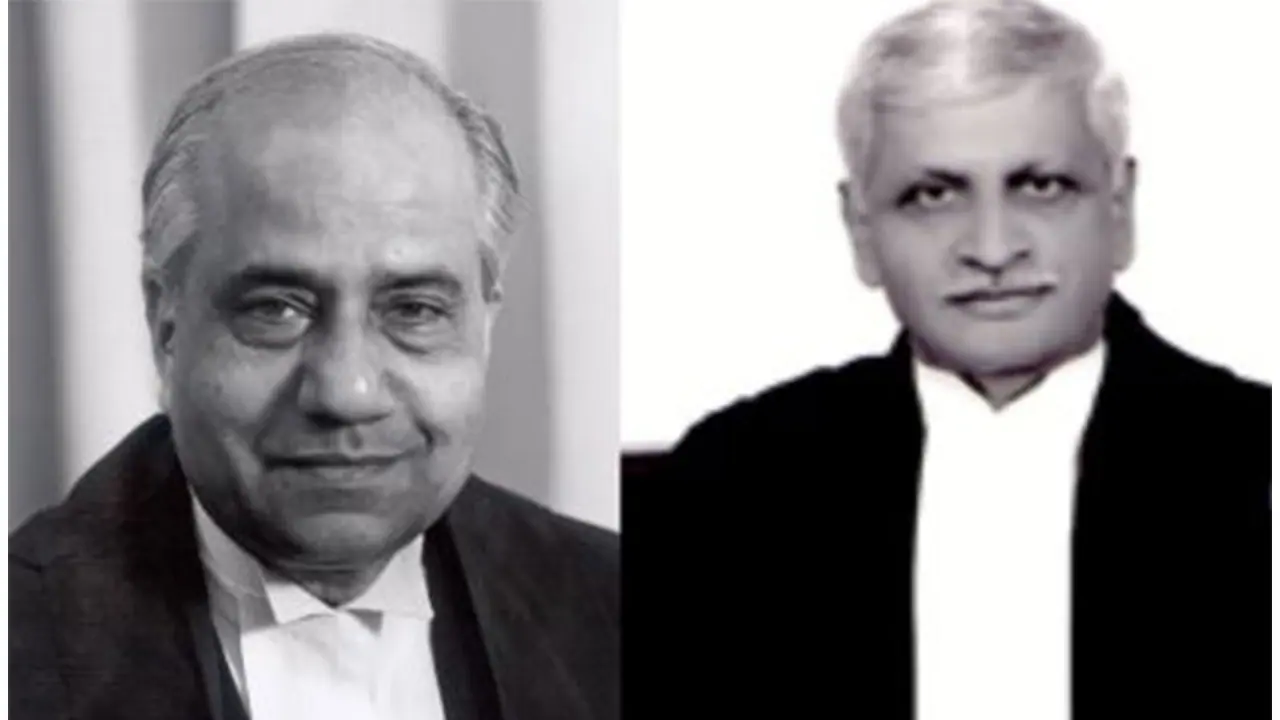
Former SC judges BN Srikrishna and UU Lalit, plus advocate Sudipto Sarkar, gave legal opinions to Tata Sons. They backed the validity of the chairman's casting vote in resolving a tie over N Chandrasekaran's continuation, citing company articles.
Two former judges of the Supreme Court, Justice BN Srikrishna and former Chief Justice of India UU Lalit, have given separate legal opinions to Tata Sons supporting the outcome of the company’s board proceedings concerning N Chandrasekaran, holding that the chairman’s casting vote could be exercised to resolve the equality of votes under the company’s Articles of Association.
The opinions obtained by Tata Sons examine the interpretation of Articles 104B, 118 and 121 of the company’s Articles of Association, including the circumstances in which the chairman can exercise a casting vote and the duties of directors nominated by a particular entity. Senior advocate Sudipto Sarkar had also given an opinion to Tata Sons before the board meeting, examining the same provisions and concluding that Article 121 permits the chairman’s casting vote in circumstances involving an equality of votes.
Justice Srikrishna on Board Proceedings and Director Duties
Justice BN Srikrishna, in his opinion, held that the course adopted by the company was consistent with the letter and spirit of Article 121. “In my opinion, what has been done is perfectly consonant with the letter and spirit of Article 121.” Justice Srikrishna further observed that the proceedings before the board were not intended to remain deadlocked and that Article 121 should be read in a manner that enables the proceedings before the board and the company’s business to move forward and be satisfactorily concluded.
He also examined the duties of nominee directors and observed that every director has two duties: one fiduciary duty towards the company under the Companies Act and another towards the nominating entity. “There is no doubt that the former duty must override the latter in case of a conflict.” Justice Srikrishna opined that the statutory fiduciary duty owed to the company would prevail over the contractual obligation towards the nominating entity. In the circumstances, he said, Venu Srinivasan rightly acted pursuant to his statutory fiduciary duty.
Justice BN Srikrishna served as a judge of the Supreme Court from 2002 to 2006 after serving as Chief Justice of the Kerala High Court. He subsequently headed several significant commissions and committees, including those dealing with financial-sector reforms, arbitration and data protection.
Former CJI Lalit on Validity of Resolution
Former Chief Justice of India UU Lalit, in his separate opinion given to Tata Sons, examined the voting position at the board meeting and the circumstances in which the chairman could exercise a casting vote. Justice Lalit noted that out of the five members of the board who cast their votes on the proposal, except Noel N Tata, the other four members voted in favour of granting the chairmanship to N Chandrasekaran.
He observed that there was an equality of votes among the directors appointed pursuant to Article 104B, and, therefore, there was an occasion for the chairman to exercise the casting vote under Article 121. “Upon there being equality of votes amongst the Directors appointed pursuant to Article 104B, there was certainly an occasion for the Chairman to have a casting vote.”
Justice Lalit consequently concluded that the resolution dated September 17, 2026, approving the agenda was validly passed. “In my view therefore, the resolution dated September 17, 2026 for approving the agenda was validly passed.” Justice UU Lalit served as the 49th Chief Justice of India from August 27, 2022, to November 8, 2022. He was elevated to the Supreme Court in 2014 and had earlier practised as a senior advocate.
Sudipto Sarkar on Interpreting Articles of Association
Senior advocate Sudipto Sarkar had examined the issue before the Tata Sons board meeting and, in his opinion given to Tata Sons, considered the scope of Article 121 and the circumstances in which the chairman’s casting vote could be invoked. Sarkar opined that, on a plain reading of Article 121, the chairman’s casting vote can be invoked in either of two situations: where there is an equality of votes among directors appointed pursuant to Article 104B, or where there is an equality of votes of the board as a whole after taking into account the votes cast by all directors.
“The expression ‘in the case of an equality of votes’ may reasonably be construed as applying to either situation. Sarkar had also examined whether Article 118 would apply to the proposed reappointment of the chairman. He opined that Article 118 is expressly concerned with the selection of a “new Chairman” and would not apply to the proposed reappointment of the incumbent chairman.
According to his opinion, the chairman’s announcement that he would not offer himself for a further term did not alter his status as the incumbent chairman, who would continue in office until the expiry of his current term in February 2027.
The three legal opinions have examined the key provisions of Tata Sons’ Articles of Association in the backdrop of the dispute concerning Chandrasekaran’s continuation as chairman. While Sarkar’s opinion was obtained by Tata Sons ahead of the board meeting, the opinions of Justice Srikrishna and former CJI UU Lalit have addressed the validity of the course subsequently adopted by the board. The opinions were given to Tata Sons by these legal luminaries in connection with the dispute and support the company’s position on the interpretation of Article 121, the exercise of the chairman’s casting vote and the validity of the board process in the circumstances examined by them. (ANI)
(Except for the headline, this story has not been edited by Asianet Newsable English staff and is published from a syndicated feed.)