
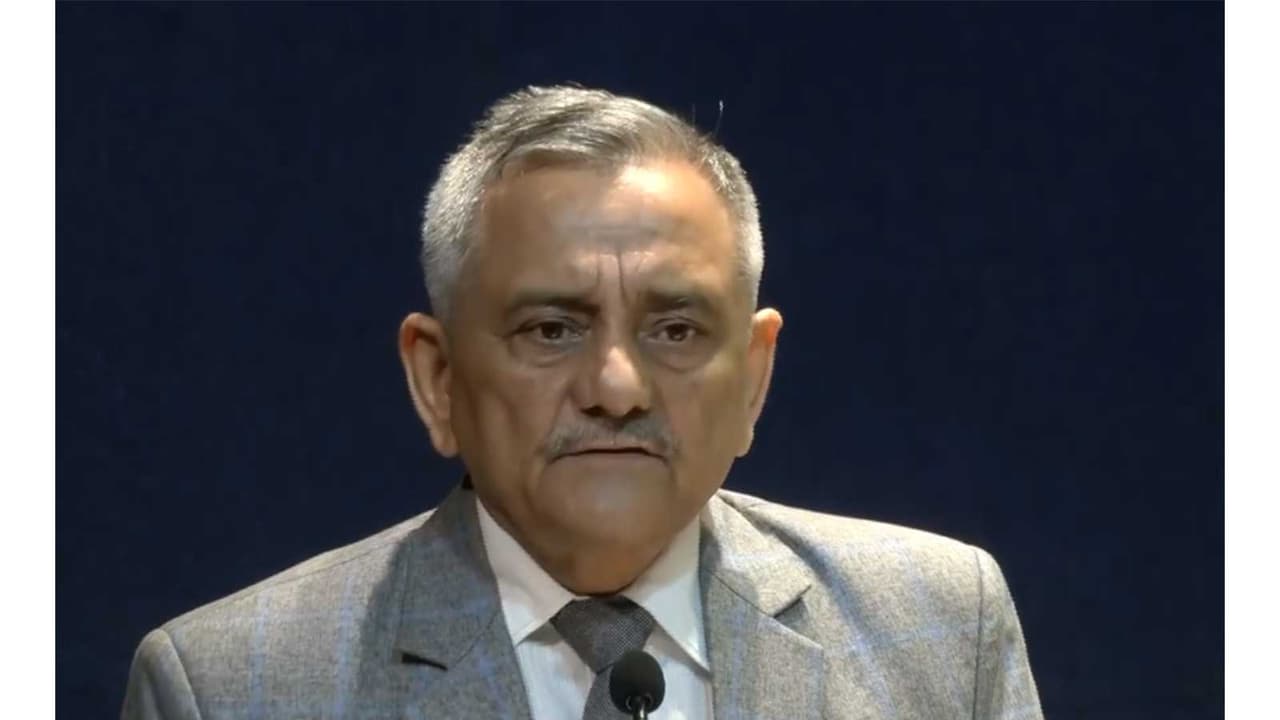
Former CDS General Anil Chauhan identified Pakistan as a major security concern for India, highlighting the threats of cross-border terrorism and the 'stability paradox' created by nuclear weapons, which expands space for sub-conventional operations.
Former Chief of Defence Staff (CDS) General Anil Chauhan on Saturday said Pakistan will continue to remain a major security concern for India, citing cross-border terrorism and the challenges posed by nuclear weapons. Addressing an event on the 139th birth anniversary of Bharat Ratna Pandit Govind Ballabh Pant, General Chauhan said, "India's external threat environment is shared by a large number of factors under all borders. We have living and nuclearised kind of cross-border terrorism."
Pakistan a 'Major Security Concern'
Speaking about Pakistan, the former CDS said, "Pakistan will remain, I think, a major security concern trying to come. The existing nuclear weapons have created a view of static stability at the highest level, and this is what has induced instability at the lowest level. Classically known as the stability paradox."
He further said, "The idea of Pakistan helping to reduce space for conventional operations and expand the space for sub-conventional operations has been their strategy."
Emerging Global Challenges
On emerging challenges, General Chauhan said geopolitical uncertainty was among the biggest concerns for global security. "I think the first and the biggest challenge before us is this lowering geopolitical and this uncertainty which provides the global security. The old balances have weakened while the structures of a new order are emerging. We should be prepared for all imaginative self-reliance, reduced vulnerability, diversified independence and reduced dependence," he said.
Technological Advancements and Modern Warfare
Talking about technological advancements, the former CDS said, "The second important challenge, which I think is the rapid form of technology. The speed and unpredictability of technology change is the biggest challenge. Organisational structures and requirements were created to take decisions when technology changes were very slow. But today, changes are very, very fast."
Discussing the changing nature of warfare, General Chauhan said, "Conflict is becoming more transparent, more precise, more dispersed and deeply networked. Cyber operations, electronic warfare, space support, economic pressure, legal instruments and information campaigns will proceed, and sometimes substitute physical attacks. So, that old kind of warfare in which countries would fight no longer exists. It is a different kind of war," he said.
Future Defence Preparedness
On future defence preparedness, General Chauhan raised questions about India's strategic choices, saying, "What should we prepare for? A short, intense war or a prolonged contest of national intelligence? Should we invest in favourable traditional domains like land, maritime and air, or these new domains of warfare like space, cyber and information warfare?"
"There are no clear answers for all this, but more important than this is that simultaneously we need to develop conceptual doctrines that support the application of these forces," General Chauhan said. Emphasising the need for reforms, he said, "Organisations, concepts, training and decision processes will actually use both this new and old kind of warfare. Education, media literacy, credible public communication, transparent institutions, religious knowledge and trust" are important factors.
(Except for the headline, this story has not been edited by Asianet Newsable English staff and is published from a syndicated feed.)