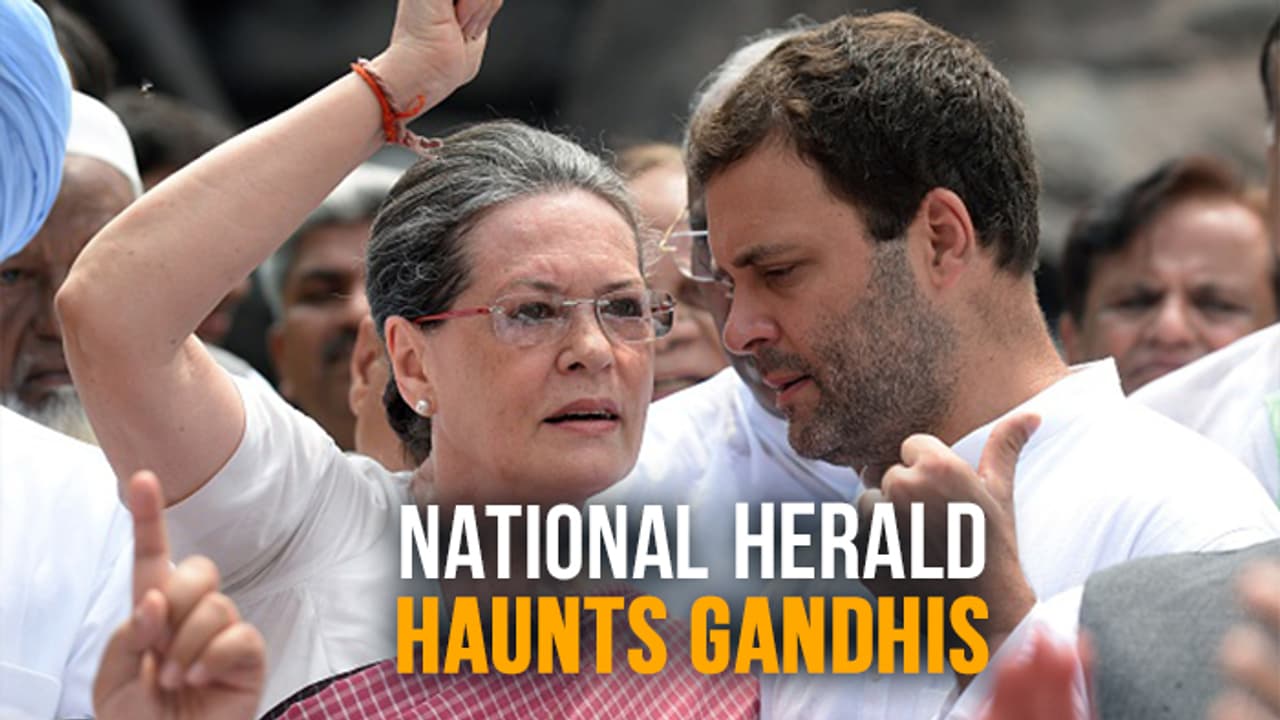
The Enforcement Directorate told a Delhi court that Sonia and Rahul Gandhi benefited from Rs 142 crore in alleged crime proceeds linked to the National Herald case, where ED has filed a chargesheet and attached assets worth Rs 751.9 crore.
The Enforcement Directorate (ED) on Wednesday began presenting its case before a Delhi court, accusing Congress leaders Sonia Gandhi and Rahul Gandhi of laundering Rs 142 crore in the National Herald money laundering case. The court, presided over by Special Judge Vishal Gogne, will hold day-to-day hearings from July 2 to July 8 to decide whether to take cognisance of the prosecution complaint.
In its opening arguments, Additional Solicitor General (ASG) SV Raju, representing the ED, said that a clear case of money laundering had been made out under the Prevention of Money Laundering Act (PMLA). He argued that the accused, including Sam Pitroda, Suman Dubey, and two firms, continued to benefit from the proceeds of crime until the ED attached assets worth Rs 751.9 crore in November 2023.
Raju said that the alleged offence involves continuing criminal activity. He told the court that the creation of Young Indian Limited (YIL) was ‘a sham’ to illegally acquire the assets of Associated Journals Limited (AJL), which once published the National Herald.
Related Articles

What did the court ask?
During the hearing, Judge Gogne raised pointed questions:
- Are the alleged wrongful acts linked to individuals or the Congress party as a whole?
- Are party donors the victims?
- Do shareholders own company assets or does the company itself?
- If clean property is usurped by someone else, does it then become proceeds of crime?
In response, ED’s Special Counsel Zoheb Hossain said that donors of the Congress were misled, as their contributions were used by office-bearers to give loans to a private firm for commercial use—not for political purposes. He said the ₹142 crore in rental income earned from AJL’s properties was part of the proceeds of crime.
What is National Herald case?
In 2008, AJL, the publisher of the National Herald newspaper, stopped operations due to financial losses. By 2010, Young Indian was formed, with Sonia and Rahul Gandhi holding 38% shares each.
AJL owed Rs 90.25 crore to the Indian National Congress (INC). Instead of recovering the full amount, the party transferred the debt to Young Indian for Rs 50 lakh, effectively handing over control of AJL to YIL, which then owned 99% of AJL’s shares.
This transfer was not scrutinised by any regulatory authority like the National Company Law Tribunal (NCLT). Critics say this led to undue benefit to the Gandhis, giving them access to Rs 2,000 crore worth of assets, mostly in the form of AJL’s real estate in cities like Delhi and Mumbai.
5000-page complaint and next steps
ASG Raju informed the court that the ED’s prosecution complaint, filed under Sections 44 and 45 of the PMLA, names seven accused, including Sonia Gandhi, Rahul Gandhi, Sam Pitroda, Suman Dubey, Young Indian, and two firms.
The defence, led by senior advocate Abhishek Manu Singhvi, asked the court to schedule hearings in July due to the volume of documents (5,000 pages). The court agreed but said the matter, as part of the MP/MLA court list, must be heard weekly.
The court also asked whether Sam Pitroda had legal representation. ASG said they would proceed even if he was not represented.
The ED cited a letter from AJL to Motilal Vora, noting AJL’s inability to repay loans due to halted publication. Despite this, further loans were granted. ED alleges this was part of a larger criminal conspiracy involving breach of trust, cheating, and criminal misappropriation.
The ED maintains that the National Herald transaction was not a mere business deal but a deliberate act of money laundering using a political party’s funds. The court will continue examining these claims during detailed hearings in July.