
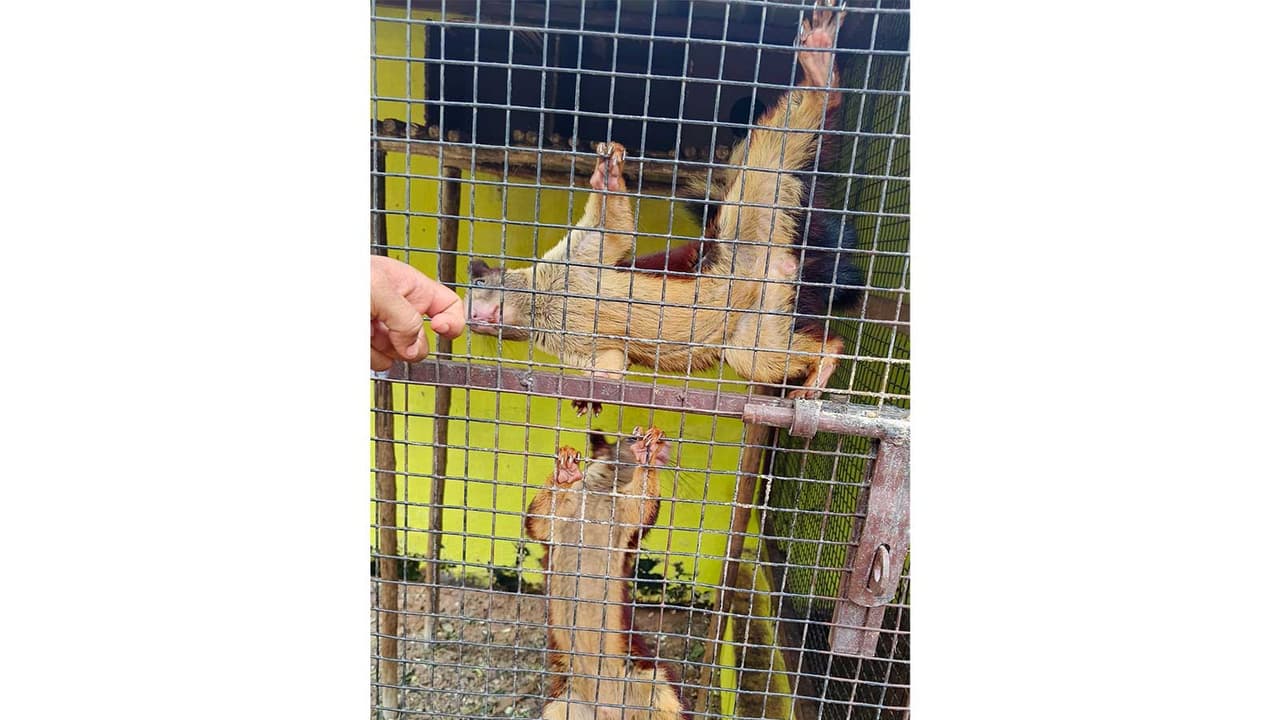
The DRI busted a wildlife trafficking syndicate in Andhra Pradesh's Srikakulam, rescuing Malabar Giant Squirrels, an Indian Star Tortoise, Jungle Fowl, and two Small Indian Civet babies. The animals are protected under Schedule I of the WPA, 1972.
Major Wildlife Trafficking Syndicate Busted in Andhra Pradesh
The Directorate of Revenue Intelligence, Nagpur Regional Unit of Mumbai Zonal Unit busted an illegal wildlife trafficking syndicate involved in the illicit trade of Malabar Giant Squirrels (Ratufa indica), Indian Star Tortoise (Geochelone elegans), Jungle Fowl and Small Indian Civet (Viverricula indica) in Srikakulam district of Andhra Pradesh on June 24 and 25.
Initial Rescue in Srikakulam
According to the Ministry of Finance, during the operation, the DRI officers intercepted a suspect in Srikakulam city and rescued four Malabar Giant Squirrels, one Indian Star Tortoise, and fourteen Jungle Fowl, all found confined in cages.
Civet Babies Rescued in Remote Village
Subsequent follow-up investigations led the DRI team to a remote location in Rayakurdi village, situated approximately 60 kilometres from Srikakulam. Despite challenging terrain, the absence of electricity, and a lack of mobile network connectivity, the officers continued the operation late into the night and successfully rescued two small Indian Civet babies from the location.
Legal Action and Handover
The Malabar giant squirrel, Small Indian Civet and Indian star tortoises are listed under Schedule I of the Wildlife (Protection) Act, 1972, giving them the highest degree of protection, by prohibiting their hunting, possession, transport and trade. Accordingly, the recovered animals were seized under the provisions of the Wildlife (Protection) Act, 1972.
Upon completion of seizure formalities, the apprehended person, along with the rescued animals, was handed over to the Forest Department, Srikakulam, for further necessary action under the relevant provisions of the Wildlife (Protection) Act, 1972.
Combating the Illegal Exotic Pet Trade
The rescued wildlife species are frequently targeted by illegal traffickers due to demand in the exotic pet trade and among wildlife collectors. Such illegal trade poses a serious threat to biodiversity and the survival of these protected species in their natural habitats.
DRI's Ongoing Enforcement
DRI's sustained enforcement actions highlight DRI's continued vigilance and commitment to wildlife protection through intelligence-driven action against illegal wildlife trafficking networks in coordination with State Forest Departments and other enforcement agencies.
Public Cooperation Urged
DRI appeals to the public to remain vigilant and share any specific information regarding illegal wildlife trade or trafficking with law enforcement agencies. Public cooperation is vital in protecting India's wildlife and combating wildlife crime.
(Except for the headline, this story has not been edited by Asianet Newsable English staff and is published from a syndicated feed.)