
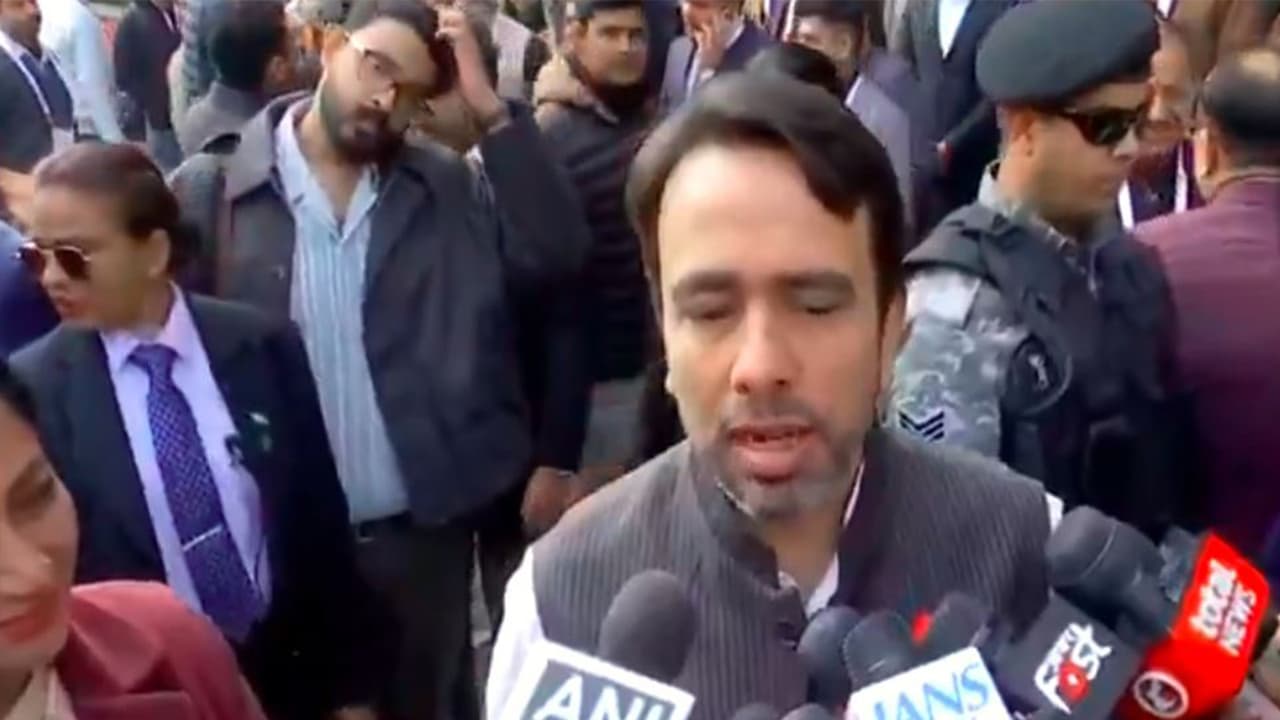
Union Minister Jayant Chaudhary lauded Delhi's innovative startup policy, saying it will empower the nation. He highlighted the Delhi government's focus on skill development to prepare youth for emerging industries, aligning with PM Modi's vision.
Delhi's Startup Policy Praised for National Impact
Union Minister of Skill Development and Entrepreneurship Jayant Chaudhary on Wednesday said that the Delhi government has an innovative policy to encourage startups and such a policy will help empower the entire country. Speaking to reporters, he said that the Delhi government is placing strong focus on skill development to ensure that youth are adequately prepared to meet the demands of emerging industries. "An innovative policy of the Delhi government is to encourage startups. If startups are encouraged in Delhi, it will empower the entire country. The Delhi government is focused on skills. This program is under Prime Minister Modi's vision," he said.
Chaudhary added that such initiatives would help build a robust and future-ready workforce, contributing significantly to India's growth and self-reliance.
Centre's Lifecycle-Based Approach to Support Startups
The Centre follows a lifecycle-based approach to support the startup ecosystem. The startups are supported across the entire journey - from idea and proof of concept to prototype development, product development and testing.
TIDE 2.0 Scheme: A Key Initiative
As part of this approach, Government of India started the "Technology Incubation and Development of Entrepreneurs 2.0 (TIDE 2.0)" Scheme in the year 2019. It promotes technology-based entrepreneurship by providing financial & technical support to incubators. Startups are supported through 51 selected incubators located in the Institutes of Higher Learning and premier R&D organizations across the country. A total outlay of Rs. 264.62 crore is approved over a period of 5 years, to support approximately 2000 tech start-ups. These incubators provide startups with requisite expertise, industry linkages and ecosystem partnerships etc. Under the scheme, 1,706 startups have been supported till now, and these startups continue to progress well.
Incubator Engagement and Startup Performance
As startups eventually operate in a competitive market, their engagement with incubators also evolve based on business realities. These include, inter alia, achieving product-market fit, specialised laboratory requirements, technological challenges, fundraising needs, strategic pivots by founders, and overall financial sustainability. In many cases, incubators have facilitated quick idea validation and effective pivoting for the startups, helping entrepreneurs shift to more viable ideas.
The overall performance of the supported startups remains encouraging, with many startups demonstrating revenue growth, increased valuations, raised external funding and IP filings.
(Except for the headline, this story has not been edited by Asianet Newsable English staff and is published from a syndicated feed.)