
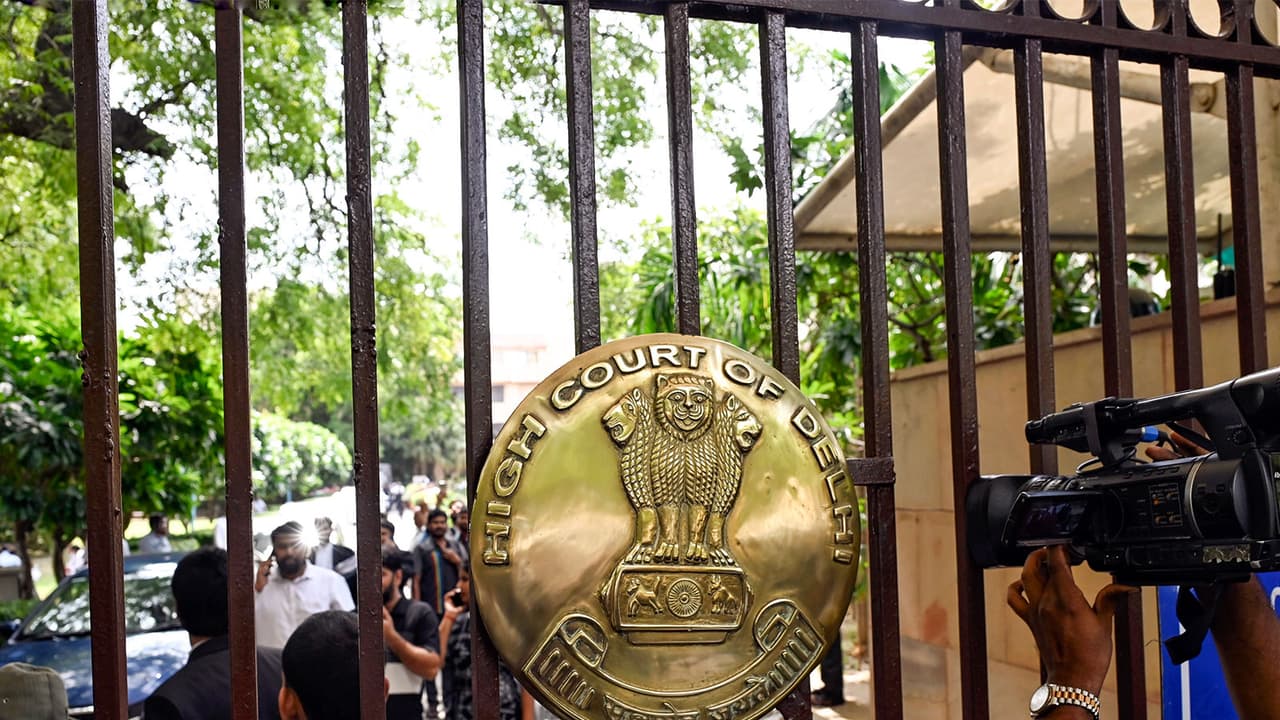
Aishe Ghosh has petitioned the Delhi High Court against the Delhi Police, alleging continuous, intrusive surveillance of peaceful protesters at Jantar Mantar. The plea claims this violates constitutional rights and seeks an end to the monitoring.
A petition has been filed before the Delhi High Court alleging that the Delhi Police has been subjecting peaceful protesters at Jantar Mantar to continuous surveillance through photography, videography and round-the-clock monitoring since the commencement of a sit-in protest and hunger strike on June 20.
The petition has been filed by former Jawaharlal Nehru University Students' Union (JNUSU) president Aishe Ghosh through advocates Subhash Chandran KR and Anirudh KP. The plea comes amid the ongoing protest being staged at Jantar Mantar by the Cockroach Janta Party (CJP), led by student activist Abhijeet Dipke.
According to the petition, the protest has remained peaceful, yet participants have allegedly been subjected to blanket surveillance without any disclosed statutory authority or procedural safeguards.
Allegations of Intimidation and Privacy Violation
Filed under Article 226 of the Constitution, the petition has arrayed the Union of India through the Ministry of Home Affairs and the Commissioner of Police, Delhi, as respondents. It contends that the authorities have installed a permanent surveillance tower equipped with cameras at the protest site while police personnel have continuously photographed and videographed protesters, allegedly creating an atmosphere of intimidation that discourages citizens from participating in lawful democratic protests.
The petition alleges that the surveillance extends to every individual present at the protest site irrespective of any suspicion of unlawful activity and includes recording not only public acts of protest but also routine personal activities such as eating, resting and seeking medical assistance.
It further claims that the authorities have not disclosed the legal basis, purpose, duration or manner in which the collected data is stored, processed or used. According to the petitioner, the surveillance has had a chilling effect on the exercise of the constitutional rights to free speech and peaceful assembly.
The plea alleges that police personnel threatened student protesters that photographs and videos taken at the protest site would be shared with their parents, guardians and educational institutions, thereby discouraging participation in the protest. It also alleges that women protesters were photographed and videographed even during heavy rainfall when they were compelled to remain at the protest site in drenched clothing due to the absence of adequate shelter.
Violation of Constitutional Rights
The PIL contends that despite repeated requests, the respondents have failed to disclose any statutory provision, executive instruction or publicly available protocol authorising the continuous surveillance or regulating the collection, storage, retention and dissemination of personal data generated through such monitoring.
It argues that the surveillance violates the fundamental rights guaranteed under Articles 14, 19 and 21 of the Constitution and fails to satisfy the constitutional requirements of legality, necessity, proportionality and procedural safeguards laid down by the Supreme Court in Justice K S Puttaswamy (Retd) v Union of India.
Prayers and Demands in the Petition
Leading with its prayers, the petition seeks a declaration that continuous and intrusive mass surveillance of peaceful protesters at designated protest sites is constitutionally impermissible, disproportionate and cannot be justified under the guise of maintaining public order or national security in the absence of an explicit statutory framework and judicial oversight.
It also seeks a declaration that the installation of a permanent surveillance tower and blanket deployment of videographers at Jantar Mantar fail the constitutional test of the "least restrictive means" by creating an unlawful chilling effect on the freedoms guaranteed under Articles 19(1)(a), 19(1)(b) and 21 of the Constitution.
The petitioner has further sought directions to immediately suspend all mass photography, videography and surveillance at Jantar Mantar until the respondents demonstrate the existence of a proximate, real and imminent threat to public order justifying such measures. The plea also seeks disclosure of the legal authority, security threat assessments, purpose, scope, retention policy and data-sharing protocols governing the surveillance exercise.
Additionally, the PIL seeks preservation of all surveillance records, metadata and internal orders, a restraint against deletion or dissemination of surveillance material pending adjudication of the case, destruction of personal data collected through the surveillance except where strictly required for an ongoing criminal investigation, framing of comprehensive guidelines governing surveillance at peaceful assemblies, constitution of an independent committee to examine the extent of data collected through surveillance at Jantar Mantar, and provision of basic civic amenities, including drinking water, sanitation and emergency medical facilities, at the protest site. (ANI)
(Except for the headline, this story has not been edited by Asianetnews Editorial staff and is published from a syndicated feed.)