
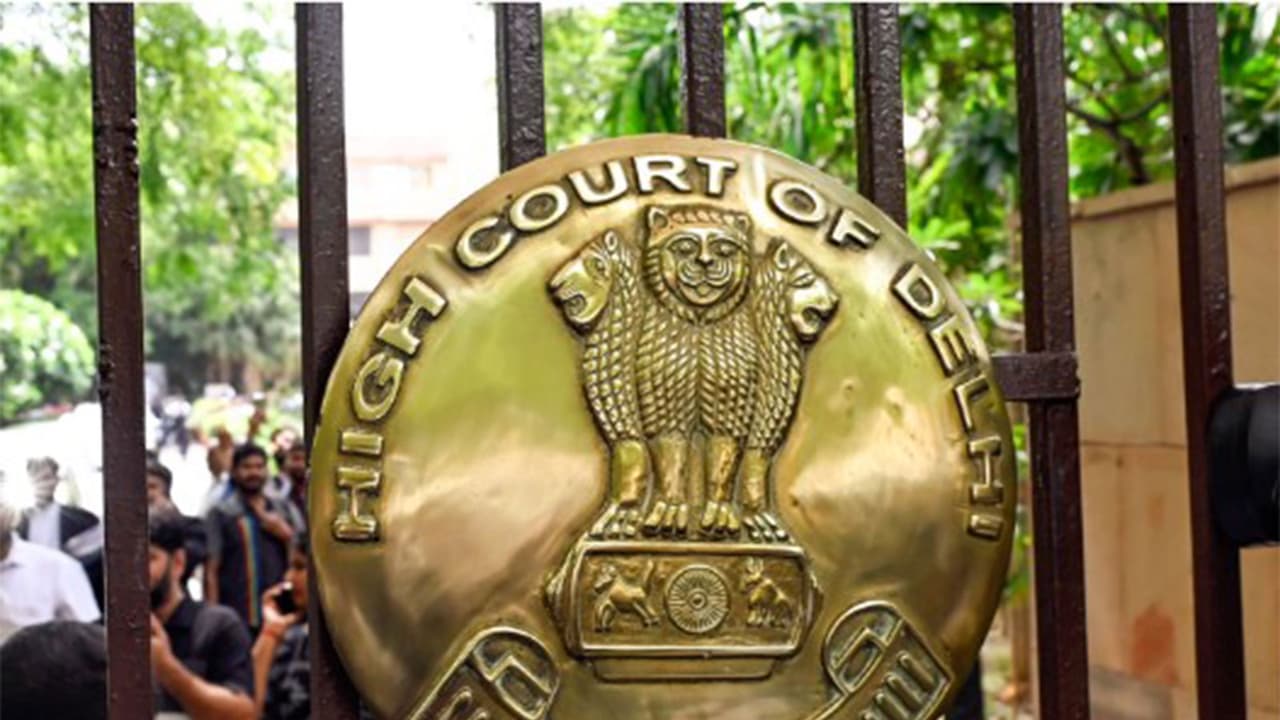
Delhi High Court dismissed an appeal for seat reservation for junior advocates in BCD elections. It ruled that all election-related grievances must be taken to Supreme Court-supervised committees, and High Courts are barred from hearing such petitions.
The Delhi High Court has ruled that any grievance related to the Bar Council of Delhi (BCD) elections must be raised before the committees constituted under the supervision of the Supreme Court, and not before the High Court.
Upholding this position, the Court dismissed an appeal seeking reservation of seats for advocates with less than 10 years of practice. A Division Bench comprising the Chief Justice and Justice Tejas Karia held that, in view of the Supreme Court's directions in M Varadhan vs Union of India, the entire election process including dispute resolution is overseen by High-Powered Election Committees. The Court clarified that individuals aggrieved by any aspect of the election must approach these committees, and High Courts are barred from entertaining such petitions.
Court dismisses appeal seeking reservation for junior advocates
The case arose from an appeal filed by an advocate, who had challenged a single judge's order dismissing his plea against a BCD notification dated December 24, 2025. The notification reserved 12 out of 23 seats for advocates with over 10 years of practice and 5 seats for women. Petitioner argued that the remaining 6 seats should be reserved exclusively for junior advocates.
Rejecting this contention, the High Court held that the Advocates Act does not confer any vested right on junior advocates to claim reservation. It emphasised that the statutory requirement of reserving nearly 50% seats for advocates with over 10 years of practice, along with 30% reservation for women as directed by the Supreme Court, cannot be interpreted to mean that the remaining seats must be reserved for those with lesser experience. Doing so would effectively result in 100% reservation, which is impermissible.
The Court also noted that the appellant had approached the court belatedly, after participating in the election process and once vote counting had already begun. This delay further weakened his case.
Concluding that the writ petition was not maintainable and that no legal right had been violated, the High Court refused to interfere with the earlier order and dismissed both the appeal and the pending application without costs. (ANI)
(Except for the headline, this story has not been edited by Asianet Newsable English staff and is published from a syndicated feed.)