
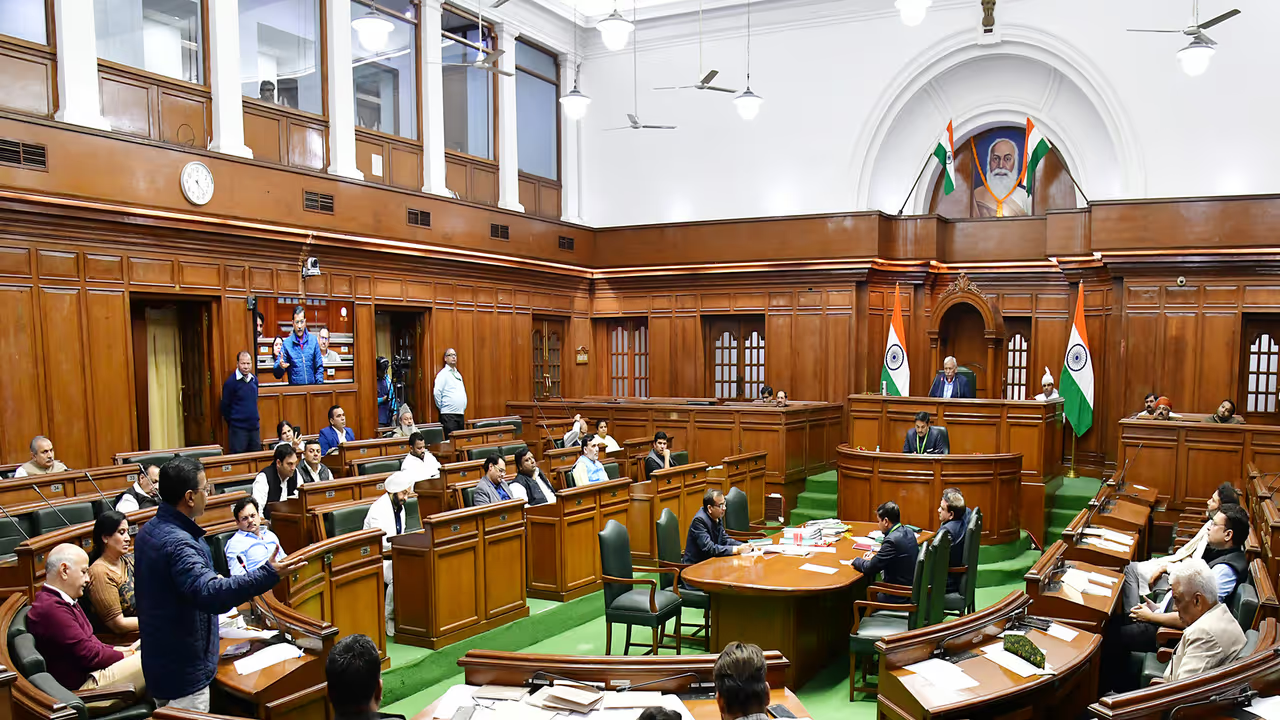
The Delhi legislative assembly's winter session will run from January 5-8, 2026. The session begins with the LG's address and is set to feature intense scrutiny on governance, accountability, and administrative performance through key debates.
The winter session of the Delhi legislative assembly will commence on January 5 (Monday) and will go on till January 8.
According to the Delhi legislative assembly Secretariat, the fourth session of the eighth legislative assembly will begin at 11 am. Subsequent sittings will start at 2 pm.
A Checkpoint on Governance and Accountability
The first legislative sitting of 2026 is unfolding against a backdrop of heightened scrutiny of governance, making the Winter Session less a routine calendar exercise and more a checkpoint on how effectively the administration responds to questions of performance and accountability. As the first Assembly engagement of the new year, the session carries added significance. Issues of development delivery, administrative efficiency and financial discipline are likely to dominate proceedings, offering early signals on how effectively the state machinery is responding to civic challenges.
With limited time and heightened expectations, the Winter Session is poised to be a concentrated exercise in legislative scrutiny rather than an extended debate.
Session to Commence with LG's Address
The session will formally commence on January 5 with the address of the Lieutenant Governor of Delhi, Vinai Kumar Saxena, at 11 am, following which the regular sitting of the House will begin. The Winter Session is scheduled to run until January 8, with sittings on the opening day starting in the morning and subsequent sittings beginning at 2 pm.
Speaker Calls for Constructive Engagement
Speaker of the Delhi Legislative Assembly, Vijender Gupta, has underlined the importance of constructive engagement during the Winter Session, noting that legislative scrutiny and meaningful debate are central to strengthening democratic governance. Emphasising discipline, preparedness and adherence to procedure, the Speaker expressed hope that the House would use the sittings effectively to raise issues of public importance, seek clarity from the government and contribute to informed decision-making in the interest of the people of Delhi.
Key Legislative Tools for Scrutiny
Special Mentions
Special Mentions under Rule 280 are also likely to play an important role during the session. With strict limits on both number and length, these interventions are expected to be used as precision tools to highlight governance gaps and pressing public issues. The choice of matters raised is likely to signal legislative priorities for the year ahead.
Emphasis on Question Hour
A key feature of the session will be the emphasis on Question Hour, scheduled on three consecutive days. Several major service-delivery departments, including health, education, power, water, transport, finance and urban development, will be taken up for questioning, creating space for legislators to raise governance concerns and seek time-bound responses from the government.
(Except for the headline, this story has not been edited by Asianet Newsable English staff and is published from a syndicated feed.)