
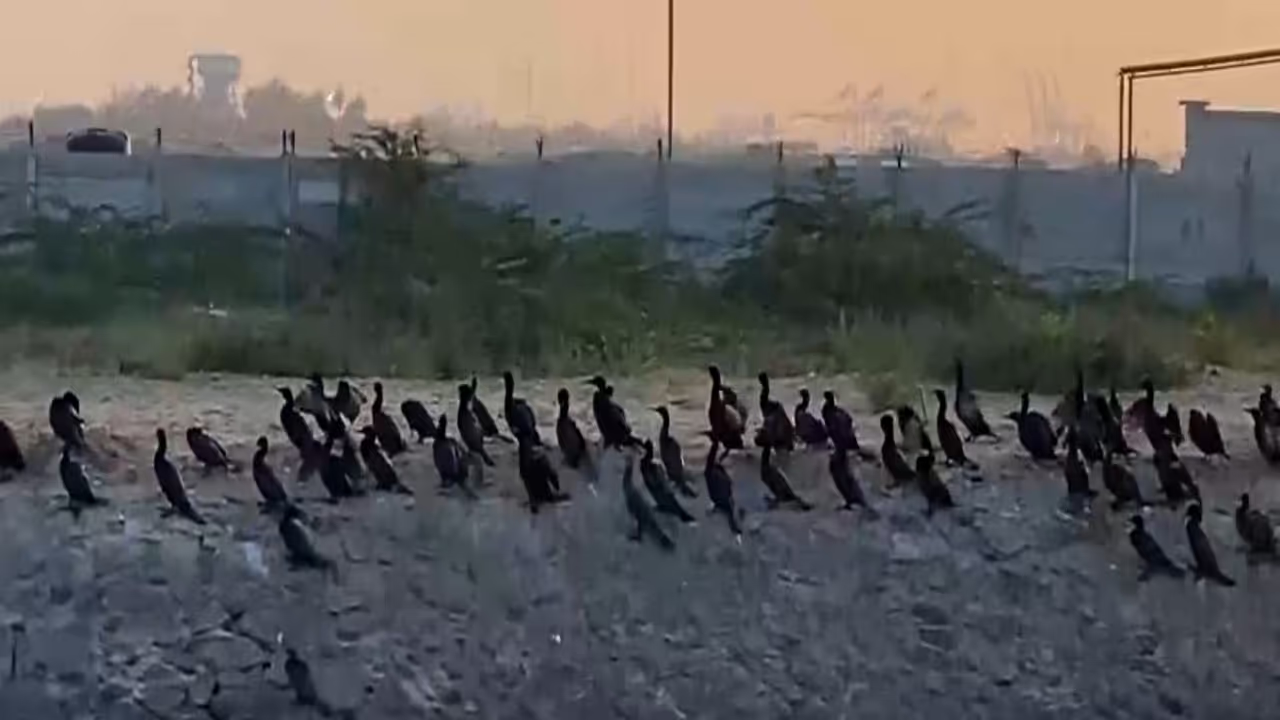
Large cormorant flocks at Thoothukudi Port's estuary signal a healthy ecosystem. The district also hosts thousands of migratory Rosy Starlings, which benefit farmers by consuming locusts, highlighting the region's rich biodiversity and natural abundance.
Cormorant Flocks Signal Healthy Estuary
Large flocks of cormorants have been spotted in recent days at the estuary coastal area near Thoothukudi Port. This estuarine region, where seawater and freshwater converge, offers a rich habitat with abundant fish and other aquatic organisms. As a result, cormorants are gathering here in large numbers in search of food.
The sight of cormorants calmly floating on the water's surface and suddenly diving to catch fish has drawn the attention of nature enthusiasts. Especially during the early morning and evening hours, these birds can be seen actively foraging in groups, reflecting the rich biodiversity of the region. The increase in the number of cormorants is considered a significant indicator that the Thoothukudi Port estuary coastal area continues to remain ecologically balanced and naturally abundant.
Migratory Rosy Starlings Arrive in Thousands
Last month, thousands of migratory Rosy Starlings arrived in Tamil Nadu's Thoothukudi district, particularly around Perungulam and Thamirabarani River areas, creating a spectacular aerial display.
Expert Insights on Migration and Benefits
Speaking to ANI, District Forest Officer Ilaiyaraja said, "The Thoothukudi district, being a coastal district, encounters many migratory birds every winter. Recently, we have seen a large influx of Rosy Starlings in Perungulam and the surrounding areas. Rosy Starling belongs to the starling family. They breed in Central Asia and West Asian countries in steppe grasslands. During winter, since the weather is very harsh there, from July to August till April and May, they migrate to tropical regions like India."
He further said that starting from Gujarat down South, the Rosy Starlings migration can be witnessed."They stay here during the winter and go back to their native place after April and May. Thoothukudi has wetlands. Food availability and weather are the main reasons for their migration. This wetland and agricultural land, when combined, provide a better habitat for these migratory birds... We should be proud of that. This year, we can see that the count is largely increasing," he said.
He further said that Rosy Starlings have to be protected."As the birds are coming in large count the major prey is locusts and other insects. Starlings feed on locusts, they save the agricultural land of the farmers. They are providing a huge contribution to farmers," he added.
The coastal area near Thoothukudi Harbour has turned into a busy hub of bird activity, with large flocks of water birds gathering in the estuary area of Thoothukudi Harbour Beach. (ANI)
(Except for the headline, this story has not been edited by Asianet Newsable English staff and is published from a syndicated feed.)