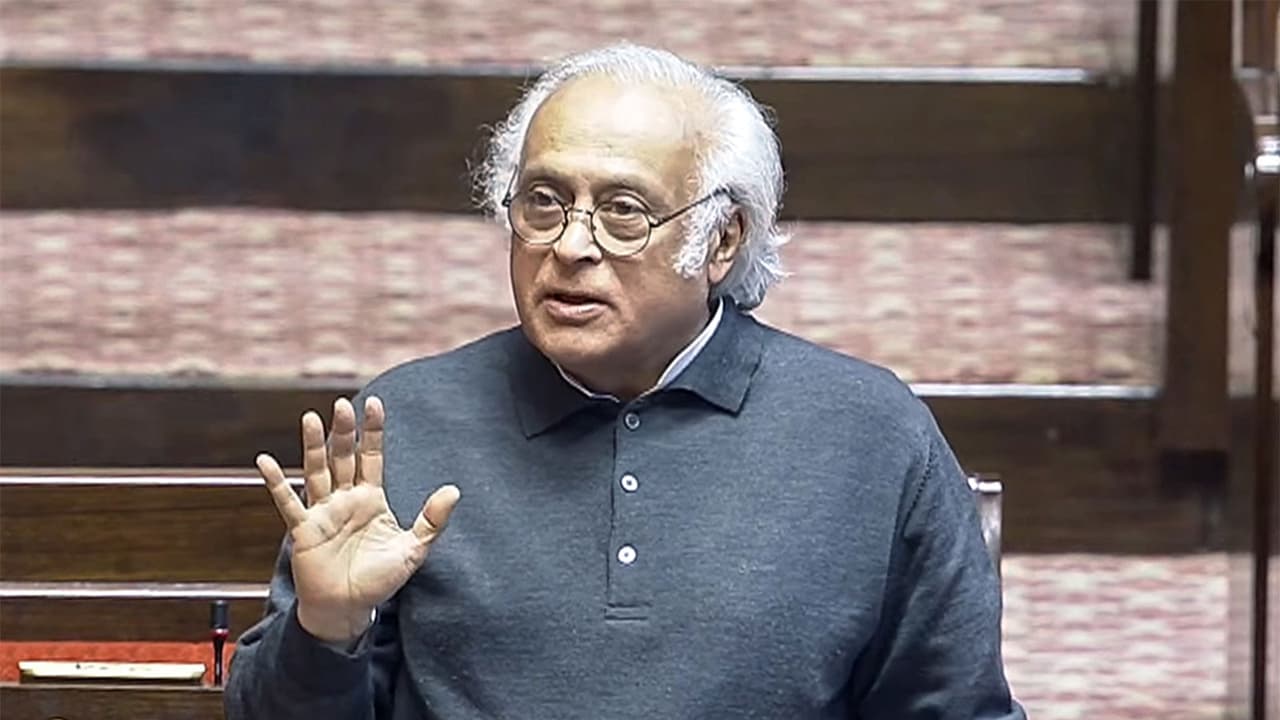
Ahead of the Budget Session, Congress's Jairam Ramesh demanded a full Parliament debate on the West Asia crisis. He criticized EAM S Jaishankar's planned statement, arguing it prevents MPs from asking questions and seeking clarifications.
As the second part of the Budget Session set to commence on Monday, Congress MP Jairam Ramesh called for a full-fledged discussion in Parliament on the evolving situation in West Asia. External Affairs Minister S Jaishankar is scheduled to make a statement in the Lok Sabha regarding the evolving situation in West Asia. According to the Lok Sabha's list of business issued on Sunday, Jaishankar will brief members on the developments in the region.
Opposition Demands Full Debate
In a post on X, Jairam said that the problems with Ministerial statements are that they convey the information which is already known, with MPs not allowed to seek clarifications or ask questions.It has been let known that the External Affairs Minister will make a statement in both Houses of Parliament on the situation in West Asia. The problems with such Ministerial statements are that (i) they convey little of value over and above that is already known; and more… — Jairam Ramesh (@Jairam_Ramesh) March 8, 2026"It has been let known that the External Affairs Minister will make a statement in both Houses of Parliament on the situation in West Asia. The problems with such Ministerial statements are that (i) they convey little of value over and above that is already known; and more importantly (ii) MPs are not given an opportunity to seek clarifications or ask questions," he said."What the Opposition wants is a full-fledged debate. On April 8 2003 there was a spirited debate in the Lok Sabha on the US invasion of Iraq and a resolution was even passed condeming it. This was when Mr. Atal Bihari Vajpayee, who knew his Rajdharma, was the PM," the Congress MP posted.
Tensions Escalate After Killing of Iranian Supreme Leader
EAM Jaishankar's statement is expected amid rising global concern over the escalating tensions in West Asia and their geopolitical implications.The conflict intensified after 86-year-old Iranian Supreme Leader Ayatollah Ali Khamenei was killed in joint military strikes carried out by the United States and Israel on Iran on February 28. The strikes reportedly targeted key installations and also killed several senior leaders of the Islamic Republic.Following the attacks, Tehran launched retaliatory strikes targeting American military bases in several Arab countries as well as Israeli assets across the region. Israel, backed by the United States, has continued strikes on Iranian targets, while also expanding military operations into Lebanon against Hezbollah and other Iran-backed groups. (ANI)(Except for the headline, this story has not been edited by Asianet Newsable English staff and is published from a syndicated feed.)