
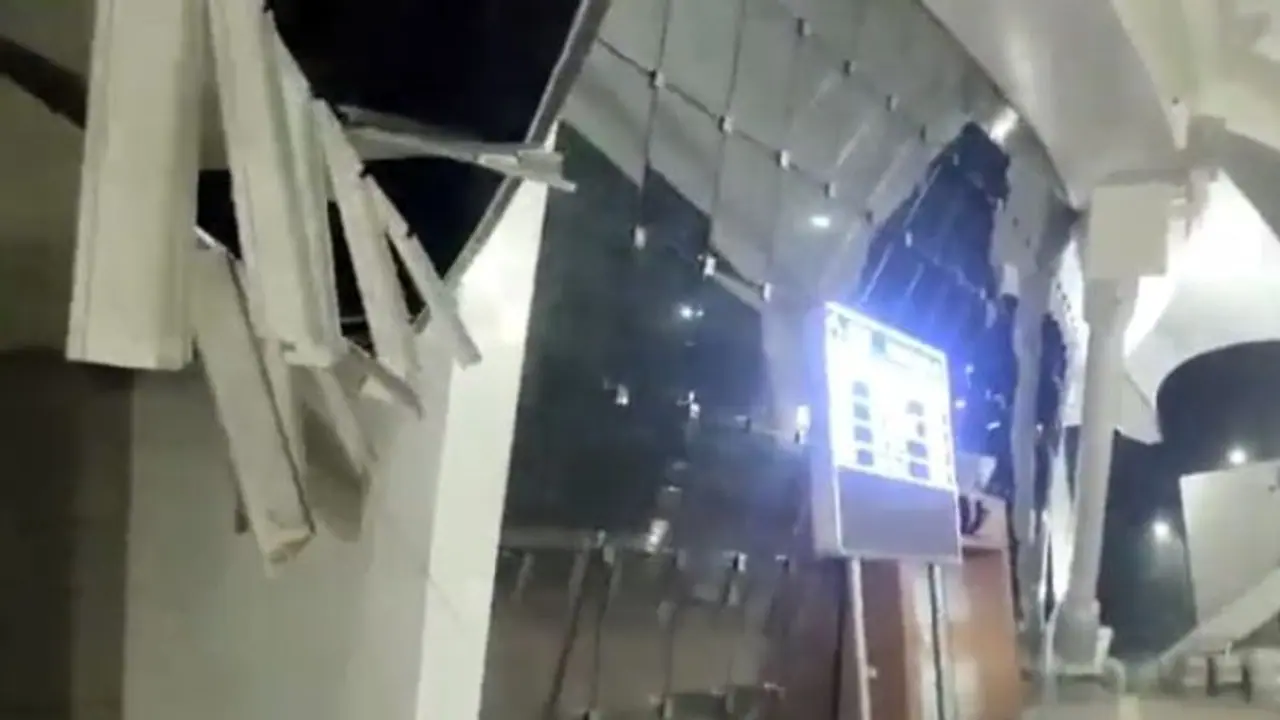
After Congress insinuated that the Prime Minister prioritizes inaugurating projects for self-promotion, even if they remain incomplete, the government hit back with a clarification and said that instead of jumping the gun and seeking sensationalism out of nothing, Opposition should just seek an explanation
Barely a week after Prime Minister Narendra Modi inaugurated the new integrated terminal building, named NITB, at the Veer Savarkar International Airport in Port Blair, Andaman and Nicobar Islands, visuals emerged showing that some parts of its ceiling were collapsing. This incident provided fresh ammunition for the Opposition to criticize the Prime Minister. Civil Aviation Minister Jyotiraditya Scindia hit back at the Opposition for reacting without knowing the complete story.
The visuals revealed the ceiling in a section of the building dropping, sparking discussions on social media about the quality of the construction that led to such a collapse just a week after its inauguration.
Following the circulation of pictures and videos showing the collapsed portions, Congress leader Jairam Ramesh took to Twitter to take a dig at PM Modi, suggesting that the Prime Minister inaugurates projects, even if they are unfinished or of substandard quality, to boost his image while citizens bear the consequences.
He said, "The Prime Minister will inaugurate anything these days -- even if it’s unfinished or substandard infrastructure (highways, airports, bridges, trains, etc). More than willing ministers anxious to boost their Sensex with him oblige. It’s the taxpayers and citizens who pay the cost. Such a sorry state of affairs in ‘New India’!"
Aviation Minister hits back
Following the Opposition outcry, Civil Aviation Minister Jyotiraditya Scindia took to Twitter to say, "The structure is outside the terminal building. Besides, a part of the false ceiling had been deliberately loosened for CCTV work. Heavy winds (about 100 km/hr) later, led to the swinging panels as seen in the video. The false ceiling had been restored after completing the work. Next time, instead of jumping the gun and seeking sensationalism out of nothing, just seek an explanation."
Airport Authority of India confirms
When questioned, the Airport Authority of India clarified that the incident was caused by a false ceiling outside the terminal building, which was loosened for the adjustment of CCTV works and final alignment. Heavy winds on the night of July 22nd lifted the false ceiling from the bottom, causing around 10 square meters of it to dislocate. They assured the public that the false ceiling inside the terminal building remained intact, and no other damage occurred to the installations within the terminal.
The New Veer Savarkar Airport
The new integrated terminal building was constructed at a cost of Rs 710 crore and covers an area of approximately 40,800 square meters. It has the capacity to accommodate over 50 lakh passengers annually, which is expected to significantly boost tourism in the Andaman and Nicobar Islands.
During the inauguration, Prime Minister Modi highlighted that the existing terminal could only handle 4000 tourists, while the new terminal increased the capacity to 11,000, and up to 10 planes can now be parked at the airport simultaneously. He expressed optimism that the improved facilities would attract more flights and tourists, leading to job creation and economic growth for the region. The Prime Minister emphasized that the new terminal would enhance Ease of Travel, Ease of Doing Business, and connectivity for the Andaman and Nicobar Islands.
The NITB incorporates several sustainability features, including a Double Insulated Roofing System to reduce heat gain, skylights for maximum natural sunlight during the day, LED lighting, low heat gain glazing, rainwater catchment with an underground water tank, an on-site sewage treatment plant with 100% of treated wastewater reused for landscaping, and a 500 KW solar power plant to minimize its environmental impact on the islands.
