
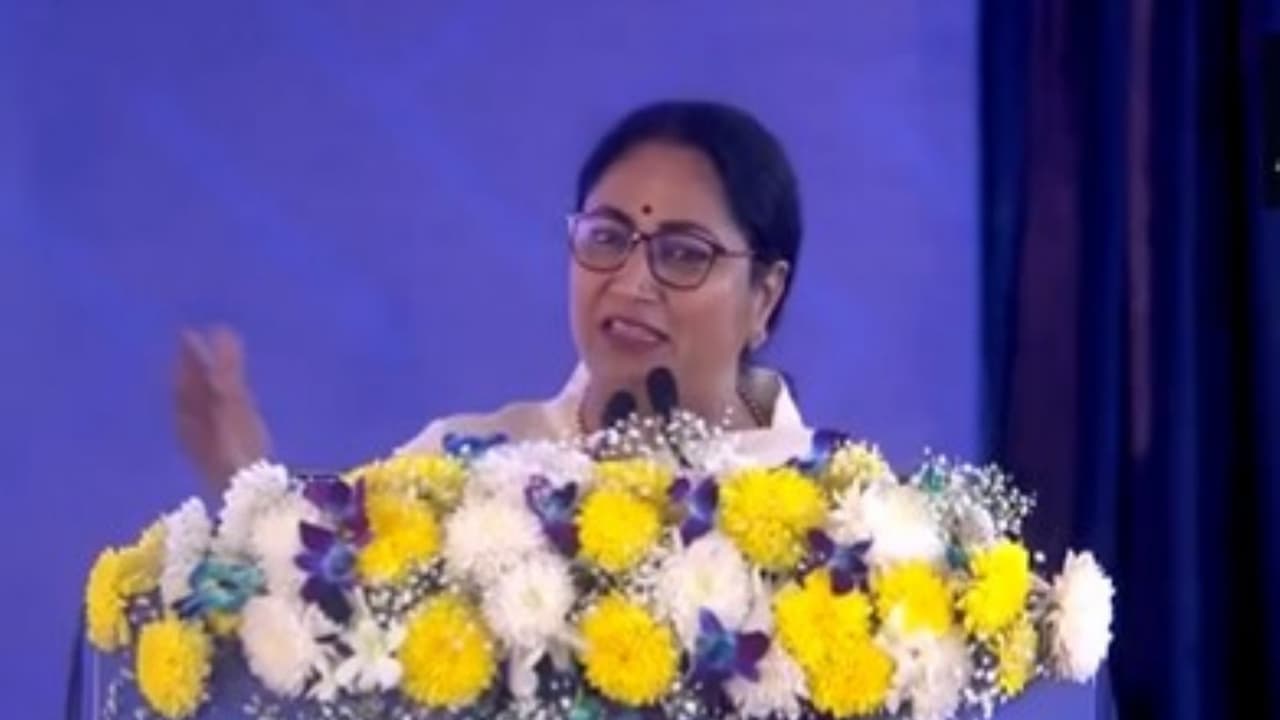
Delhi CM Rekha Gupta announced a new Drainage Master Plan after 50 years to tackle pollution and waterlogging. Concurrently, PM Modi launched major housing and infrastructure projects worth Rs 15,200 crore for central government employees.
Delhi Chief Minister Rekha Gupta on Sunday said that the state government has introduced a new Drainage Master Plan after nearly five decades to tackle long-standing issues of pollution and waterlogging in the national capital.
Speaking at the inauguration of the Majlis Park-Maujpur Babarpur Corridor, the Chief Minister said the government is taking concrete measures with the support of the Centre to address challenges faced by the city, particularly during the monsoon season when several areas experience severe waterlogging. "We are taking concrete steps, with the help of the central government, to address problems like pollution and waterlogging in Delhi. After 50 years, a new Drainage Master Plan was introduced for Delhi to address the pollution and waterlogging problems in Delhi," Gupta said.
Major Housing, Infrastructure Push in Delhi
Earlier in the day, Prime Minister Narendra Modi also inaugurated 2,722 newly built flats and laid the foundation stone for 6,632 additional flats and other multiple projects worth Rs 15,200 crore under the General Pool Residential Accommodation (GPRA) redevelopment plan in Delhi, as part of a major housing and infrastructure push in the national capital.
The Government of India is redeveloping seven ageing government housing colonies in Delhi through an innovative self-financing model that requires no funding from the public exchequer.
The project covers Sarojini Nagar, Netaji Nagar, Nauroji Nagar, Kasturba Nagar, Thyagraj Nagar, Sriniwaspuri and Mohammadpur, spread across about 537 acres.
Many of the existing quarters in these colonies had become old and structurally unsafe, with nearly 40 per cent declared uninhabitable.
The redevelopment project aims to address the shortage of more than 20,000 houses for central government employees by replacing the old low-rise buildings with modern high-rise residential complexes.
Once completed, the project will provide more than 21,000 new residential units along with upgraded infrastructure and public facilities.
Innovative Self-Financing Model
The redevelopment is being carried out under a self-financing model that does not require funds from the public exchequer.
Around 69.41 acres -- about 12.9 per cent of the total project area -- will be monetised for commercial and residential use to finance the redevelopment. (ANI)
(Except for the headline, this story has not been edited by Asianet Newsable English staff and is published from a syndicated feed.)