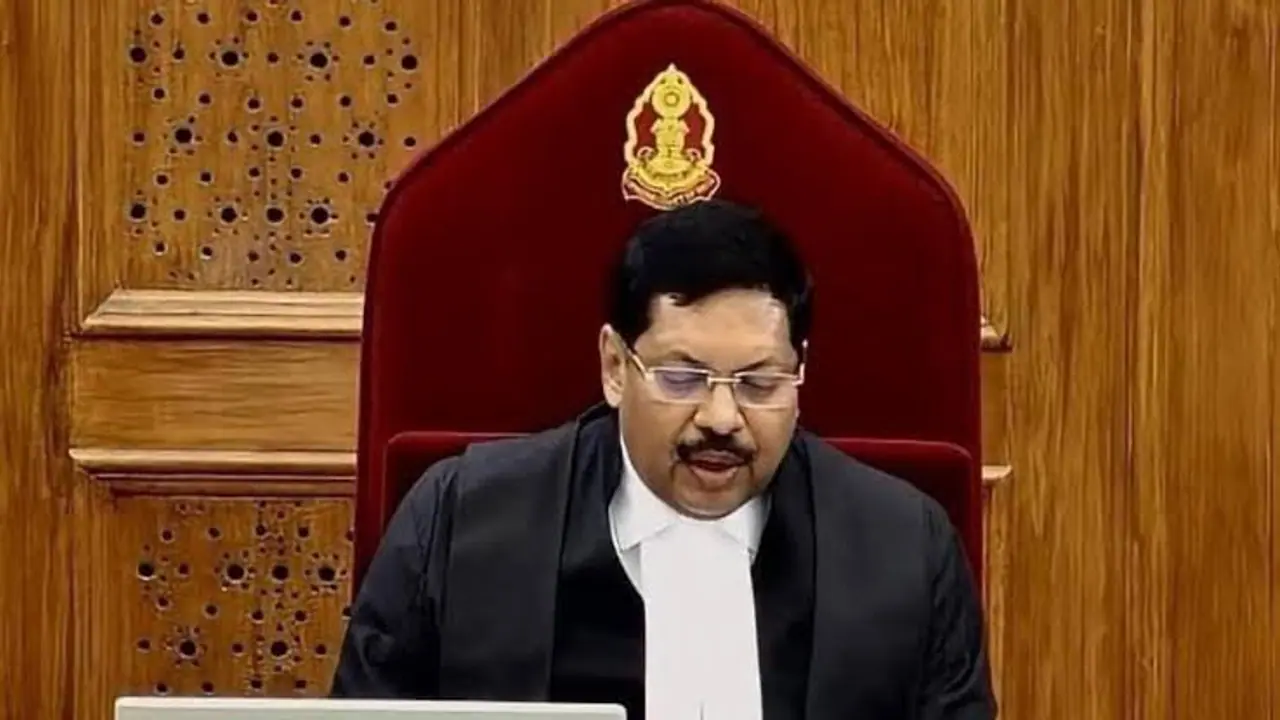
"I will look into this": Chief Justice BR Gavai said on Supreme Court order on stray dogs.
Chief Justice of India (CJI) BR Gavai has assured a relook at the removal on stray dogs on the streets of Delhi-NCR amid an uproar from several quarters of the society. The Supreme Court on Monday had ordered the removal of all stray dogs from all localities in Delhi-NCR within eight weeks and house them in dedicated dog shelters to be set up by civic authorities. The decision taken in view of rising dog bites and rabies cases, drew mixed reactions. A bench of Justices JB Pardiwala and R Mahadevan said that all localities should be made free of stray dogs and there should not be any compromise. It also made it clear that no captured animal will be released back on the streets. It also ordered contempt proceedings against any individual or organisation that attempts to obstruct the authorities from carrying out the capture drive. "If any individual or organisation comes in the way of picking stray dogs or rounding them up, we will proceed to take action against any such resistance," said Justice Pardiwala.
The ruling sparked a massive debate. While animal lovers have slammed the ruling as "inhumane", others have welcomed it, citing incidents of stray dogs attacking children and the elderly. The issue was raised before the Chief Justice this morning. He was also apprised of a previous court order that barred the relocation and killing of stray dogs and mandated following of existing laws and rules for stray dogs.
"I will look into this," replied the Chief Justice, adding to the hopes of thousands of animal lovers who differed with the top court on the need to relocate dogs from the streets of Delhi-NCR.
Related Articles

Moving lakhs of stray dogs from Delhi’s streets into shelters (that don’t yet exist) is a task that demands huge funds, extensive manpower, and years of meticulous planning. Beyond logistical hurdles, the task pits civic bodies against deep-rooted territorial instincts of dogs, fierce opposition from local communities, when even basic municipal functions like unclogging drains and maintaining cleanliness already stretch resources thin.
The Counterpoint from Animal Rights Groups
Animal welfare organisations have denounced the ruling as both inhumane and unfeasible. PETA India criticised the plan, asserting that the “displacement and jailing of dogs is not scientific and has never worked”, warning it would “cause uproar” without addressing the core problems.
They argue that large-scale displacement can trigger territorial fights, starvation, and eventual return of the dogs to their original areas, especially if puppies continue to be born. The group stressed that the surge in stray numbers reflects a failed sterilisation strategy and urged authorities to abandon “ineffective and inhumane displacement drives” in favour of a robust, large-scale sterilisation programme as the only sustainable solution.