
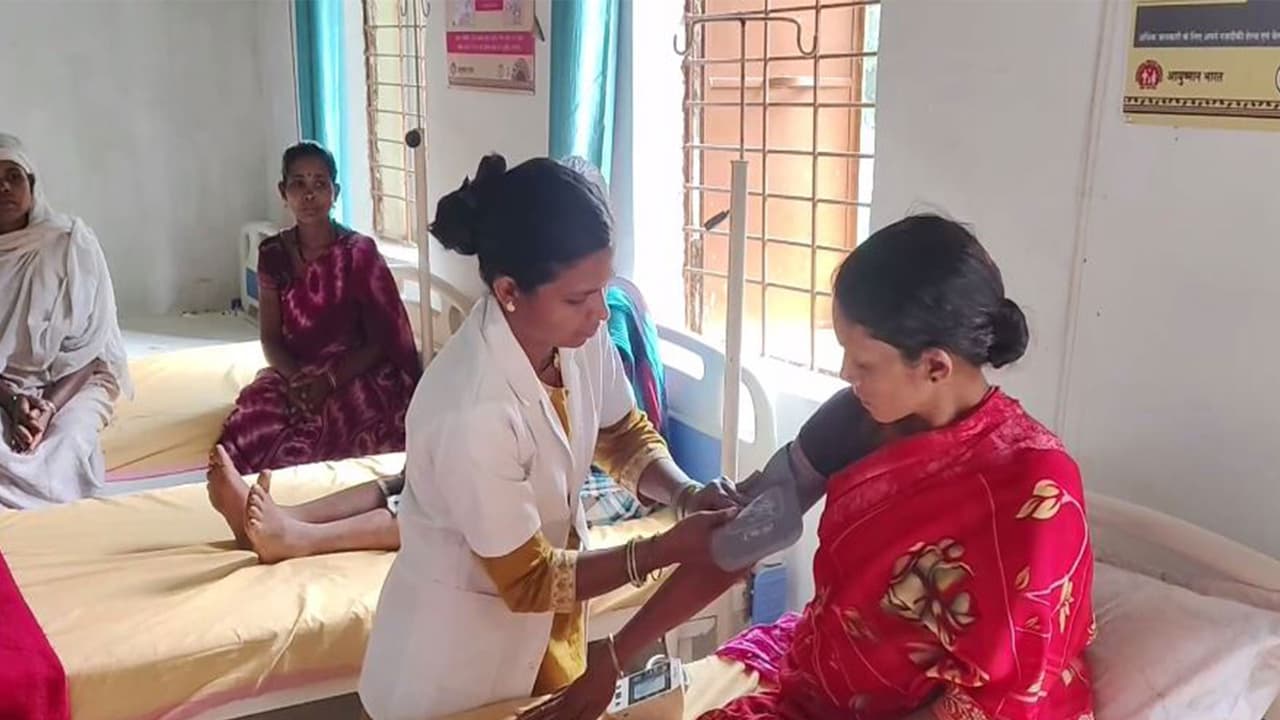
As Naxal influence wanes in Chhattisgarh's Narayanpur, 'Maayka Kendras' and bike ambulances are transforming healthcare in the remote Abujhmarh region, significantly reducing maternal and infant mortality rates for tribal women.
In a region where dense forests, treacherous terrain, and decades of Naxal resistance once blocked basic infrastructure, the remote Abujhmarh belt of Narayanpur district is witnessing a major healthcare transformation. As Naxal influence recedes, developmental initiatives are reaching deep into these formerly inaccessible tribal hinterlands, making safe motherhood a reality for local women.
At one time, even laying a road for development was a challenge. Naxals opposed the construction of roads, bridges, culverts, buildings, and other developmental projects; the barrel of a Naxal gun seemed to stand in the way of every development effort. Whether to fetch rations, obtain essential documents, or transport a sick person to the hospital, villagers had to trek for kilometres, crossing rivers, streams, mountains, and dense forests. Added to this was the constant threat of wild animals; villagers even lost their lives in bear attacks on several occasions.
Yet, amidst this entire struggle, pregnant women suffered the most. During labour, family members were often forced to carry pregnant women across dangerous terrain on makeshift slings (kanwar) to reach distant health centres. Delayed care led to frequent home or roadside deliveries, significantly elevating infection risks and endangering the lives of both mothers and newborns.
'Maayka Kendras' Transform Maternal Care
To tackle high Maternal Mortality Rates (MMR) and Infant Mortality Rates (IMR) in the district, Narayanpur Collector Namrata Jain confirmed that the administration has established specialised maternal care units called ‘Maayka Kendras’ (Maternal Care Centres). The ‘Maayka Kendras’ (Maternal Care Centres) stand as a prime example of this transformation. Narayanpur Collector Namrata Jain stated that 'Maayka' centres have been established in the district to address maternal health concerns and high Infant Mortality Rates (IMR) and Maternal Mortality Rates (MMR); eight such centres have been launched where pregnant women receive proper counselling.
"We have established 'Maayka' centres in Narayanpur district to address maternal health, as well as IMR (Infant Mortality Rate) and MMR (Maternal Mortality Rate), both of which have been high. We have launched eight such centres so far. When a woman is pregnant, she receives proper counselling there,” she said.
A total of eight such centres are currently operational in Abuja to support pregnant women. These centres provide a safe haven where expectant mothers from remote and inaccessible villages are brought well before their due date. She further highlighted that ‘bike ambulances’ have been made available to navigate remote areas.
Bike Ambulances: A Lifeline to Remote Areas
“The second component involves the use of bike ambulances. We lack motorable roads as the area was previously Naxal-affected and has only recently opened up. We have deployed motorbike ambulances that can navigate these remote areas; they feature comfortable seating to transport pregnant women to the centres, thereby encouraging institutional deliveries," she said.
In these remote regions, where standard ambulances still struggle to reach, ‘bike ambulances’ have emerged as a source of great relief for the villagers. When necessary, patients are transported from remote villages to the main road via bike ambulances and subsequently taken to health centres.
Pregnant women receive care, nutrition, and medical facilities akin to the comfort of their own maternal homes, sparing them the ordeal of battling for survival amidst forests, hills, and rivers during childbirth.
Government Backing and Measurable Impact
Narayanpur MLA and Forest Minister Kedar Kashyap said that the entire country has been liberated from Naxalism through the resolve of Prime Minister Narendra Modi, the determination of Union Home Minister Amit Shah, and the courage of our armed forces. He noted that the areas that previously lacked facilities are now equipped with institutional delivery services.
“To ensure the effective implementation of health services in the Abujhmarh region, Chief Minister Vishnu Deo Sai has launched eight centres under the 'Maayka' program. During my visit to the Maayka centre in Maspur, I observed that pregnant women, who previously lacked access to such facilities, are now being provided with institutional delivery services. Furthermore, pregnant women receive nutritional support and counselling from experts to prevent malnutrition among mothers and children, ensuring the birth of healthy babies in Abujhmarh and reducing maternal and infant mortality rates,” he said.
He added that motorbike ambulances have been introduced to extend health services to areas inaccessible to four-wheeled vehicles or regions where road construction was hindered.
Over 280 pregnant women have been registered at these centres so far, facilitating more than 80 successful institutional deliveries. The journey to the hospital, which was once a perilous trek between life and death, has now been made easier for safe motherhood through 'Maayka' centres and bike ambulances.
(Except for the headline, this story has not been edited by Asianetnews Editorial staff and is published from a syndicated feed.)