
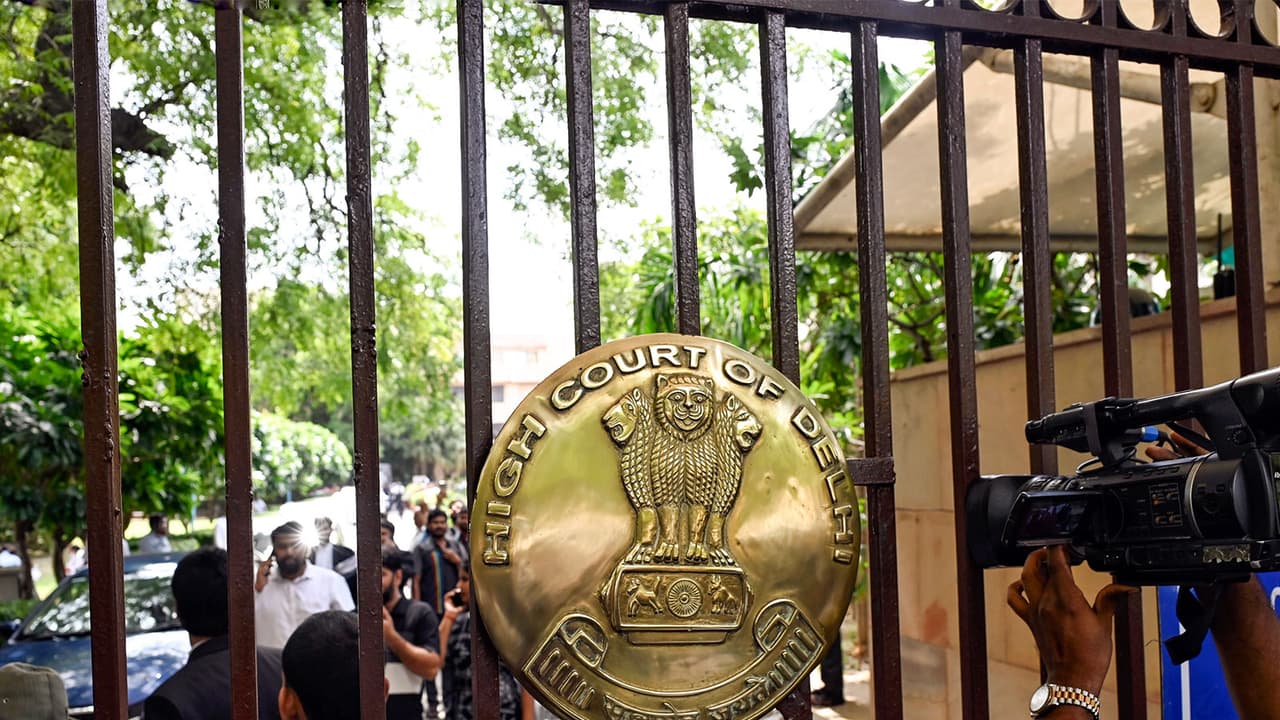
Google told the Delhi HC it can't proactively monitor YouTube for unauthorized court recordings. Citing its intermediary status under the IT Act, it argued liability lies with uploaders and it can only act on specific court orders for takedowns.
Google Cites Intermediary Status
Google LLC has told the Delhi High Court that it cannot be directed to proactively monitor YouTube or prevent the recurrence of allegedly unauthorised recordings of court proceedings, contending that as an intermediary it neither creates nor controls third-party content and cannot be burdened with an obligation to police millions of videos uploaded on its platform. In an affidavit filed before the High Court in the PIL concerning the circulation of videos of the April 13 hearing in Arvind Kejriwal's recusal plea, Google submitted that YouTube is merely an intermediary under the Information Technology Act, 2000, and that liability, if any, rests with the publisher or uploader of the content rather than the platform.
'Legally Untenable' Demands
Google further submitted that the relief sought by the petitioner, directing social media platforms to prevent recurrence of such recordings, monitor re-uploads and impose penalties for non-compliance, is legally untenable, vague and incapable of implementation. It argued that court proceedings are recorded by third parties outside the YouTube platform and YouTube has no means to determine whether a particular uploaded video relates to court proceedings, whether the recording is unauthorised or whether it violates any specific law, especially when rules governing the recording of court proceedings vary across courts.
Compliance with Court Orders
According to the affidavit, YouTube is only required to disable access to specific URLs after a competent court adjudicates the identified content to be unlawful. It asserted that the platform cannot proactively scan millions of videos to identify possible unauthorised recordings or prevent future uploads. Google also informed the Court that of the nine YouTube URLs identified in the petition, several had already been blocked in India or made unavailable even before the High Court's interim order dated April 23, 2026. Following the Court's directions, it also blocked the remaining identified URLs as a matter of abundant caution. It stated that no further URLs containing the alleged recordings have since been notified to it by the petitioner.
Reliance on Legal Precedents and Safe Harbour
The affidavit states that YouTube neither publishes nor endorses user-generated content and cannot be expected to adjudicate the legality of videos uploaded by third parties. Google submitted that the Supreme Court's decision in Shreya Singhal v. Union of India makes it clear that an intermediary acquires "actual knowledge" only upon a court order or notification by the appropriate government and cannot be compelled to independently decide whether content is unlawful.
Google further argued that intermediaries enjoy safe harbour protection under Section 79 of the IT Act and cannot be subjected to a proactive monitoring obligation. It submitted that any direction for removal must identify specific URLs, and that general directions requiring platforms to monitor or prevent future uploads would create a chilling effect and are contrary to settled law. It also maintained that any orders regarding the removal of content ought to be directed primarily against the originators or publishers after giving them an opportunity of being heard, rather than against intermediaries. The affidavit concludes by seeking dismissal of the petition insofar as it concerns Google.
Background of the Case
The Delhi High Court had earlier directed the removal of all social media links containing the April 13 proceedings before Justice Swarana Kanta Sharma in the recusal plea moved by former Delhi Chief Minister Arvind Kejriwal. A Division Bench of Justice V. Kameswar Rao and Justice Manmeet Arora also impleaded the Ministry of Electronics and Information Technology (MeitY) as a respondent and issued notice to all respondents, including Arvind Kejriwal, Manish Sisodia, journalist Ravish Kumar and others. The PIL, filed by advocate Vaibhav Singh, alleges that the April 13 court proceedings were recorded and circulated on social media without permission in violation of the Delhi High Court's Electronic Evidence and Video Conferencing Rules, 2025.
The Court had noted that recording and uploading court proceedings without prior permission is expressly prohibited under the High Court Rules. It directed the removal of any remaining links and observed that if such videos reappear, the platforms must remove them upon being informed and intimate the Registrar General. Senior Advocate Arvind P. Datar, appearing for one of the intermediaries, had submitted that the flagged content was removed after official communication and that intermediaries cannot function as censors. Additional Solicitor General Chetan Sharma had submitted that the issue concerns the institution of the judiciary and requires serious consideration. (ANI)
(Except for the headline, this story has not been edited by Asianet Newsable English staff and is published from a syndicated feed.)
