Backed by a fresh outlay of Rs 40,000 crore, the new phase aims to accelerate India's journey from being a manufacturing hub to emerging as a globally competitive semiconductor powerhouse.
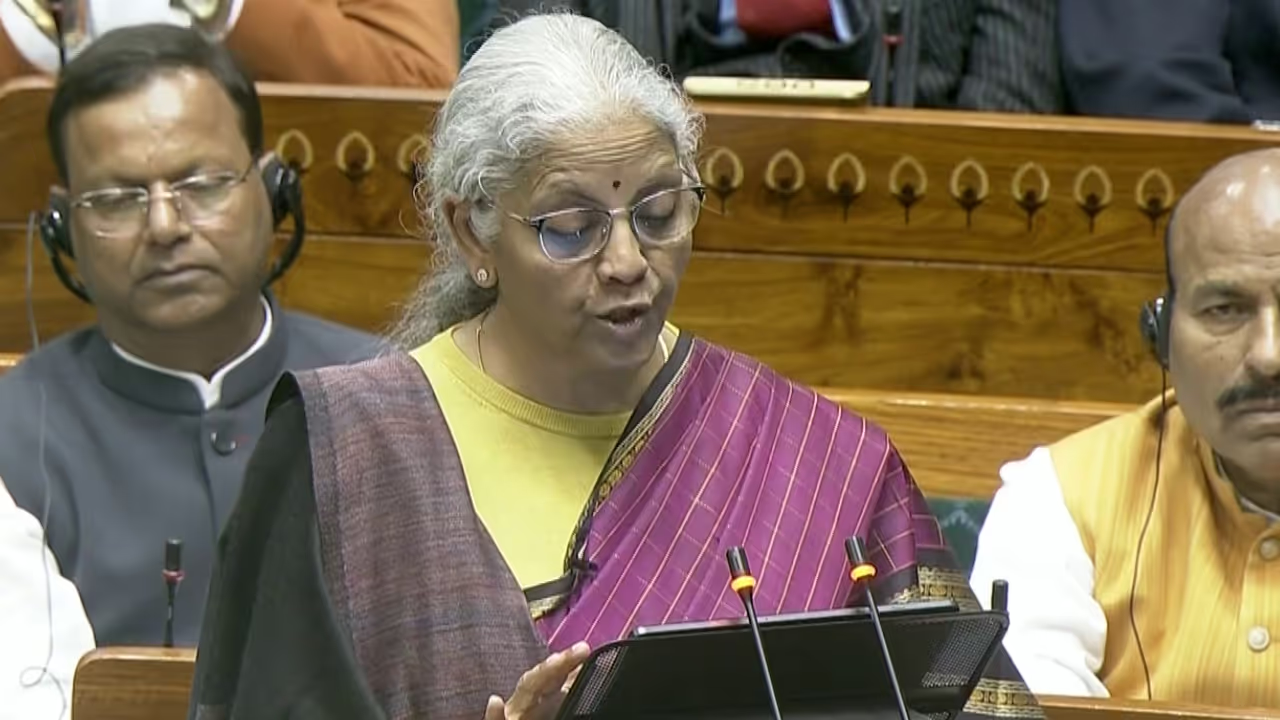
Union Finance Minister Nirmala Sitharaman on Sunday (February 1, 2026) gave a major push to India's technology ambitions by announcing India Semiconductor Mission (ISM) 2.0 while presenting her ninth consecutive Union Budget in Parliament.
With this, Sitharaman not only created history but also reinforced the government's focus on making India a key player in the global semiconductor space at a time when chip supply chains remain fragile worldwide.
A Historic Budget Moment
The Union Budget for 2026–27 outlines how the government plans to earn and spend money in the coming financial year, while also reflecting its broader economic priorities amid global uncertainty.
Related Articles

By presenting her ninth Budget in a row, Sitharaman has placed herself among India's most enduring finance ministers, extending a record-breaking run that few before her have achieved.
What Is India Semiconductor Mission 2.0?
Unlike the first phase, which largely focused on setting up chip fabrication plants, ISM 2.0 goes much deeper into the semiconductor ecosystem.
Addressing the Lok Sabha, Sitharaman said the new phase will focus on:
- Manufacturing semiconductor equipment and materials
- Encouraging the design of homegrown Indian intellectual property (IP)
- Strengthening supply chains to reduce import dependence
The goal is to move India from being just a manufacturing destination to a global semiconductor hub.
Big Push for Electronics Components
To support this vision, the Finance Minister also announced a massive enhancement of the Electronics Component Manufacturing Scheme (ECMS), raising its outlay to Rs 40,000 crore.
This funding boost is expected to:
- Attract global and domestic investments
- Support local component manufacturers
- Create high-skilled jobs in electronics and chip-related industries
Why This Matters for India
Semiconductors power everything from smartphones and electric vehicles to defence systems and renewable energy infrastructure. With ISM 2.0, the government is betting big on ensuring India has a stronger, more secure role in this critical global industry.