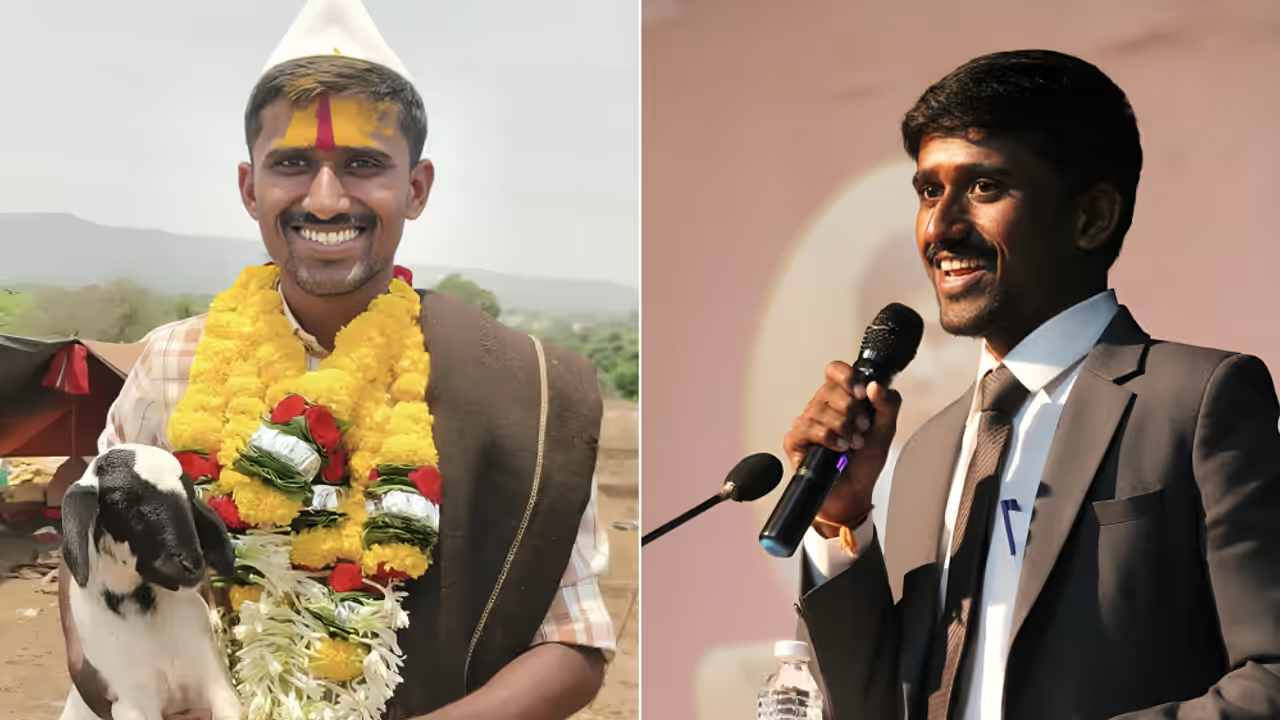
Birdev Siddhappa Done, AIR 551 in UPSC 2024, rose from shepherd's life in rural Maharashtra to become an IPS officer. Educated in govt schools, he balanced work and studies, had multiple UPSC attempts and succeeded with discipline and family support.
Birdev Siddhappa Done's early life unfolded far away from exam halls, coaching centres and city classrooms. His childhood passed in open fields in rural Maharashtra, where tending sheep was part of daily life. Work came first. Responsibility arrived early. Education had to fit around it. There were no shortcuts or special support systems. Days were shaped by labour, seasons, and routine. Yet, slowly and quietly, learning found its place alongside work.
Related Articles

Learning through government schools
Birdev studied in government schools, carrying his books alongside responsibilities at home. Progress did not come easily or quickly. It came through discipline and repetition. There were limits on time and resources. Still, effort remained steady. He learned to manage his day carefully, balancing study with work. Education was not separate from life. It was woven into it.
College followed the same pattern. There was no sudden change in comfort or routine. Time management mattered. Consistency mattered more.
How the civil services dream took shape
The idea of joining the civil services did not arrive overnight. It formed slowly, through observation and experience. Birdev watched how systems worked and how decisions affected ordinary lives. Over time, a sense of purpose began to grow.
That purpose later turned into preparation for the Union Public Service Commission (UPSC) examination, one of India’s toughest competitive exams.
The long road to UPSC
Birdev’s journey to UPSC success did not move in a straight line. He appeared for the exam more than once. Each attempt required reflection and reassessment.
Study plans were changed. Mistakes were reviewed. Weak areas were worked on again and again. What never changed was discipline. Equally important was family support. His family believed that education could change outcomes, even when results took time. Patience was tested, but belief remained firm.
Clearing UPSC 2024 and becoming an IPS officer
In 2024, Birdev Siddhappa Done cleared the UPSC Civil Services Examination with an All India Rank of 551. He was allotted the Indian Police Service (IPS).
The moment marked a clear shift in his life. From days shaped by grazing routes and rural routines, he stepped into a role defined by structure, authority, and public responsibility.
His success carried meaning beyond personal achievement. It mattered to the community that had watched his journey unfold quietly over many years.
Words that reflect the journey
In a social media post, Birdev shared what the achievement meant to him. He wrote that dreams do come true and hard work always pays off. He recalled an essay he wrote in Class 11 titled “My Financial and My Aim in Life.” In it, he had written one bold line: “One day, I will become an IAS officer.”
At that time, it was only a dream on paper. Today, after years of dedication and steady effort, that dream has become reality. Birdev proudly shared that he has cracked UPSC CSE 2024 and now stands as an IPS officer.
He encouraged students not to fear big dreams and to chase them with belief and effort.
A first flight and a new world
Training brought a new environment into Birdev’s life. Familiar rural rhythms gave way to formal systems and national institutions. Travel expanded horizons.
During training-related travel, Birdev and his family boarded a flight together for the first time. It became a quiet but powerful marker of how far the journey had come, from village fields to national service.
Today, Birdev Siddhappa Done stands at a very different point from where he began. The distance between grazing sheep and becoming an IPS officer is measured in years of persistence, learning, and shared belief. His story reflects change built patiently, step by step, without forgetting its roots. It is a reminder that steady effort, even in silence, can carry a person from the margins to the centre of public service.