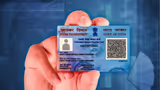
The government has warned of a phishing scam involving fake emails from the Income Tax Department. These fraudulent messages prompt recipients to download an e-PAN to steal personal and financial information.
The government has issued a strong warning after several people reported receiving emails claiming to be from the Income Tax Department, asking them to "download their e-PAN." PIB Fact Check has confirmed that these messages are fraudulent and are part of a widespread phishing scam targeting unsuspecting taxpayers.
Fake e-PAN Emails on the Rise
In a post on X, PIB Fact Check alerted users, saying "Have you also received an email asking you to download e-PAN Card? This is a fake email. Never respond to calls, texts, emails, or links asking for sensitive or financial information."
Related Articles

These fraudulent emails often mimic official communication and attempt to trick users into clicking malicious links or sharing personal data such as bank details, passwords, or PAN credentials.
What Exactly Is Phishing?
Phishing is a cybercrime method where scammers pose as trusted organisations, like banks, government departments, or social media platforms, to steal confidential information. These emails usually redirect victims to fake websites that look almost identical to official portals, making it easier for scammers to harvest passwords, credit card numbers, or login details.
How to Report a Suspicious Email
Officials have advised citizens to immediately report any suspected phishing attempt:
If the email claims to be from the Income Tax Department:
- Forward it to: webmanager@incometax.gov.in
- Also send a copy to: incident@cert-in.org.in
If the phishing email is unrelated to income tax:
- Forward it directly to: incident@cert-in.org.in
Income Tax Department Issues Safety Advisory
The department has urged people to stay cautious and follow these safety measures:
- Do not open attachments from unknown senders—these may contain harmful software.
- Never click suspicious links or enter bank/card details on unverified websites.
- Avoid copying and pasting URLs from emails as scammers can mask malicious links.
- Keep anti-virus, anti-spyware, and firewalls updated to protect against cyber threats.
Officials emphasise that legitimate communication from the Income Tax Department never asks users to share personal banking details via email.
How to Safely Download Your e-PAN
If you genuinely need to download your e-PAN, you can do so securely through UTIITSL's official website or mobile app. This facility is only available to applicants who have applied for a PAN or requested a correction through UTIITSL.
The e-PAN is sent only to the email ID registered in PAN records with the Income Tax Department.