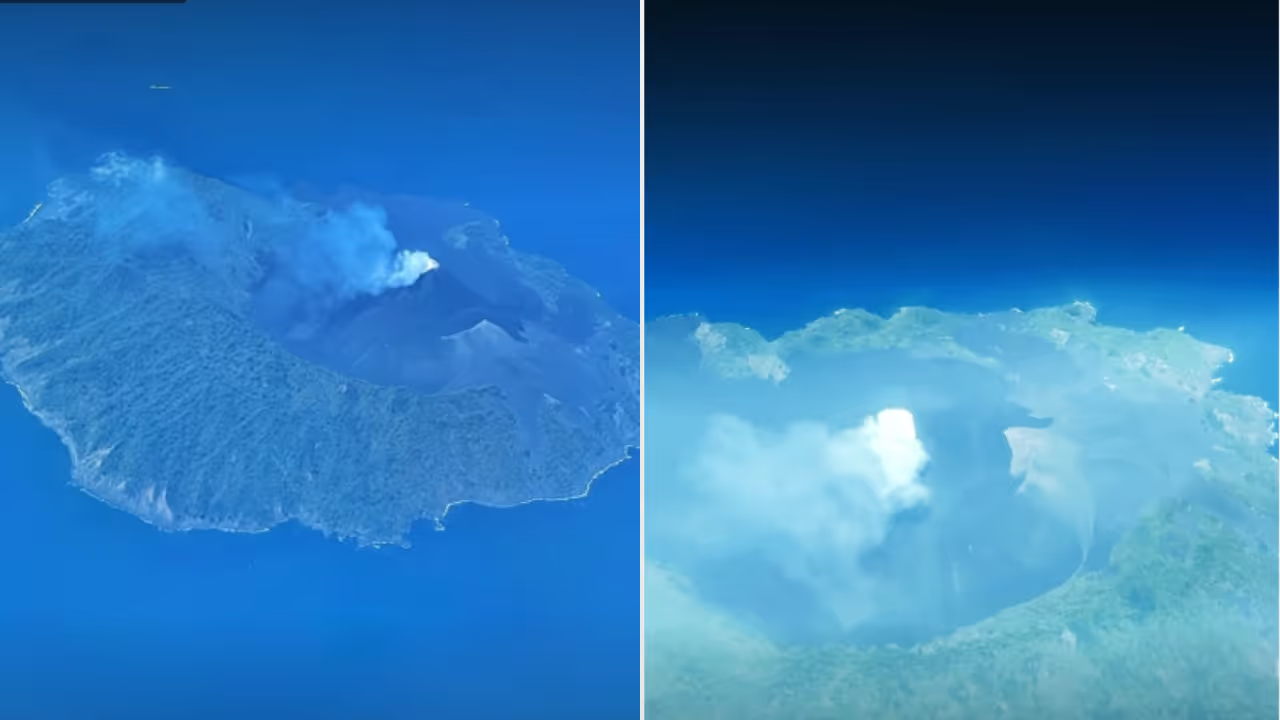
Barren Island, India's only active volcano in the Andaman Sea, is home to wild goats, fruit bats and other wildlife. Discover how goats arrived on the remote island and survived its volcanic eruptions, including the 1991 eruption.
India is home to several fascinating natural wonders, but one of its most unusual sights lies in the Andaman Sea. Barren Island, located in the Andaman and Nicobar Islands, is India's only confirmed active volcano and the only confirmed active volcano in South Asia. Its volcanic landscape, occasional smoke emissions and surrounding marine life make it a remarkable sight, particularly for passengers flying over the Andaman Islands. Despite its name and rugged volcanic terrain, the island is home to wild goats, fruit bats, birds and other wildlife.
A recent video shared by pilot Chidambaram Meyappan has drawn attention to this remote island, offering viewers a glimpse of the active volcano and its surprising natural inhabitants.
Barren Island: India's Only Active Volcano
Located around 135 kilometres north-east of Port Blair, Barren Island is known for its active volcanic landscape. Its first recorded eruption dates back to 1787. After remaining relatively quiet for more than a century, the volcano became active again in 1991 and has witnessed further eruptions over the years.
Related Articles

In a video shared on Instagram, pilot Chidambaram Meyappan pointed out the island to passengers during a flight to Bangkok. He explained that passengers might spot smoke rising from the island about 10 minutes after crossing the Andaman Islands.
The island rises to around 1,160 feet above sea level. However, much of the volcanic mountain remains underwater, extending more than 6,000 feet below the sea's surface. This makes Barren Island an impressive geological formation, with only its summit visible above the water.
Why Are There Wild Goats On Barren Island?
One of the most surprising features of Barren Island is the presence of wild goats despite its remote location and volcanic terrain. The animals are not native to the island. Historical accounts indicate that British sailors brought goats there in 1891, reportedly leaving them as a potential food source for sailors who might become stranded following a shipwreck.
Over time, the goats survived without regular human care and became feral. The island's vegetation and the absence of natural predators helped them establish a population. They have also survived volcanic activity, including the 1991 eruption.
A scientific report published by the Smithsonian Institution's Global Volcanism Program noted that the goats had survived the 1991 eruption remarkably well, possibly by taking shelter on the island's southern slopes.
More Than A Volcanic Landscape
Despite its name, Barren Island is home to more wildlife than its rugged landscape might suggest. Wild goats roam its slopes, while fruit bats roost in its trees. The surrounding waters also support marine life, including coral reefs that attract divers.
Although visitors cannot freely set foot on the island, diving trips from Swaraj Dweep, formerly known as Havelock Island, offer opportunities to explore the surrounding underwater environment. The volcanic landscape also gives the seabed distinctive features, including areas of dark volcanic sand.
The island has a neighbour with a volcanic past as well. Narcondam Island, located around 140 kilometres to the north, is a dormant volcano known for its distinctive natural landscape.
How Did Social Media React?
The video shared by pilot Chidambaram Meyappan has attracted attention on social media, with users expressing interest in Barren Island's landscape and marine life.
One user commented: "Informative."
Another user wrote: "The most beautiful island."
A third user commented: "Some of the beautiful Coral life you will ever witness. Barren Island."