
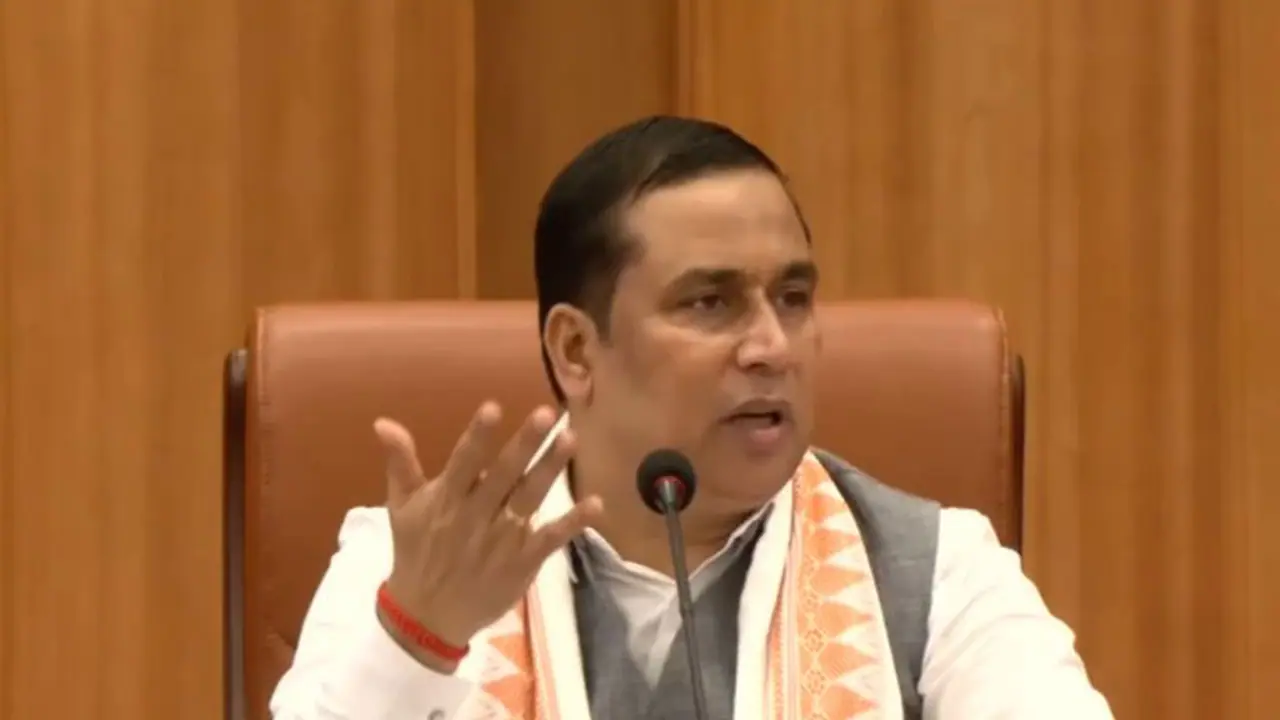
Assam Minister Jayanta Mallabaruah rejects claims of religious bias in the Lutumari forest eviction, citing Supreme Court directives and the need to restore ecological habitats for wildlife conservation.
Clarifying the Lutumari Reserve Forest Eviction
Assam Forest Minister Jayanta Mallabaruah has firmly rebutted claims made by Shafiqur Rahman, Leader of the Opposition in the Bangladesh Parliament and Ameer-e-Jamaat ( Chief ) of Bangladesh Jamaat-e-Islami, regarding the eviction drive at Lutumari Reserve Forest in Assam’s Nagaon district. In a detailed response on X, Minister Baruah described the Bangladeshi leader's allegations as presenting an “incomplete and misleading picture of the facts” and laid out the legal and administrative basis of the operation.
Legal Basis and Administrative Procedure
The Bangladeshi leader had expressed concern over the eviction of Muslim families and alleged demolition of mosques in Assam, portraying the operation through a religious lens. Responding to the X post, Baruah made it clear that the exercise was neither arbitrary nor directed against any particular religion or community, but was undertaken to reclaim notified forest land in accordance with the law.
According to the Minister, eviction proceedings conducted on October 17 and 18, 2026, covered 314 hectares of notified forest land in Lutumari Reserve Forest, which involved 563 families. He cited the directions of the Supreme Court of India, including its order dated February 10, 2026, which prescribed procedures for eviction from notified forest areas in Assam. He further pointed out that the Special Leave Petitions (Civil) filed by the petitioners had been disposed of by the Supreme Court on September 2, 2026. The Minister emphasised that the occupants had pursued and exhausted their legal remedies and that the State Government proceeded only after following the prescribed legal process.
Commitment to Due Process
Countering the portrayal of the operation as arbitrary, the Minister highlighted that notices had been served well in advance. The government deliberately waited until the rainy and flood season had ended, recognising the hardships that displacement could cause to affected families. He stated that occupants were given ample time to vacate their homes and remove their belongings before the operation was undertaken. The proceedings remained peaceful, with no reported resistance or use of force.
Ecological Objectives and Conclusion
The State Forest Minister underscored that protecting notified forest land is both a legal obligation and an ecological necessity. He clarified that the operation was directed at reclaiming forest land and was not targeted at any religious or social community. The reclaimed area is proposed to be restored through plantations of indigenous forest species, helping regenerate wildlife habitats, particularly those of elephants, while contributing to efforts to reduce human–elephant conflict.
In his response, Minister Baruah reiterated that the government respects every community and understands the human difficulties associated with eviction proceedings. However, he stressed that forest protection and the rule of law cannot be selectively interpreted through a religious lens. The Minister’s response places the focus squarely on the legal record, the Supreme Court proceedings and the ecological purpose of the operation. By setting out the facts and the sequence of events, Minister Baruah challenged the narrative advanced by the Bangladesh opposition leader and rejected the attempt to portray a forest conservation measure as religiously motivated.
(Except for the headline, this story has not been edited by Asianetnews Editorial staff and is published from a syndicated feed.)