
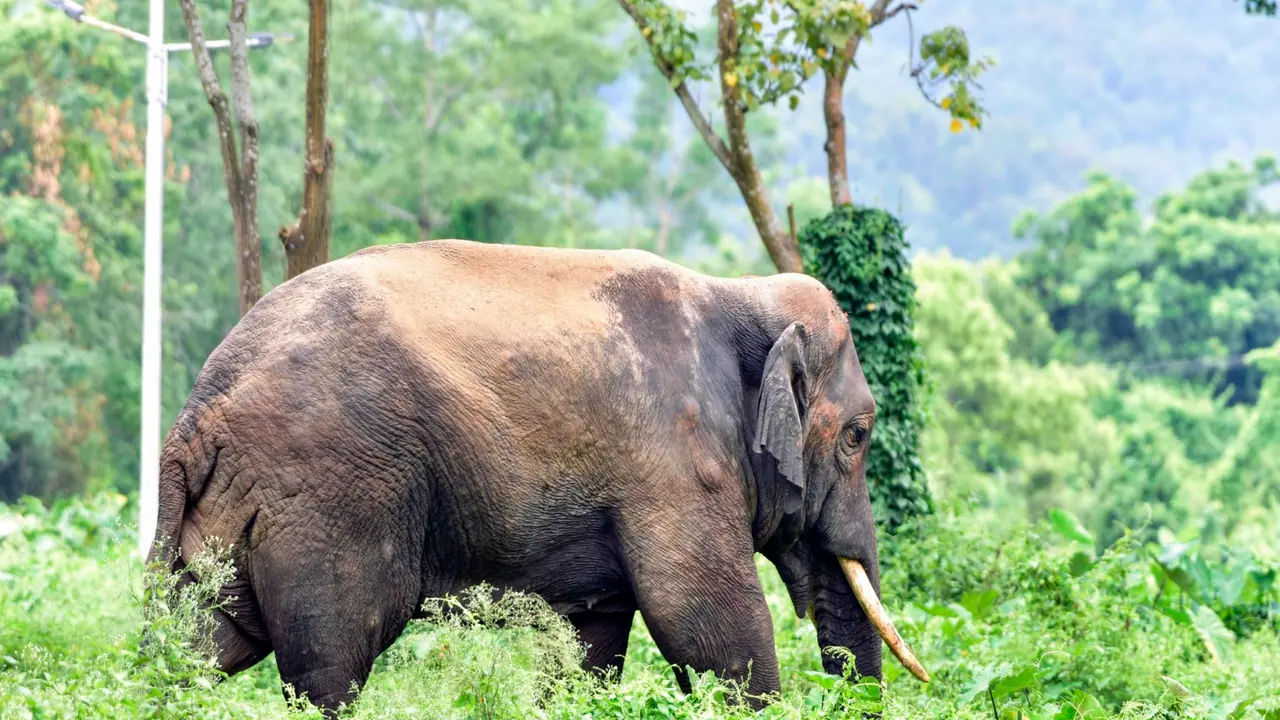
Coordinated efforts by the Assam Forest Department and Aaranyak have sharply reduced human deaths from human-elephant conflict in Lakhipur. Using solar fences and volunteer networks, deaths fell from 19 in 2022 to two in 2025.
Human deaths have declined sharply in Assam's Lakhipur hotspot of Human-Elephant Conflict (HEC) because of unrelenting and coordinated mitigation efforts by the Goalpara Division of the Assam Forest Department and the premier biodiversity conservation non-profit Aaranyak.
Mitigation Efforts and Results
According to the data available, the number of human deaths due to HEC in Lakhipur, located close to the Assam-Meghalaya boundary, came down to only two in the year 2025 from 19 deaths in 2022 because of the persistent mitigation efforts put up by the Forest Department in collaboration with Aaranyak.
The Range Officer, Lakhipur Forest Range, Moupran Gayon, informing on the ongoing efforts for HEC mitigation in the range with cooperation from Aaranyak, highlighted how mitigation tools like solar-powered fences, solar street lights installed in select HEC-prone areas, and rechargeable torchlights provided to volunteers with cooperation from Aaranyak have been instrumental in reducing direct interface between humans and wild elephants of late, leading to a decline in human casualties.
So far, the Forest Department through Aaranyak has installed about 47 km of solar-powered fence securing at least 18 HEC-prone villages in Lakhipur Circle, benefiting about 1440 households.
Volunteer Networks Prove Crucial
Volunteers of Elephant Conservation Networks (ECN), promoted by Aaranyak and Gaja Mitras and engaged by the Assam Forest Department, have also contributed extensively to reducing the conflict in the area. At least 70 ECN volunteers and 40 Gaja Mitras are working in close coordination with Forest Department staff in Lakhipur Range to facilitate peaceful human-elephant coexistence. The ECN comprises volunteers networked through WhatsApp, who raise an early alarm for neighbouring areas as soon as wild elephants are sighted in their respective localities.
Inter-Departmental Collaboration for Sustained Action
The Circle Officer of Lakhipur Revenue Circle, Sailen Dutta Das, while lauding this collaborative HEC mitigation effort during a meeting on June 29 last, asked all other concerned government departments working in the revenue circle -- APDCL, Veterinary Department, Agriculture Department, Social Welfare Department, Education Department, Soil Conservation Department, Police Department, Health and Family Welfare Department, Forest Department, DDMA, Panchayat and Rural Development Department -- to contribute towards the HEC mitigation through action-driven efforts to maintain this declining trend of human deaths and facilitate coexistence.
He said that in the next such meeting scheduled for October 2026, the civil administration will take stock of the action taken by the concerned departments in this regard. Representatives of these concerned government departments assured they would provide the necessary support as required for HEC mitigation.
The interdepartmental interaction focused on the mitigation of human-elephant conflict (HEC) and involved concerned government departments, which was convened by the Circle Officer of Lakhipur Revenue Circle in collaboration with Aaranyak. Reputed conservation scientist and head of the Elephant Research and Conservation Division (ERCD) of Aaranyak, Dr Bibhuti Prasad Lahkar, made a PowerPoint presentation (PPT) in the meeting on HEC mitigation, highlighting the role of concerned government departments. (ANI)
(Except for the headline, this story has not been edited by Asianetnews Editorial staff and is published from a syndicated feed.)