
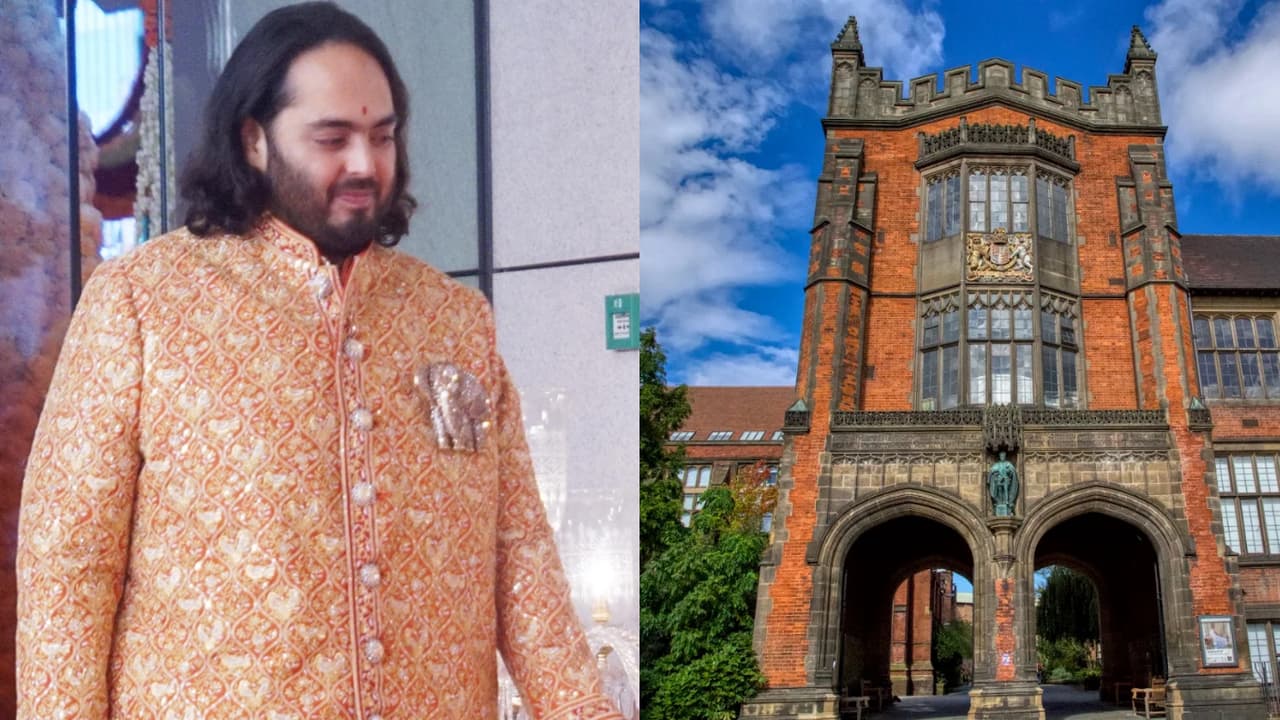
Anant Ambani was recently appointed Professor of Practice in Sustainability at Newcastle University, UK. The role recognises his industry experience in wildlife conservation through Vantara and clean energy initiatives at Reliance Industries, bringing practical sustainability expertise into university education and research.
Anant Ambani is now a Professor of Practice in Sustainability at Newcastle University, but the title may not mean what many readers assume. Unlike a conventional academic professorship, the role is designed to bring professional, industry and practical experience into a university’s teaching, research and wider engagement. The university has said the honour recognises Ambani’s work in conservation, biodiversity protection, animal welfare and the clean-energy transition.
What Is a Professor of Practice?
A Professorship of Practice is intended to connect academic institutions with people who have substantial experience outside traditional university research. In Ambani’s case, Newcastle University has linked the appointment to his work through Vantara, his wildlife rescue and conservation initiative in Jamnagar, Gujarat, as well as his role as an Executive Director of Reliance Industries.
The university has clarified that the position does not confer an academic qualification and does not involve Ambani setting Newcastle University’s academic direction. The appointment is instead being presented as a way to bring his experience in conservation, sustainability and energy transition into the university environment.
Ambani has spoken about the role in terms of encouraging students to think about sustainability beyond conventional boundaries. Before the ceremony, he said: “Everyone who graduates from here has the potential to change the world in some way. I am so honoured to be here at the steps of Newcastle University where the honourable and most legendary Martin Luther King stood.”
What Will Anant Ambani Bring to Newcastle?
Ambani’s professional work gives the university several areas through which his experience can intersect with sustainability education. At Reliance Industries, he has been involved in initiatives spanning solar manufacturing, green hydrogen, circular materials, carbon capture, clean fuels and next-generation energy technologies. Newcastle University says this work forms part of Reliance’s stated ambition to become a Net Carbon Zero enterprise by 2035.
His conservation work is another major part of the appointment. Vantara, described by Newcastle as a 3,500-acre wildlife rescue and conservation initiative, focuses on rescuing, rehabilitating and protecting abused, injured and endangered animals. The university says its work aligns with Newcastle’s research in conservation and biodiversity.
At the formal ceremony, Ambani said: “As humanity confronts a different set of global challenges, I believe conservation and sustainability must become the next great movement - one that transcends nations, generations and differences.”
Why Is the Role Drawing Attention?
The appointment has attracted scrutiny because of Ambani’s family business background and questions raised by some academics and conservationists about the relationship between corporate power, sustainability and academia. Critics have publicly questioned the university’s decision, while Newcastle has defended the appointment by pointing to Ambani’s conservation and clean-energy work.
Newcastle Vice-Chancellor Professor Chris Day said: “Professor Ambani is demonstrating exactly this kind of leadership, driving forward ambitious solutions that support the restoration of healthy, resilient ecosystems for future generations.”
The university’s latest formal ceremony, held at King’s Hall on September 30, therefore adds context to what the title represents: not a conventional academic qualification, but a university role intended to connect Ambani’s experience in business, conservation and energy transition with Newcastle’s sustainability-focused education and research.
