- Home
- World
- 'Died For 2 Minutes': What Happens After Death? Man Says Wasp Sting Took Him To A World Beyond Death
'Died For 2 Minutes': What Happens After Death? Man Says Wasp Sting Took Him To A World Beyond Death
Former emergency room nurse Jack Allen says a wasp sting left him unconscious on a ranch in Mexico in September 2024. He recalls a vivid garden, meeting his wife and being told to return. His account has renewed interest in what happens near death.
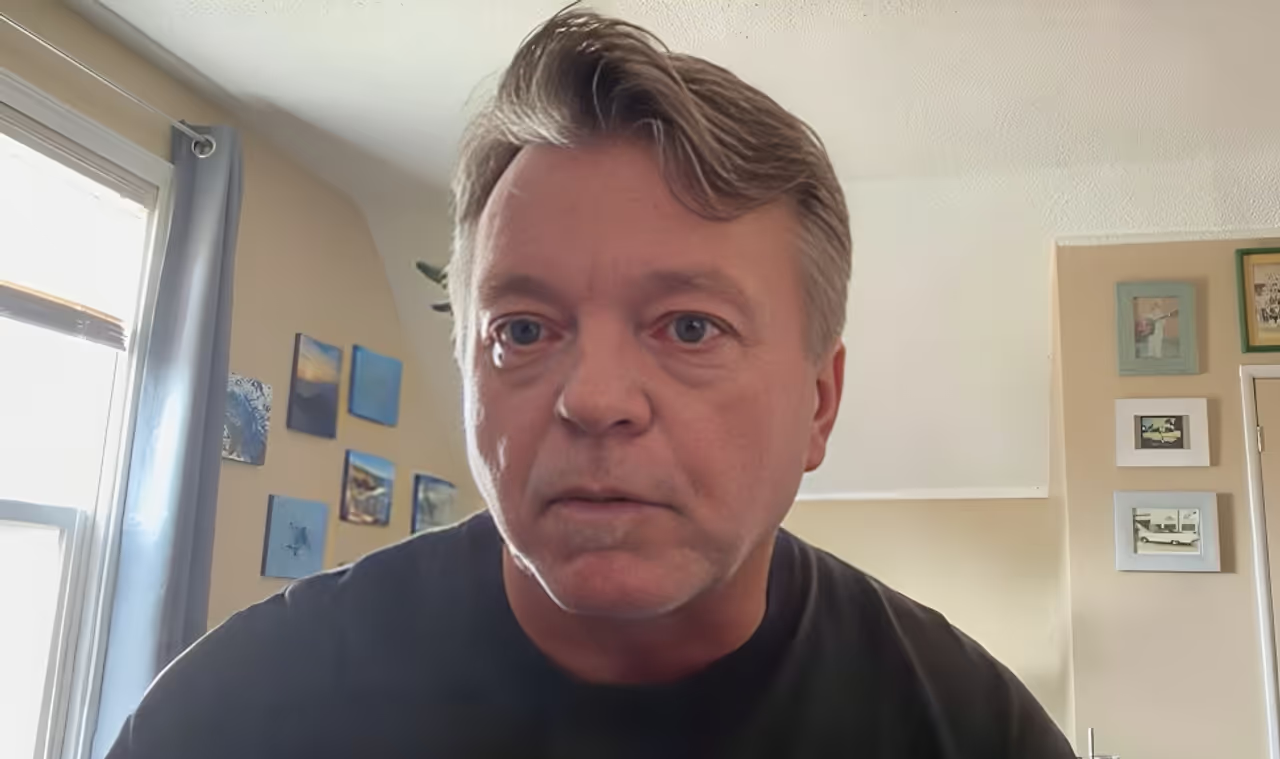
Former Nurse Says He Met His Wife In A Beautiful Garden After A Wasp Sting Nearly Killed Him
What happens when a person comes close to death? Is there another world beyond the one we know, or are such experiences created by the brain during a medical crisis? These questions have fascinated people for centuries. Well, a former emergency room nurse from the United States has now shared an account of an experience he believes gave him a glimpse of life beyond death.
Jack Allen says he briefly lost consciousness after being stung by a wasp on a farm in Mexico in September 2024. During the episode, he recalls finding himself in a beautiful garden, meeting his wife and experiencing a feeling of love and peace unlike anything he had known before. He says the experience changed the way he thinks about death and the purpose of life.
His account has attracted attention because it includes several features commonly described in near-death experiences, including encounters with loved ones, vivid surroundings and a feeling of being somewhere beyond ordinary reality. However, his story remains a personal account. There is no independent medical confirmation that he died or that he entered an afterlife.
Who is Jack Allen and what happened in Mexico?
Allen reportedly spent 37 years working as an emergency room nurse, caring for patients in critical condition and witnessing people at the end of their lives. After retiring, he decided to move to Mexico and build a quieter life on a tropical fruit farm with his business partner.
The incident took place in September 2024, when Allen was working on the property with his business partner and two employees. He was carrying a large knife and accidentally struck a hanging tree branch. According to his account, a large wasp nest was attached to the other end of the branch.
The movement disturbed the nest, releasing a swarm of wasps. Allen tried to get away but was stung on his shoulder by one of the insects. Reports describing his experience identify the insect as an executioner wasp, although its exact species has not been independently confirmed.
Allen says he soon began feeling unwell. His eyes rolled upwards, his body started convulsing and he lost consciousness. His companions reportedly tried to revive him for around two minutes. They later told him that they had believed he was dead.
It was during this period of unconsciousness that Allen says he experienced something he had never encountered before.


A garden, his wife and a feeling of being home
Allen describes the place he remembers as a garden filled with beautiful flowers, greenery and extraordinary colours. He says the experience did not feel like an ordinary dream. Instead, everything appeared unusually vivid and real.
He recalls feeling completely peaceful, as though he had finally reached a place where he truly belonged. He also says he had a sense of understanding time and space in a way that he had never experienced while awake.
The most emotional part of the experience, according to Allen, was seeing his wife in the garden.
He says she appeared much younger, healthier and full of energy. In his account, this was particularly striking because she has a serious disability affecting her feet in everyday life.
Allen recalls walking through the garden with her and collecting flowers. He says the love and happiness he felt in that moment were overwhelming.
However, the experience did not last. Allen says his wife eventually told him that he had to return. He remembers her appearing sad as she delivered the message, but says he was so happy that he was willing to follow whatever she told him.
He then experienced what he describes as a powerful pulling sensation, almost as if something was drawing him backwards. Suddenly, he opened his eyes and found himself lying on the ground, with his companions shouting around him.
How the experience changed his outlook on life
Allen says he felt unusually peaceful after regaining consciousness. Despite the frightening incident, he reportedly told his companions that he had never felt so good in his life.
The experience also changed how he viewed death. Having spent decades working in emergency rooms, he had seen many people die. He now says he no longer looks at death in quite the same way.
However, his life after the incident was far from peaceful. Allen says a powerful hurricane later destroyed the Mexican farm, damaging the business he had built there. His marriage also ended in divorce, and he eventually had to sell his property in Texas.
He does not present these events as proof of a supernatural connection. Instead, he says the experience left him with a different understanding of why people are alive and what they should do with their time.
Allen believes people should focus on caring for others, helping those in difficulty and finding a sense of purpose in everyday life. He has also suggested that his experience showed him something that human beings may not be meant to understand while living on Earth.
What does science say about near-death experiences?
Near-death experiences, commonly called NDEs, are reported by some people who survive life-threatening medical emergencies. They may describe seeing bright lights, moving through tunnels, meeting deceased relatives, feeling separated from their bodies or experiencing an unusual sense of peace.
Although these accounts can be deeply meaningful to the people who experience them, science has not established that they are journeys into an afterlife.
A 2025 review published in Nature Reviews Neurology examined several possible explanations for these experiences. Researchers discussed how changes in blood flow, oxygen levels, brain activity and neurotransmitter systems during a medical crisis could contribute to vivid experiences. Psychological processes may also influence what a person remembers and how they interpret it.
The review suggested that near-death experiences may involve several processes working together rather than one single cause. However, the precise mechanisms are still being studied.
What did the AWARE II study discover?
One of the important research projects in this field is the AWARE II study, published in the journal Resuscitation in 2023. Led by researchers including Dr Sam Parnia, the study examined awareness and brain activity in people who experienced cardiac arrest.
Researchers studied 567 in-hospital cardiac arrest cases across 25 hospitals. Of the 53 patients who survived, 28 completed interviews. Eleven of those interviewed reported memories or perceptions that suggested some form of conscious experience during or around the resuscitation period.
Six described experiences that researchers classified as transcendent recalled experiences of death.
The researchers also recorded brain activity during CPR. Some patients showed electrical patterns associated with organised brain activity, even after prolonged periods of resuscitation.
These findings suggest that the relationship between cardiac arrest, brain activity and consciousness is more complex than previously understood. However, the study did not establish that consciousness continues after irreversible death or that the participants had travelled outside their bodies.
A separate 2023 study from researchers at the University of Michigan examined brain activity in four dying patients. It found increases in certain high-frequency brainwave activity in two of them after life support was withdrawn. The researchers said these patterns could offer clues about the brain during the dying process, but the small study could not establish what the patients were experiencing.
Does the soul leave the body after death?
This remains one of humanity's oldest unanswered questions. Different religions and philosophical traditions have their own beliefs about the soul, reincarnation, heaven and what follows death. These beliefs are important to millions of people, but they are not conclusions that can currently be confirmed through medical research.
Science can study measurable changes in the heart, brain and body as a person approaches death. It can also investigate memories reported by people who survive cardiac arrest. But it has not established whether a soul exists independently of the body or where it might go after death.
It is also important to distinguish cardiac arrest from irreversible death. During cardiac arrest, the heart stops pumping blood effectively, causing a person to become unresponsive. Immediate CPR and emergency treatment can sometimes restore circulation and save their life. A person who survives such an event may later describe a powerful experience, but that does not mean they were medically dead in the irreversible sense.
Allen's account therefore offers a personal perspective on a mystery that science has yet to resolve. His description of meeting his wife and returning with a changed outlook may be deeply significant to him. Whether it represents a glimpse of another world or an experience produced by a brain under extreme stress remains unknown.
Check the Breaking News Today and Latest News from across India and around the world. Stay updated with the latest World News and global developments from politics to economy and current affairs. Get in-depth coverage of China News, Europe News, Pakistan News, and South Asia News, along with top headlines from the UK and US. Follow expert analysis, international trends, and breaking updates from around the globe. Download the Asianet News Official App from the Android Play Store and iPhone App Store for accurate and timely news updates anytime, anywhere.