- Home
- Sports
- From Bottlers to EPL Champions After 22 Years: How Arteta Finally Took Arsenal Out of Man City’s Shadow
From Bottlers to EPL Champions After 22 Years: How Arteta Finally Took Arsenal Out of Man City’s Shadow
How Mikel Arteta transformed Arsenal from serial heartbreakers into Premier League champions after 22 painful years — through belief, psychology, culture and ruthless evolution.
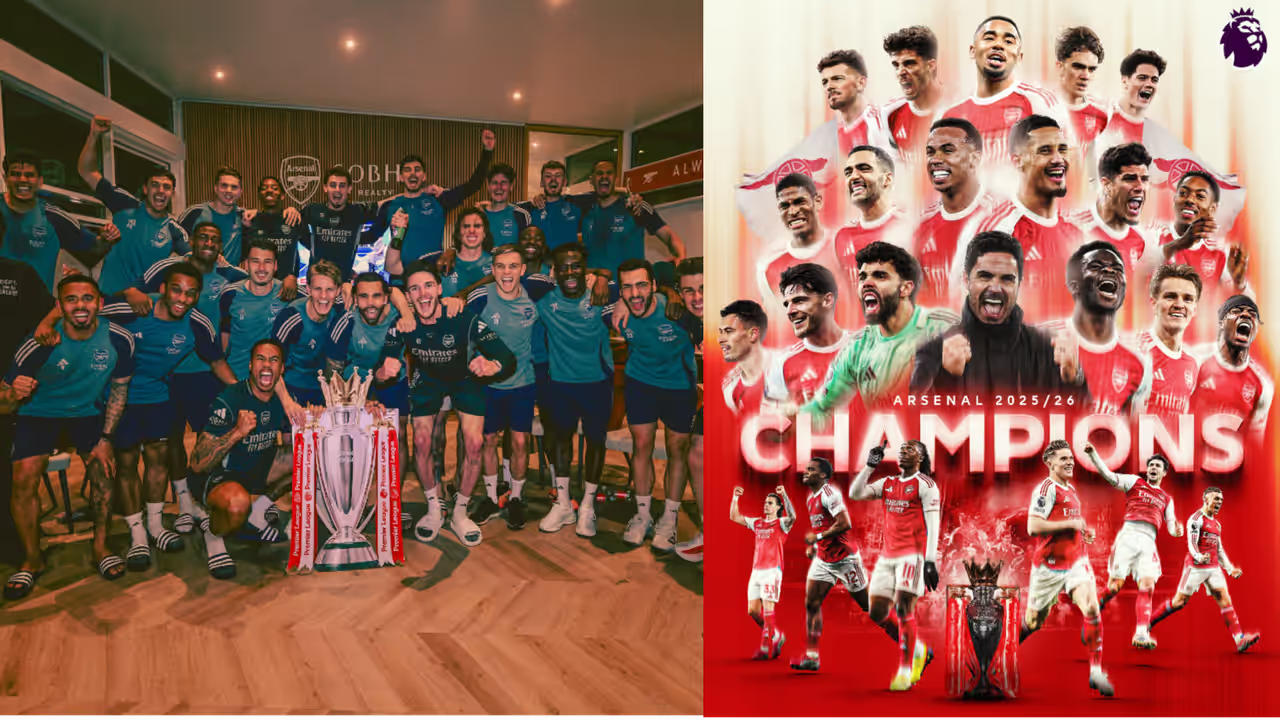
Arsenal Crowned Premier League Champions After 22 Years
For 22 years, Arsenal supporters carried the weight of longing.
A generation had grown up without witnessing their club lift the Premier League trophy. They had lived through the late Wenger decline, the chaos of the post-Wenger years, humiliating defeats, broken promises, and seasons that always seemed to collapse just before glory arrived.
And perhaps that is why this title means more.
Not because Arsenal were perfect. Not because they stormed through the season untouched. But because they finally learned how to survive.
This was not simply a football team winning matches. It was a club learning how to heal old scars.
And at the centre of it all stood Mikel Arteta — obsessive, emotional, relentless, and finally vindicated.
🏆 ARSENAL ARE CHAMPIONS 🏆 pic.twitter.com/l5GrveCpZg
— Premier League (@premierleague) May 19, 2026


The Moment Arteta Refused to Panic
The season could have broken in April.
A damaging 2-1 defeat to Manchester City on April 19 left Arsenal wobbling dangerously. It came barely weeks after losing the EFL Carabao Cup final to the same opponents. Once again, the familiar fear crept in.
Was this another collapse?
Inside Arsenal’s London Colney training base, though, the response was startlingly calm.
Three years of finishing second behind his mentor Pep Guardiola had changed Arteta. Previous heartbreaks had taught him something vital: when pressure reaches unbearable levels, suffocating players with intensity can destroy them.
So instead of anger, he chose release.
The squad were given two days off. When they returned, there were no furious meetings, no tactical autopsies, no exhausting drills designed to punish failure.
Instead, Arteta hit reset.
Players were divided into small teams for light-hearted five-a-side games. Staff and players gathered for a barbecue at the training ground. Laughter replaced tension. Conversations drifted away from football. The atmosphere softened.
It sounds small. Almost insignificant.
But inside elite sport, tiny emotional shifts can decide entire seasons.
Away from cameras and headlines, Arsenal slowly rebuilt their spirit.
The club that had spent years being labelled “nearly men” suddenly began behaving like champions.
We did it, together. pic.twitter.com/wQDp02LvLd
— Arsenal (@Arsenal) May 19, 2026
Building a Squad Strong Enough to Survive
One of Arteta’s biggest frustrations in previous campaigns had been injuries.
Privately, he believed Arsenal’s title challenges had repeatedly fallen apart because the squad simply lacked the depth required to compete across every competition.
By January 2025, that pressure became impossible to ignore.
During one press conference, a journalist once again questioned Arsenal’s failure to sign a striker. Arteta delivered his usual controlled answer — insisting the club were “actively looking in the market.”
But when the cameras stopped rolling, his frustration finally surfaced.
He reportedly marched toward the journalist and fixed him with a cold stare from close range. The strain had clearly been building for months.
This time, Arsenal refused to repeat old mistakes.
The club committed heavily in the summer transfer window, spending around £250 million to reshape the squad. Most importantly, they finally signed the centre-forward supporters had demanded for years: Viktor Gyokeres.
The former Coventry striker needed time to settle, but his 14 league goals proved decisive by season’s end.
He was not alone.
Arsenal also strengthened across midfield and defence, bringing in players including Martin Zubimendi and Noni Madueke.
Andrea Berta’s Instant Impact at the Emirates
The architect behind that rebuild was Arsenal’s new sporting director, Andrea Berta, appointed after the shock departure of Edu.
Berta quickly became a popular figure internally.
The day after his appointment, he surprised journalists waiting at London Colney by casually greeting them before Arteta’s press conference. Arteta silently waited nearby until Berta finished speaking. When the Italian finally noticed him, the pair embraced warmly and laughed together before walking away.
It was a brief moment, but revealing.
People inside Arsenal immediately sensed chemistry between the two men.
Soon after, Berta handed custom red ties to club executives before Arsenal’s Champions League quarter-final against Real Madrid.
Arsenal won the first leg 3-0.
Executives wore the same ties again at the Bernabeu for the return fixture — believing them to be lucky charms after another victory secured a semi-final place.
Football clubs are built on tactics and talent. But sometimes they are also built on superstition, belief, and emotional connection.
Depth Became Arsenal’s Greatest Weapon
In previous years, injuries had shattered Arsenal’s momentum.
This season, the squad finally looked prepared.
Even when six players were unavailable for a Champions League clash against Club Brugge in December, Arsenal comfortably won 3-0.
That resilience mattered enormously.
Arteta finally had options everywhere: multiple defenders for each role, midfield balance through Zubimendi, and genuine attacking depth.
The days of emergency solutions were gone.
No more makeshift full-backs. No more desperate reliance on players like Rob Holding during title run-ins. No more academy teenagers filling Champions League benches during crucial knockout ties.
Depth was no longer treated as a luxury.
At Arsenal, it became survival.
And two players ultimately transformed Arsenal from challengers into champions: Declan Rice and David Raya.
Rice brought control, authority, and leadership to midfield. Raya repeatedly rescued Arsenal with match-saving interventions.
One controlled the rhythm of games. The other controlled moments of chaos.
Together, they gave Arsenal stability they had lacked in previous collapses.
The Pressure That Nearly Consumed Them
Success brought a different kind of fear. For years, Arsenal fans desperately wanted a title challenge. But as the season intensified, hope slowly transformed into anxiety.
The Emirates began feeling tense.
A home defeat against Manchester United in January produced genuine boos from supporters after Matheus Cunha’s late winner completed a miserable run.
By March, even victories were met with groans.
Then came a damaging home loss against AFC Bournemouth — a match that could have moved Arsenal 12 points clear. Instead, frustration exploded around the stadium.
Players noticed it.
They spoke privately about the atmosphere. It became impossible to ignore.
Arteta himself seemed increasingly tense.
Before one match, he passionately urged supporters to arrive early and create noise: “Bring your lunch, bring your dinner…”
Then Arsenal produced a dreadful performance.
Days later came one of his strangest press conferences.
“No fear. Pure fire,” Arteta declared emotionally before a Champions League match against Sporting CP.
As he continued speaking, it felt less like a media briefing and more like a man pleading for recognition.
He reminded reporters Arsenal had reached the Champions League quarter-finals three seasons in a row. He argued that achievements once considered impossible were now being taken for granted.
The pressure was visible.
For perhaps the first time during his reign, Arteta looked vulnerable.
Then came the defeat at the Etihad.
And somehow, that became the turning point.
These streets are our own ❤️🔥 pic.twitter.com/6vGfNKsNNI
— Arsenal (@Arsenal) May 20, 2026
The Psychological Shift That Changed Everything
After the Manchester City loss, Arteta subtly altered his approach.
Internally, he became more careful with messaging around fans and expectations. He recognised the growing nervousness around the club and knew more emotional pressure could damage the squad.
At the same time, Arsenal actively tried to reconnect supporters with the team.
Ahead of a Champions League quarter-final against Sporting, fans involved in designing a stadium tifo were invited to attend open training and meet players and staff.
Arteta personally supported supporter-led atmosphere initiatives.
One proposal from REDAction Gooners involved organising a “greet the coach” event before Arsenal’s Champions League semi-final against Atletico Madrid.
Arteta reportedly loved the idea immediately.
The result was unforgettable.
Hours before kick-off, thousands of supporters flooded streets around the Emirates with red smoke, flares, chants and deafening noise.
Many inside the club described it as the greatest atmosphere in the stadium’s history.
At precisely the moment tension threatened to consume Arsenal, Arteta managed to unite the crowd behind the players again.
That emotional alignment changed the season.
Arteta’s Kingdom
When Arteta arrived in 2019, Arsenal felt broken.
The dressing room lacked discipline. Standards had collapsed. Toxicity lingered everywhere.
One of his earliest priorities was cultural cleansing.
Senior figures like Pierre-Emerick Aubameyang, Mesut Ozil and Matteo Guendouzi eventually exited as Arteta rebuilt leadership around younger figures like Martin Odegaard and Bukayo Saka.
Inside the club, Arteta’s control extended far beyond tactics.
Departments like nutrition and sports science operated under his close oversight. Staff would present ideas and data, but ultimately Arteta made the decisions.
Some outsiders viewed it as excessive.
Inside Arsenal, it was seen differently.
Everything had to align with his vision.
Arteta’s obsession with detail became legendary.
During one press conference, he interrupted a journalist mid-question simply to point out that the reporter had changed seats.
Nothing escaped his attention.
Yet beneath the intensity was another side.
When a staff member’s son experienced bullying at school, Arteta invited him to train with players and spend time around the club.
When Raya signed, Arteta arranged a custom Arsenal shirt for the goalkeeper’s grandfather.
Those gestures mattered deeply inside the dressing room.
Players did not simply respect Arteta.
Many genuinely loved him.
The Mental Battle Arsenal Finally Won
There were still painful moments.
A 2-2 draw with Wolverhampton Wanderers exposed defensive cracks, with Raya and Gabriel arguing furiously after conceding late.
The Bournemouth defeat was even worse.
Arsenal looked emotionally fragile, overwhelmed by the burden of being chased by Manchester City.
That had always been Guardiola’s greatest strength.
For years, City hunted relentlessly once Arsenal stumbled. Winning streaks of 11 matches, then nine matches, had previously crushed Arsenal’s dreams.
This season felt different.
City repeatedly failed to punish Arsenal’s mistakes.
Their chaotic 3-3 draw against Everton became symbolic. For once, Guardiola’s machine looked vulnerable.
And Arsenal finally sensed it.
After losing at the Etihad, they responded with four consecutive league wins without conceding a goal.
No panic. No collapse. No surrender.
The old Arsenal would have folded.
This version endured.
The Set-Piece Machine That Powered Arsenal to Glory
Not everyone admired Arsenal’s football.
Opposition managers complained frequently about their aggressive set-piece routines. Critics mocked their physicality. Rivals accused them of bending rules.
Arteta did not care.
Neither did Arsenal supporters.
The numbers were devastating.
Arsenal scored 24 league goals from set-pieces — more than any other team in the Premier League.
When opponents defended deep, Arsenal often found salvation through corners and free-kicks.
Set-piece coach Nicolas Jover became one of the most influential figures behind the scenes.
His decision to make Declan Rice Arsenal’s primary set-piece taker transformed their attacking threat.
One symbolic detail captured Arteta’s mindset perfectly.
For away matches, Arsenal carried a banner reading “BASICS” into dressing rooms.
It stood for: Boxes. Attack. Shape. Intensity. Compete. Set-pieces.
To Arteta, those details were not secondary.
They were everything.
The End of the Wait
Arsenal did not become champions because they suddenly turned flawless.
They became champions because they evolved emotionally.
For years, setbacks destroyed them. Pressure suffocated them. Fear consumed them.
This time, they survived the moments that once broke them.
They absorbed tension instead of collapsing beneath it.
And when Manchester City finally left the door open, Arsenal walked through it without hesitation.
For supporters who waited 22 years, this was more than a title.
It was release. It was redemption. It was proof that heartbreak does not last forever.
Arsenal were no longer contenders.
At long last, they were champions.
Party on the streets of north London 🕺 pic.twitter.com/JtWl6fjOMf
— Arsenal (@Arsenal) May 19, 2026
Stay on top of all the latest Sports News, including Cricket News, Football News, WWE News, and updates from Other Sports around the world. Get live scores, match highlights, player stats, and expert analysis of every major tournament. Download the Asianet News Official App from the Android Play Store and iPhone App Store to never miss a sporting moment and stay connected to the action anytime, anywhere.