- Home
- Sports
- IND vs SA, T20 World Cup: 5 Key Takeaways from India’s 76-Run Defeat to South Africa in Super 8 Clash
IND vs SA, T20 World Cup: 5 Key Takeaways from India’s 76-Run Defeat to South Africa in Super 8 Clash
India suffered their heaviest T20 World Cup loss, beaten by 76 runs by South Africa in the Super 8. The defeat leaves the Men in Blue’s semifinal hopes in serious jeopardy.
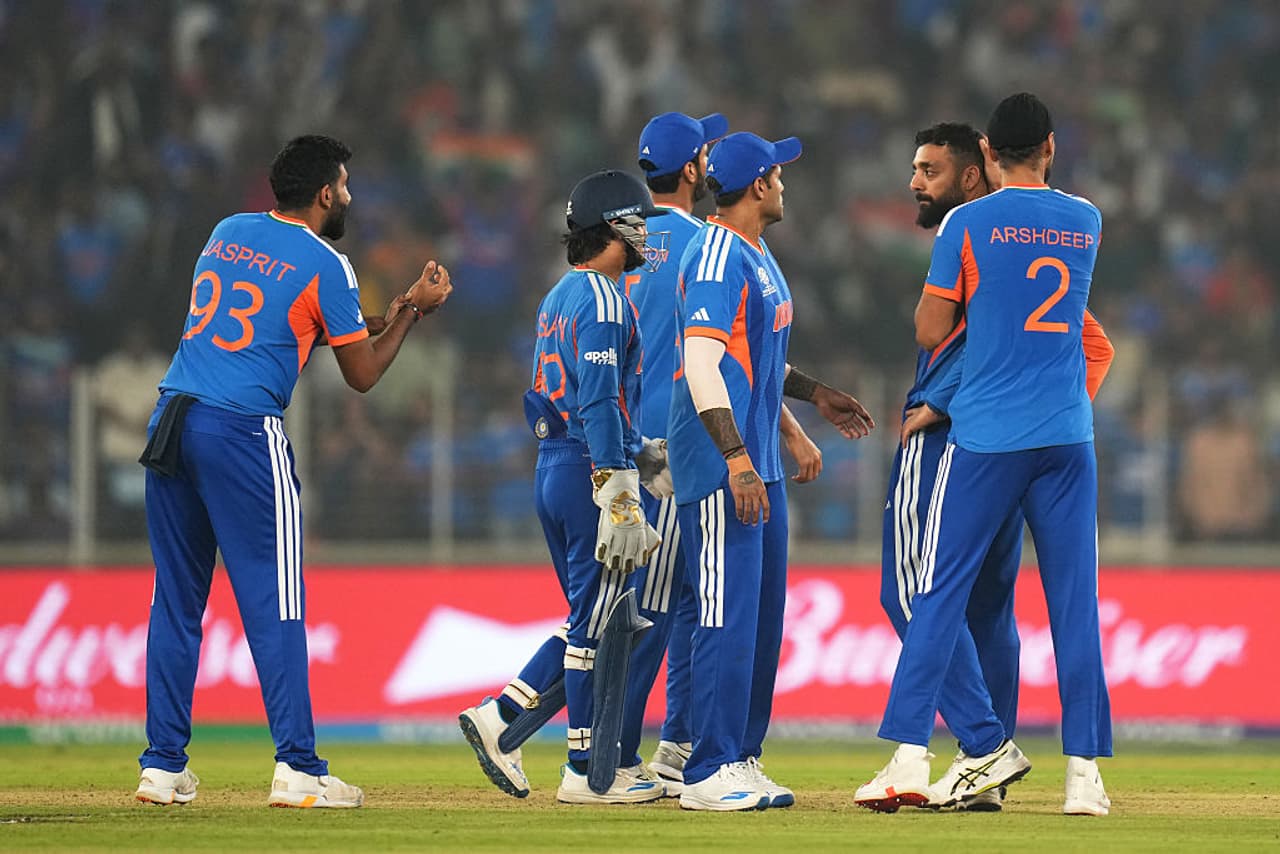
India Register Heaviest Defeat in T20 World Cup History
Team India suffered their first setback of the T20 World Cup 2026 with a heavy 76-run defeat to South Africa in the Super 8 clash at the Narendra Modi Stadium in Ahmedabad on Sunday, February 22.
With an 188-run target, Team India batters succumbed to pressure from South Africa’s disciplined bowling attack and sharp fielding as the Men in Blue folded for just 111 in 18.5 overs. This was India’s heaviest defeat by runs in the history of the T20 World Cupm surpassing their 49-run loss to Australia in the 2010 edition.
Moreover, the defeat to South Africa has put India’s semifinal chances in jeopardy as the Men in Blue's net run rate (NRR) currently stands at -3.888. Significantly denting their qualification hopes and leaving them in a must-win situation for the remaining Super 8 matches against Zimbabwe and the West Indies.
On that note, let’s take a look at key takeaways from the Men in Blue’s defeat to South Africa in Ahmedabad.


1. Benching Axar Patel For Washington Sundar a Tactical Error
One of the major takeaways from India’s defeat to South Africa was the surprise exclusion of vice-captain and spin bowling all-rounder Axar Patel for Washington Sundar for a crucial Super 8 match in Ahmedabad. Axar was rested for the Men in Blue’s final group stage match against the Netherlands to give a chance to Washington Sundar, who had yet to play a game since his return to the squad following recovery from a side strain.
However, the team management’s decision to bench Axar Patel completely backfired as Washington Sundar was less impactful with the bat and ball. Sundar conceded 17 runs at an economy rate of 8.5 in his spell of two overs and scored 11 off 11 balls at a strike rate of 100, failing to make a significant impact with either bat or ball in a high-pressure encounter.
2. Middle-Overs Bowling Struggles
Team India’s bowling in the middle overs was quite inconsistent, as they failed to contain the flow of runs under pressure. Despite Jasprit Bumrah and Arshdeep Singh providing early breakthroughs by reducing the Proteas to 20/3, the bowlers couldn’t capitalise on momentum as David Miller and Dewald Brevis stitched a crucial 97-run partnership to take South Africa neary 120-run mark by the 13th over.
In the middle overs, India conceded 111 runs for just two wickets, meaning that they leaked runs at over nine per over during that phase, allowing the Proteas to seize control of the match and shift the momentum firmly in their favour. This highlights a serious concern for India’s bowling unit, particularly their inability to apply sustained pressure in the middle overs phase, where containing the flow of runs and picking key wickets often proves decisive in a T20 contest.
3. Jasprit Bumrah's Economical Spell
As other Indian bowlers struggled to maintain their lines and lengths, Jasprit Bumrah stood out with a disciplined and economical spell. Bumrah registered the figures of 4/15 at an economy rate of 3.75. In his first two overs of the spell, Bumrah conceded just seven wickets, picking crucial wickets of Quinton de Kock and Ryan Rickelton in the powerplay, reducing the Proteas to 20/3.
After being dominated by South Africa batters, Bumrah was brought back into the attack in the death overs and gave away just five runs in the 17th over. In the penultimate over of India’s bowling, the Indian pacer further choked the Proteas’ momentum as he conceded just three runs and picked a wicket of Corbin Bosch. Throughout his four-over spell, Bumrah did not concede more than five runs in a single over.
4. Recurring Top-Three Inconsistency
One of the major key takeaways from India’s heavy defeat to South Africa was continued, as was continued instability in the top order, as India lost three early wickets inside the powerplay, Ishan Kishan (0), Abhishek Sharma (15) and Tilak Varma (1), leaving them reeling at 26/3 in 4.3 overs. In the second successive match, Kishan failed to fire, while Abhishek has yet again struggled to deliver a substantial knock at the top after three successive ducks, and Tilak hasn’t made a significant impact yet.
Inconsistency in the top-three batting order has often left the middle order to carry the burden of rebuilding under pressure, disrupting the team’s momentum, and limiting their ability to control the tempo of the innings in crucial phases. However, the middle order also failed to step up in crucial situations, exposing a lack of collective responsibility in high-pressure chases and underlining deeper concern over India’s batting cohesion in Super 8.
5. Shivam Dube’s Lone Fight Amid Batting Collapse
Chasing an 188-run target, Team India had a disastrous start to their innings as they collapsed to 51/5 in 9.1 overs and posted a total of 57/5 by the end of the 10th over. This means India lost half of their side under 60 runs, leaving the middle order with a steep task against South Africa’s disciplined bowling attack and sharp fielding.
Amid the batting collapse, Shivam Dube, who has been India’s most impactful batter and clutch performer for India, stood tall like a lone warrior and attempted to steady the innings with a fighting 42 off 37 balls, showing composure even when wickets were kept falling at the other end. Though his effort eventually didn’t pay off, Dube’s knock ensured India crossed the 100-run mark and avoided an even more damaging blow to their Net Run Rate.
Stay on top of all the latest Sports News, including Cricket News, Football News, WWE News, and updates from Other Sports around the world. Get live scores, match highlights, player stats, and expert analysis of every major tournament. Download the Asianet News Official App from the Android Play Store and iPhone App Store to never miss a sporting moment and stay connected to the action anytime, anywhere.