- Home
- Sports
- IND vs NZ, 2nd T20I: 5 Key Takeaways from India’s 7-Wicket Win Over New Zealand in Raipur
IND vs NZ, 2nd T20I: 5 Key Takeaways from India’s 7-Wicket Win Over New Zealand in Raipur
India took a 2-0 lead with a seven-wicket win in Raipur, chasing 209 in style. Suryakumar Yadav (82*) and Ishan Kishan (76) starred in a record run chase as India sealed a dominant victory.
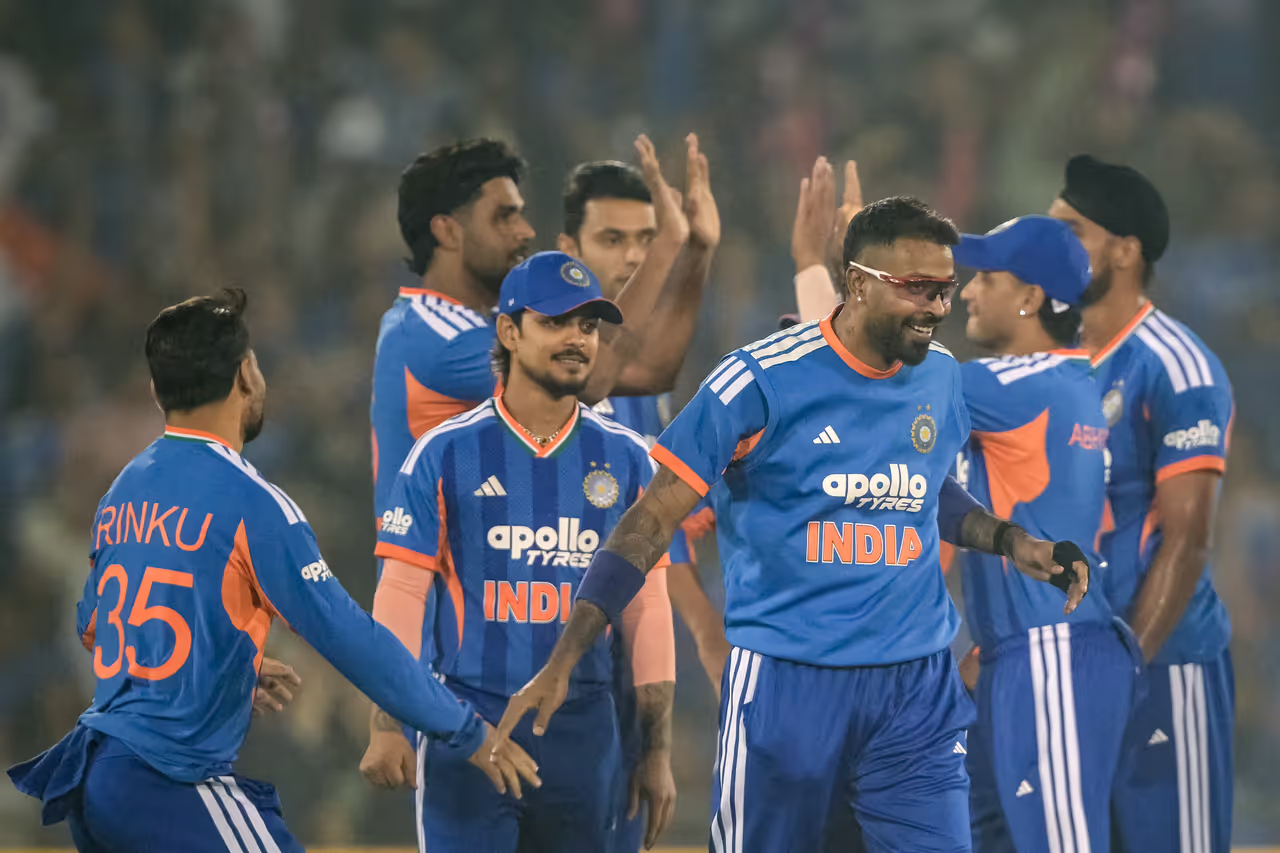
India's Batting Dominates New Zealand in Raipur T20I
Team India took a 2-0 lead in the five-match T20I series with a dominant seven-wicket win over New Zealand in the second outing at the Shaheed Veer Narayan Singh International Stadium in Raipur, Chhattisgarh, on Friday, January 23.
With a mammoth target of 209 set by New Zealand, Team India chased it down with 28 balls to spare, despite early setbacks, thanks to explosive performances by Suryakumar Yadav (82*) and Ishan Kishan (76), and a vital contribution from Shivam Dube (36*) to seal one of their most emphatic T20I victories. The Men in Blue will aim for an unassailable series lead in the third T20I in Guwahati.
On that note, let’s take a look at key takeaways from Team India’s win over New Zealand in the Raipur T20I.


1. Bumrah-less Pace Attack Struggles
Team India’s pace bowling attack struggled to contain the flow of New Zealand’s runs as the visitors went aggressive in the powerplay and never let the pressure build before the late surge by skipper Mitchell Santner guided the Kiwis to a commanding total. Indian pacers, especially Arshdeep Singh and Harshit Rana, could not create pressure on New Zealand batters, despite the latter providing an early breakthrough by dismissing opener Devon Conway.
Arshdeep had a worst outing as he conceded 18 runs each in two overs and went wicketless while giving 53 runs at an economy rate of 13.2 in his spell of four overs. Though Harshit drew the first blood, he failed to capitalize on the breakthrough as he conceded 35 runs at an economy rate of 11.70 in three overs. Hardik Pandya picked a wicket but conceded 25 runs in his spell of 3 overs.
In the absence of Jasprit Bumrah, who was rested for the second T20I, India’s pace attack lacked the usual incisiveness and control, putting extra pressure on the spinners to contain New Zealand’s aggressive batting.
2. Sanju Samson’s Opener Spot Under Spotlight
Team India wicketkeeper-batter Sanju Samson’s opener spot came under the spotlight after he yet again failed to deliver in the T20I series against New Zealand. In the opening match in Nagpur, Samson was dismissed for just 10 runs. This was followed by another failure in the Raipur T20I, as he was dismissed for just 6 runs after smashing a maximum.
Samson was reinstated as an permanentopener after the BCCI selection committee excluded Shubman Gill from the India squad for the T20I series against New Zealand and the upcoming edition of the T20 World Cup. Sanju Samson batted at the top of the order before Gill was accommodated as an opener on his return to the T20I setup.
However, after two consecutive failures in the T20I series against New Zealand, Sanju Samson’s consistency at the top of the batting order raised questions, putting his place as India’s first-choice opener under scrutiny ahead of the T20 World Cup 2026
3. Ishan Kishan’s Counter-Attack Innings
The left-handed batter did not have an ideal return to the national side after he was dismissed for just 8 runs in the first T20I at Nagpur. However, Ishan Kishan bounced back strongly and made a statement with his fiery knock, boosting his confidence ahead of the T20 World Cup 2026.
Ishan Kishan played an explosive innings of 76 off 32 balls, including nine fours and four maximums, at an impressive strike rate of 237.50. After losing openers early, Ishan took charge of India’s run chase and dominated the New Zealand bowling attack with his aggressive strokeplay and fearless intent, ensuring that the run rate was not spiraled out of control while putting relentless pressure on the New Zealand bowlers.
The southpaw formed a match-defining 122-run stand for the third wicket with India skipper Suryakumar Yadav, lifting the Men in Blue after early setbacks in their run chase.
4. Suryakumar Yadav’s Return to ‘Vintage’ Form
After going through a lean patch in 2025, India T20I skipper Suryakumar Yadav returned to his original form with his explosive captain’s knock of 82 off 37 balls, including 11 fours and 4 sixes, at an impressive strike rate of 221.62, helping the Men in Blue chase down the mammoth target set by New Zealand with 28 balls to spare.
Suryakumar brought up his fifty in just 23 balls, ending his 468-day drought of a half-century. After Ishan Kishan’s wicket, the veteran batter took charge of India’s run chase and accelerated effortlessly, dismantling New Zealand’s bowling attack with his trademark strokeplay and ensuring that India never lost control of the chase.
Suryakumar Yadav also formed an unbeaten 81-run partnership with Shivam Dube to help India chase down the target before the death overs
5. World Record Run Chase in T20Is
The individual performances, especially from Suryakumar Yadav and Ishan Kishan, powered a record run chase. The Men in Blue chased down 209 in just 15.2 overs, registering the fastest successful 200+ run chase by a full-member nation in T20I history. Team India recorded their joint-highest successful run chase in the history of the shortest format of the game at the international level.
Moreover, Team India became the first full-time member to chase down the target of over 200 after being two down in less than 10 runs, highlighting India’s fearless batting depth and ability to dominate high-pressure run chases in T20Is.
The Men in Blue’s victory was a dominant statement win that underlined their explosive batting firepower and growing confidence heading into the T20 World Cup 2026.
Stay on top of all the latest Sports News, including Cricket News, Football News, WWE News, and updates from Other Sports around the world. Get live scores, match highlights, player stats, and expert analysis of every major tournament. Download the Asianet News Official App from the Android Play Store and iPhone App Store to never miss a sporting moment and stay connected to the action anytime, anywhere.