MalayalamNewsableKannadaKannadaPrabhaTeluguTamilBanglaHindiMarathiMyNation
Add Preferred SourceGoogle-icon
  • Facebook
  • Twitter
  • whatsapp
  • YT video
  • insta
  • Latest News
  • India
  • World
  • Business
  • Markets
  • Sports
  • Entertainment
  • Technology
  • Auto
  • Lifestyle
  • Home
  • Technology
  • Science
  • Last solar eclipse of 2020 today: Everything you need to know

Last solar eclipse of 2020 today: Everything you need to know

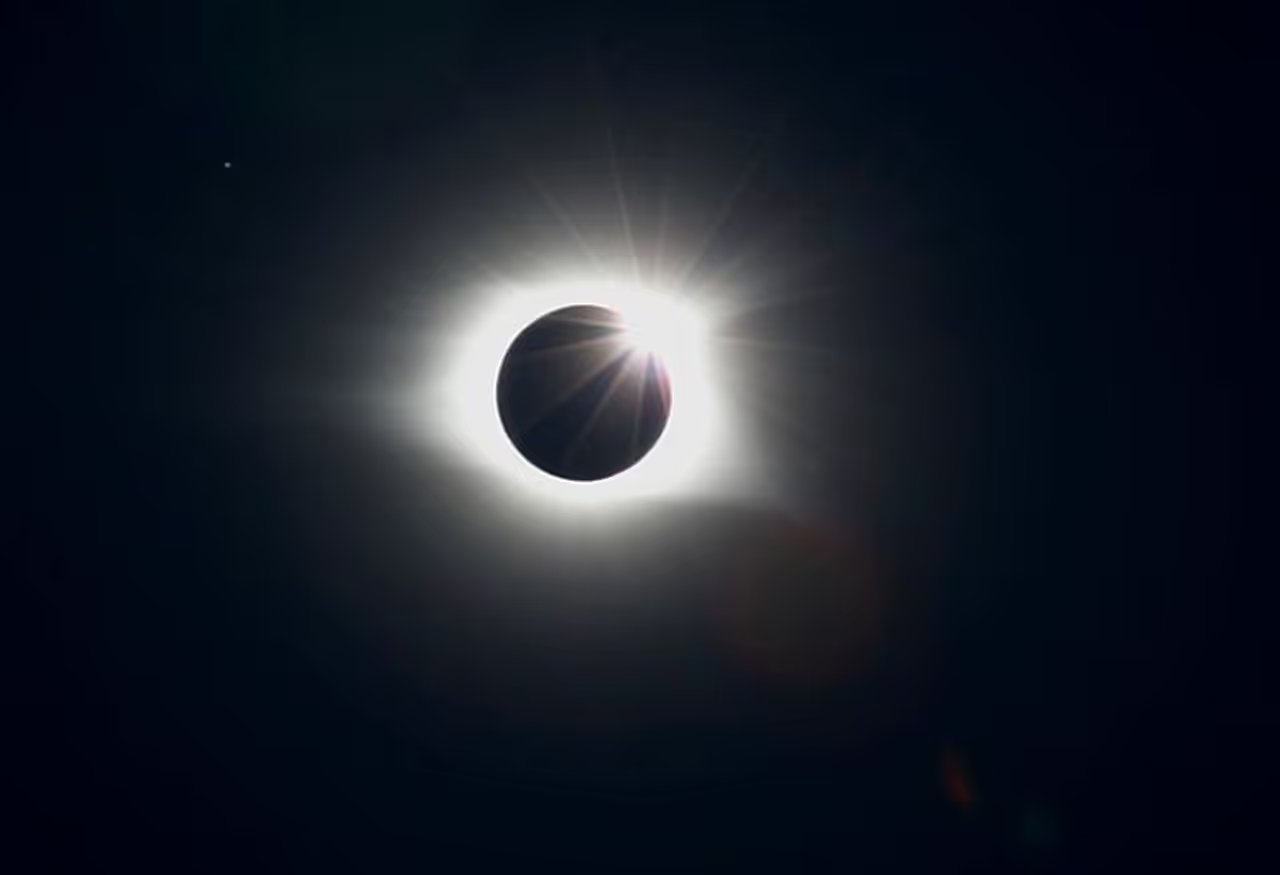
The second and final solar eclipse of 2020 will be a total solar eclipse. However, only people living in South American countries of Chile and Argentine would be able to witness the total eclipse.
1 Min read
Asianet Newsable English
Published : Dec 14 2020, 09:53 AM IST
Share this Photo Gallery
  • FB
  • TW
  • Linkdin
  • Whatsapp
  • GNFollow Us
12
<p>According to reports, the celestial event will begin at 7:03 PM IST and will peak at 9:43 PM IST before ending at 12:23 AM IST on December 15.<br />&nbsp;</p><p>Those in India need not be disaheartened. Those wanting to see the celestial awe inspiring moment can view it live courtesy US space agency NASA.<br />&nbsp;</p><p>According to solareclipse.info, the next total solar eclipse that will be visible from India is expected to happen on March 20, 2034.</p>

<p>According to reports, the celestial event will begin at 7:03 PM IST and will peak at 9:43 PM IST before ending at 12:23 AM IST on December 15.<br />&nbsp;</p><p>Those in India need not be disaheartened. Those wanting to see the celestial awe-inspiring moment can view it live courtesy US space agency NASA.<br />&nbsp;</p><p>According to solareclipse.info, the next total solar eclipse that will be visible from India is expected to happen on March 20, 2034.</p>

According to reports, the celestial event will begin at 7:03 PM IST and will peak at 9:43 PM IST before ending at 12:23 AM IST on December 15.
 

Those in India need not be disaheartened. Those wanting to see the celestial awe-inspiring moment can view it live courtesy US space agency NASA.
 

According to solareclipse.info, the next total solar eclipse that will be visible from India is expected to happen on March 20, 2034.

Add Asianet Newsable as a Preferred SourcegooglePreferred
22
<p><strong>What's a solar eclipse?</strong><br />&nbsp;</p><p>A solar eclipse happens when the moon casts a shadow on Earth, fully or partially blocking the Sun's light in some areas.&nbsp;<br />&nbsp;</p><p>The total eclipse, when the Sun is completely blocked by the moon, will last up to 2 minutes and 40 seconds, depending on your location.<br />&nbsp;</p><p>Observers within the path of totality will be able to see the Sun's corona (weather permitting).&nbsp;Observers outside this path will see a partial eclipse.<br />&nbsp;</p><p>After the 2020 solar eclipse, the next total solar eclipse visible over South America will be on Saturday, December 4, 2021.</p>

<p><strong>What's a solar eclipse?</strong><br />&nbsp;</p><p>A solar eclipse happens when the moon casts a shadow on Earth, fully or partially blocking the Sun's light in some areas.&nbsp;<br />&nbsp;</p><p>The total eclipse, when the Sun is completely blocked by the moon, will last up to 2 minutes and 40 seconds, depending on your location.<br />&nbsp;</p><p>Observers within the path of totality will be able to see the Sun's corona (weather permitting).&nbsp;Observers outside this path will see a partial eclipse.<br />&nbsp;</p><p>After the 2020 solar eclipse, the next total solar eclipse visible over South America will be on Saturday, December 4, 2021.</p>

What's a solar eclipse?
 

A solar eclipse happens when the moon casts a shadow on Earth, fully or partially blocking the Sun's light in some areas. 
 

The total eclipse, when the Sun is completely blocked by the moon, will last up to 2 minutes and 40 seconds, depending on your location.
 

Observers within the path of totality will be able to see the Sun's corona (weather permitting). Observers outside this path will see a partial eclipse.
 

After the 2020 solar eclipse, the next total solar eclipse visible over South America will be on Saturday, December 4, 2021.

About the Author

AN
Asianet Newsable English
Latest Videos
Recommended Stories
Recommended image1
You Spend 78 Minutes Travelling Each Day, No Matter Where You Live or How You Travel
Recommended image2
Talking to the Dead with AI: The Promise, the Illusion, and the Business Behind It
Recommended image3
Who Was James Watson: The DNA Pioneer Who Changed Science Forever
Recommended image4
How GSAT-7R Makes India's Navy More Connected, Secure and Ready at Sea
Recommended image5
Why ISRO’s Heaviest Satellite Launch Marks a New Era for India's Space Power
News
Breaking News TodayLatest News TodayIndia NewsWorld NewsKarnataka NewsKerala NewsIndian Defence NewsBengaluru News
Entertainment
Entertainment NewsOTT ReleaseBigg BossMovie ReviewsBox Office Collection
Sports
Sports NewsCricket NewsFootball NewsWWE NewsOther Sports
Lifestyle
Lifestyle NewsFood and RecipesHealth NewsAstrologyCareer NewsWeb Stories
Business
Business newsShare Market NewsGold PriceDA Hike8th Pay CommissionTechnology NewsAutomobile News
Weather
WeatherKolkata WeatherChennai WeatherBengaluru Weather
Asianet
Follow us on
  • Facebook
  • Twitter
  • whatsapp
  • YT video
  • insta
  • Download on Android
  • Download on IOS
  • About Website
  • Terms of Use
  • Privacy Policy
  • CSAM Policy
  • Complaint Redressal - Website
  • Compliance Report Digital
  • Investors
© Copyright 2025 Asianxt Digital Technologies Private Limited (Formerly known as Asianet News Media & Entertainment Private Limited) | All Rights Reserved