- Home
- International
- Illegal Biolab Found Inside Las Vegas Home, Raises Questions About Future Pandemic Risks
Illegal Biolab Found Inside Las Vegas Home, Raises Questions About Future Pandemic Risks
Authorities in Las Vegas have uncovered a suspected illegal biological laboratory inside a home owned by a Chinese national linked to a similar case in California. Police found pathogen-labelled containers, lab equipment and around 1,000 mice.
Suspected Illegal Biological Lab Found Inside Las Vegas Home
Federal and local authorities have uncovered what they allege was an illegal biological laboratory operating inside a residential home in Las Vegas. The property is located on Sugar Springs Drive, near Washington Avenue and Hollywood Boulevard, according to a report by Daily Mail.
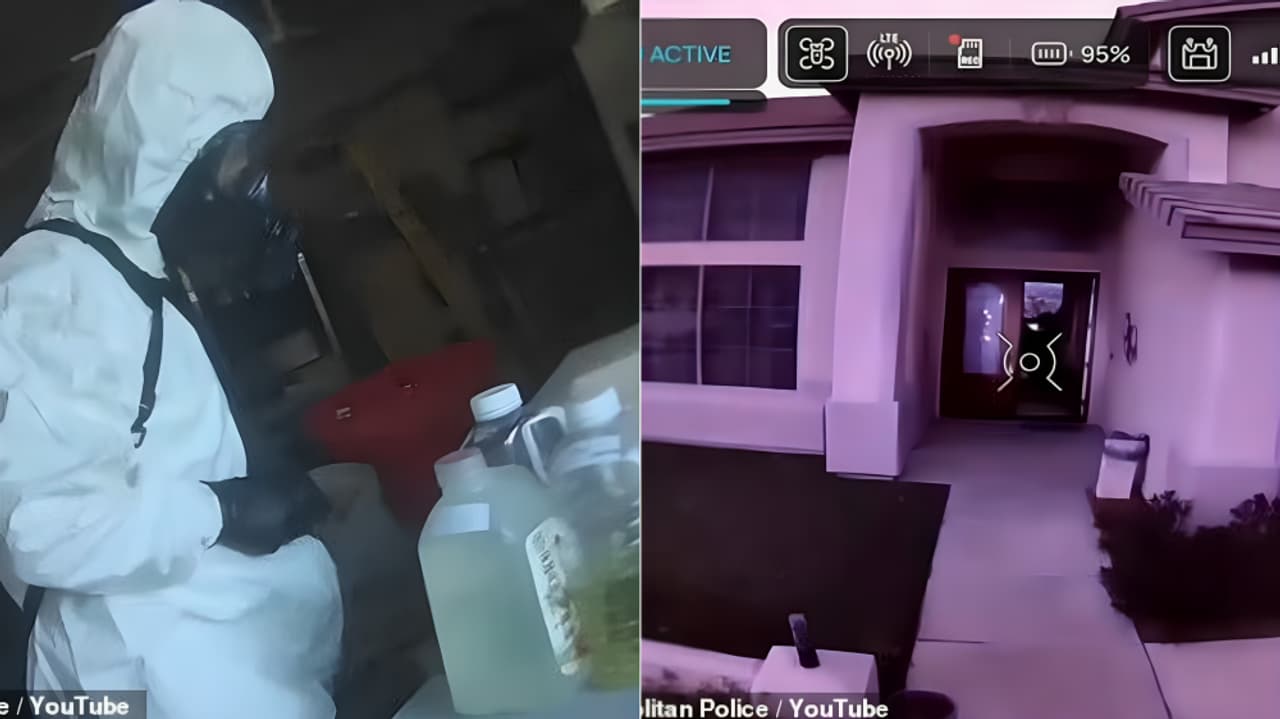
Newly released video from the Las Vegas Metropolitan Police Department (LVMPD) shows officers and hazmat teams wearing full protective gear as they entered the home. Agents were seen removing bags of medical tubing, vials, sealed containers, and other lab-related materials from the house.
The operation took place on Saturday after police obtained a search warrant and decided special safety steps were needed.
The discovery has raised fresh concerns among officials and lawmakers about the risk of unregulated biological work triggering another pandemic-type threat if such activities go unchecked.
Large amount of biological material discovered
During a press briefing on Monday, LVMPD Sheriff Kevin McMahill said investigators found a “significant volume of material” stored inside refrigerators and freezers throughout the house.
These included small vials and larger containers filled with liquids of different colours and unknown content. Some containers were marked with bio-safety labels.
McMahill said the scale of the discovery raised serious concerns and required immediate involvement from federal agencies.


Pathogen labels alarm investigators
Police said they found containers labelled with names of serious diseases. These labels reportedly included 'dengue fever', 'HIV', and 'malaria'. Other reports said labels such as 'COVID' and ‘Ebola’ were also seen.
Authorities stressed that the labels alone do not confirm the presence of live viruses. However, the discovery was treated as highly sensitive and dangerous.
More than 1,000 samples were collected from the home and sent for testing, according to Christopher Delzotto, the special agent in charge of the FBI’s Las Vegas field office.
1,000 mice found inside the property
Investigators also found around 1,000 mice inside the home. Police did not immediately say what the mice were being used for, but confirmed they were taken as evidence.
Sheriff McMahill said the biological material and equipment were mostly located in a locked garage, which appeared to be the main area used for lab activity.
Special equipment seized
According to the FBI, the initial search uncovered several items commonly used in laboratories. These included a bio-safety hood, bio-safety warning labels, a centrifuge, multiple refrigerators, and gallon-sized containers filled with red-brown liquid.
Small vials containing unidentified substances were also found stored in cold conditions.
Authorities said these findings raised further questions about how long the operation may have been running and what its purpose was.
Property manager arrested
Police arrested 55-year-old Ori Solomon, who was identified as the property manager for the Sugar Springs Drive home and another nearby property on Temple View.
Both locations were searched as part of the investigation. Authorities later confirmed that other locations linked to Solomon were checked but ruled out.
Solomon’s exact role in the suspected lab has not yet been explained in detail. Investigators said the case is still in its early stages.
Home owned by suspect linked to California case
Police confirmed that the Las Vegas home is owned by Jia Bei Zhu, a Chinese national already linked to a previous illegal biological laboratory case in Reedley, California, discovered in 2023.
Zhu has remained in custody since that earlier case and is scheduled to go on trial in April.
The California lab discovery led to a congressional investigation, which found that thousands of biological samples were stored at the site. Many were labelled as possible pathogens, including HIV, malaria, tuberculosis, COVID-19 and Ebola.
Attorney denies involvement
Zhu’s lawyer, Anthony Capozzi, said on Monday that his client has been in federal custody for three years and is not involved in the Las Vegas case.
“He is not involved in any kind of biolab being conducted in a home in Las Vegas,” Capozzi said. “What went on in that residence, we are unaware of.”
Authorities have not charged Zhu in connection with the Las Vegas investigation so far.
Robots and air testing used
Sheriff McMahill said police used a robot to help clear the house safely before officers entered. Multiple air samples were also taken to check for harmful substances.
Three people were renting rooms in the Sugar Springs home at the time of the raid. Police said they were safely evacuated and are not connected to the suspected lab or the investigation.
Links to earlier California lab
McMahill said the materials found in Las Vegas were “consistent” with what investigators saw in the Reedley case.
In California, authorities said the lab allegedly received millions of dollars from Chinese banks. Investigators also found nearly 1,000 genetically modified mice designed to mimic the human immune system.
Lab workers there reportedly told officials the mice were created to catch and carry the COVID-19 virus.
A freezer labelled “Ebola” was also found in the California lab. Ebola is classified as a Select Agent and can be fatal in 25 to 90 per cent of cases.
Authorities still searching for answers
Sheriff McMahill said investigators do not yet know why the biological materials were stored in the Las Vegas home or how they were meant to be used.
“These are the hardest questions,” he said, adding that the next phase of the investigation will focus on identifying the substances, their source, and their intended purpose.
Lawmakers call for action
Congressman Kevin Kiley of California has called for a hearing on a bill aimed at stopping illegal laboratories from operating in residential areas.
“This can’t keep happening,” Kiley said. “The federal government must do more to stop illegal labs from endangering our communities.”
He said the bill would close legal gaps that allow dangerous facilities to operate without detection.
Authorities said incidents like this underline fears about how illegal biological labs could pose pandemic-type risks if dangerous materials are mishandled or misused.