- Home
- Lifestyle
- Science Behind Eating Ghee With Hot Rice: 5 Surprising Health Benefits You Should Know
Science Behind Eating Ghee With Hot Rice: 5 Surprising Health Benefits You Should Know
Mixing ghee with hot rice is a traditional Indian habit with surprising health benefits. From supporting gut health to improving nutrient absorption, science explains why this simple combination matters.
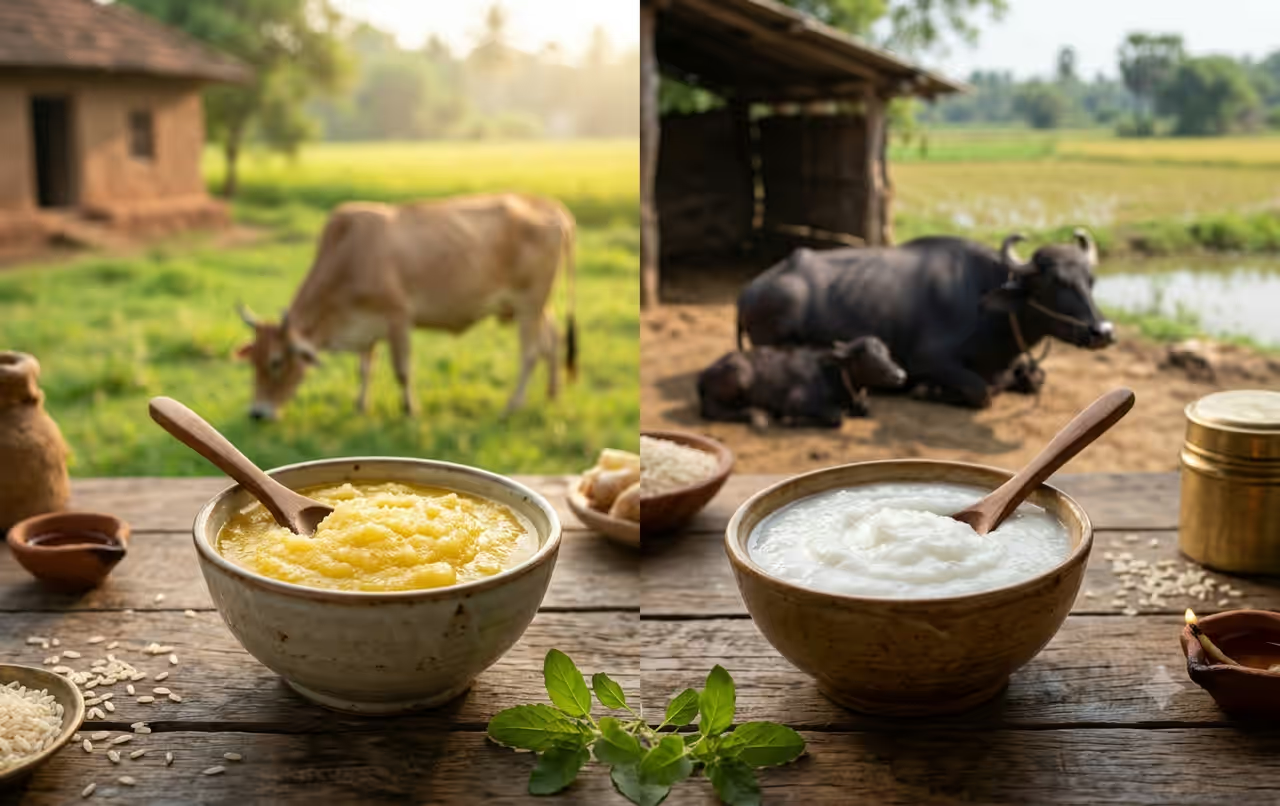
Why add ghee to hot rice?
We all feel a deep satisfaction when we mix a spoonful of golden ghee into steaming hot rice. South Indians love their ghee rice, while North Indian homes always add ghee to the first bite of dal-chawal. We have followed this tradition for generations.
Earlier, people thought it was just for the mouth-watering taste. But modern research shows solid science behind this habit. Adding a little ghee to hot rice as part of a balanced diet supports digestion. It also improves nutrient absorption, controls blood sugar levels, and maintains gut health.


Reduces carb absorption speed
White rice packs a lot of carbohydrates and has a high Glycaemic Index (GI). This can spike your blood sugar quickly. When you add fat to a carb-heavy meal, it slows down gastric emptying. Because of this, glucose enters your bloodstream slowly instead of rushing in.
A study published on ResearchGate tested this. Researchers gave white rice cooked with ghee in an open vessel to 103 Type-2 diabetes patients for 3 months. They checked HbA1c levels before and after this diet change. The results showed that HbA1c levels dropped for 86.41% of patients, while only 13.59% saw an increase.
Researchers concluded that ghee-cooked white rice did not spike blood sugar. Ghee is no magic pill, but adding a little to your rice gives you steady energy compared to eating plain rice.
Beneficial fatty acids
Ghee contains a lot of saturated fat, but it is naturally rich in short-chain and medium-chain fatty acids like butyric acid. The scientific world focuses heavily on butyrate because it gives essential energy to the inner cell walls of your colon. A review study titled 'Health benefits of ghee: Review of Ayurveda and modern science perspectives' notes this. It states that the fatty acids, vitamins, and bio-active compounds in ghee offer various health benefits.
Ayurveda says ghee helps with memory, digestion, nutrition, and rejuvenation. Modern studies explore how ghee impacts heart health, wound healing, and skin health. Research hints that ghee's unique fatty acid profile might have medical benefits, though we need more studies. A single teaspoon of ghee has low butyrate levels, so you cannot treat it as a full medical cure. Still, it massively boosts the nutritional value of traditional dairy fats.
Helps body absorb nutrients
Many vitamins and plant nutrients are fat-soluble. Your body absorbs them easily only when you pair them with healthy fats. For example, when you eat rice with carrots, spinach, pumpkin, or other greens, adding a teaspoon of ghee helps your body absorb vitamins A, E, K, and carotenoids like beta-carotene.
A 2022 study by Yao et al. confirms this. They found that eating fat with carotenoid-rich veggies boosts their bioavailability. Foods rich in unsaturated fatty acids do this best. So, our traditional Indian meal of rice, veggies, dal, and a little ghee naturally helps your body use all the nutrients.
Satisfaction and aroma
People have used ghee for centuries, and its rich aroma is a big reason why. Food scientists say the taste and smell of food help you feel satisfied after a meal. When your food gives you complete sensory satisfaction, you naturally stop craving unnecessary snacks. This varies from person to person, but sensory satisfaction remains a key part of healthy eating habits.
Ayurveda has long described ghee as a food that nourishes body tissues while igniting 'Agni', the digestive fire. Ayurvedic principles and modern nutrition science operate differently. Yet, modern scientific studies now prove many traditional views on digestion and nutrient absorption.
The same review study mentioned earlier notes that Ayurveda describes ghee (Ghrita) as a nourishing food and medicine. Ayurvedic texts link ghee to brain health, gut health, nutrition, vision, and respiratory wellness. Interestingly, the 'Charaka Samhita' includes ghee in its list of foods recommended for daily consumption.
Moderation is health
Ghee has many benefits, but it is high in calories. One teaspoon of ghee contains roughly 45 calories. The World Health Organization (WHO) and the American Heart Association (AHA) constantly advise limiting saturated fat intake to protect heart health. Healthy adults can safely add one to 2 teaspoons of ghee a day, provided they eat veggies, dals, whole grains, fruits, and exercise regularly.
This simple habit of mixing a spoonful of ghee into hot rice reminds us of the scientific logic behind our traditional diets. Ghee is not a magic cure for all problems. But it slows down carb absorption, helps your body take in vitamins, and lets you enjoy your meal with full satisfaction. As always, eating too much of anything is never healthy. True health lies in enjoying it in moderation as part of a balanced diet.
Explore the latest Lifestyle News covering fashion, wellness, travel, Food and Recipes, and more. Stay updated with trending Health News, fitness tips, and expert insights to inspire your daily living. Discover personalized lifestyle trends that keep you stylish and informed. Download the Asianet News Official App from the Android Play Store and iPhone App Store for everything that adds value to your everyday life.