- Home
- Lifestyle
- Orthodox Christmas 2026: History, Significance, Rituals; Why Is It Celebrated 13 Days After December 25
Orthodox Christmas 2026: History, Significance, Rituals; Why Is It Celebrated 13 Days After December 25
Orthodox Christmas 2026: Commemorates the birth of Jesus Christ through ancient traditions, fasting, prayer, and midnight liturgies, rooted in the Julian calendar followed by many Eastern Orthodox churches
Orthodox Christmas
Orthodox Christmas in 2026 will be observed on Tuesday, January 7, by millions of Christians across Eastern Europe, Africa, and the Middle East. While much of the world celebrates Christmas on December 25, Orthodox Christians follow a different liturgical calendar, making their celebration fall 13 days later. Rooted in ancient tradition, Orthodox Christmas is deeply spiritual, emphasizing fasting, prayer, family, and the Nativity of Jesus Christ.
Why Orthodox Christmas Is Celebrated 12–13 Days After December 25
The difference in dates arises from the use of two calendars. Most Western Christian churches follow the Gregorian calendar, introduced by Pope Gregory XIII in 1582 to correct inaccuracies in the older Julian calendar. This reform fixed the date of Christmas as December 25.
However, many Orthodox churches chose not to adopt the Gregorian calendar for religious observances and continue to follow the Julian calendar, which was introduced by Julius Caesar in 45 BC. Today, the Julian calendar lags 13 days behind the Gregorian calendar. As a result, December 25 on the Julian calendar corresponds to January 7 on the Gregorian calendar, which is why Orthodox Christmas is celebrated on that date.
The decision to retain the Julian calendar is closely tied to Orthodox Christianity’s emphasis on preserving early Church traditions and maintaining continuity with ancient practices, especially following the Great Schism of 1054, when Christianity formally split into Eastern Orthodox and Roman Catholic branches.


History and Origins of Orthodox Christmas
Orthodox Christmas commemorates the Nativity of Jesus Christ, one of the most sacred events in Christianity. Early Christians did not initially celebrate Christ’s birth, focusing instead on Easter. By the 4th century, December 25 became widely recognized as the date of the Nativity in the Roman world.
Orthodox churches, while sharing the same theological meaning of Christmas, retained older calendrical calculations. Churches in Russia, Serbia, Georgia, Ukraine (some jurisdictions), Ethiopia, and Jerusalem continue to celebrate Christmas on January 7. Some Orthodox churches, such as those in Greece and Romania, use the Revised Julian calendar and celebrate on December 25, highlighting diversity within Orthodoxy itself.
The Significance of Orthodox Christmas
Orthodox Christmas is not merely a festive occasion; it is a profound spiritual milestone. It marks the incarnation of Jesus Christ, believed to be both fully divine and fully human. The celebration underscores humility, sacrifice, and divine love, symbolized by Christ’s birth in a humble manger.
Spiritually, Christmas is the culmination of the Nativity Fast, a 40-day period of fasting and repentance that begins on November 28. This period prepares believers to receive Christ through purification of body and soul, prayer, charity, and self-restraint.
Key Rituals and Traditions of Orthodox Christmas
The Nativity Fast
Leading up to Christmas, Orthodox Christians observe the Nativity Fast, abstaining from meat, dairy, and animal products. The fast encourages spiritual discipline and reflection, similar in importance to Lent before Easter.
Christmas Eve and the Holy Supper
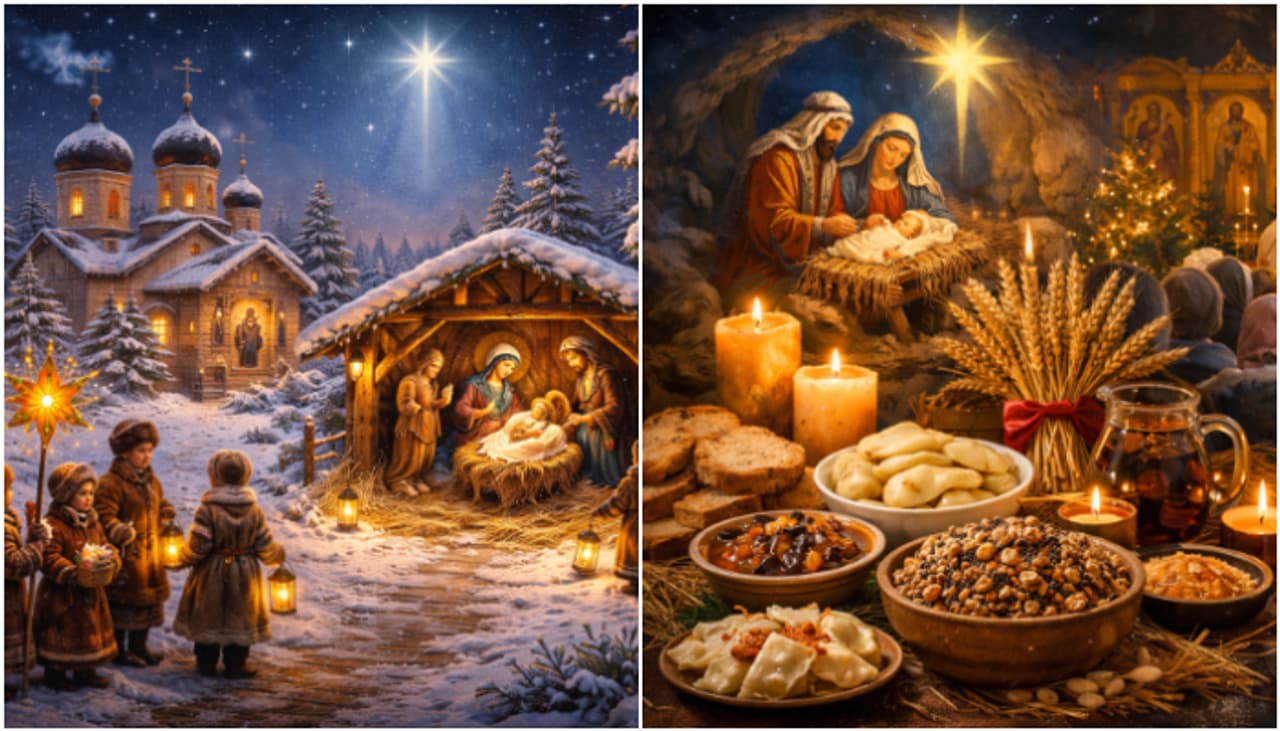
Christmas Eve, observed on January 6, is marked by the Holy Supper, known as Svyata Vechera in Slavic traditions. The meal is meatless and begins only after the first star appears in the sky, symbolizing the Star of Bethlehem.
Traditionally, the supper includes 12 dishes representing the 12 apostles. Common foods include kutia (a sweet wheat and honey dish), meatless borscht, dumplings filled with vegetables or mushrooms, fish, and dried fruit compote. In many homes, hay is placed under the table or a decorative bundle called a didukh is displayed, symbolizing the manger and honoring ancestors.
Midnight Liturgy
After the Holy Supper, many believers attend a midnight church service. These liturgies are central to Orthodox Christmas celebrations and feature ancient hymns, candlelit processions, and readings proclaiming Christ’s birth. The atmosphere is solemn, reverent, and deeply communal.
Christmas Day Celebrations
On January 7, the fast is broken. Families gather for festive meals featuring meat dishes, breads, pastries, and desserts. Visiting relatives, welcoming guests, and acts of generosity are central to the day.
Caroling, known as koliadky, is widespread in Slavic cultures. Groups go door to door singing traditional songs that celebrate the Nativity and offer blessings of health and prosperity in exchange for sweets or small gifts.
Modern Observance and Evolving Traditions
In 2026, Orthodox Christmas continues to adapt to modern life, especially among diaspora communities. While church services and fasting remain central, some families also exchange gifts, influenced by Western customs. Others are actively reviving regional traditions, old recipes, folk songs, and crafts to preserve cultural heritage for younger generations.
Explore the latest Lifestyle News covering fashion, wellness, travel, Food and Recipes, and more. Stay updated with trending Health News, fitness tips, and expert insights to inspire your daily living. Discover personalized lifestyle trends that keep you stylish and informed. Download the Asianet News Official App from the Android Play Store and iPhone App Store for everything that adds value to your everyday life.