- Home
- India
- Delhi Weather: Why AQI Could Hit 500 In Coming Days As National Capital Sees Coldest Morning Yet
Delhi Weather: Why AQI Could Hit 500 In Coming Days As National Capital Sees Coldest Morning Yet
Delhi recorded its coldest morning of season on Friday with minimum temperature falling to 10.5 degrees Celsius at Safdarjung. The city's AQI improved marginally to 270. Experts said morning AQI spikes will remain in 350-500 range for some more days.
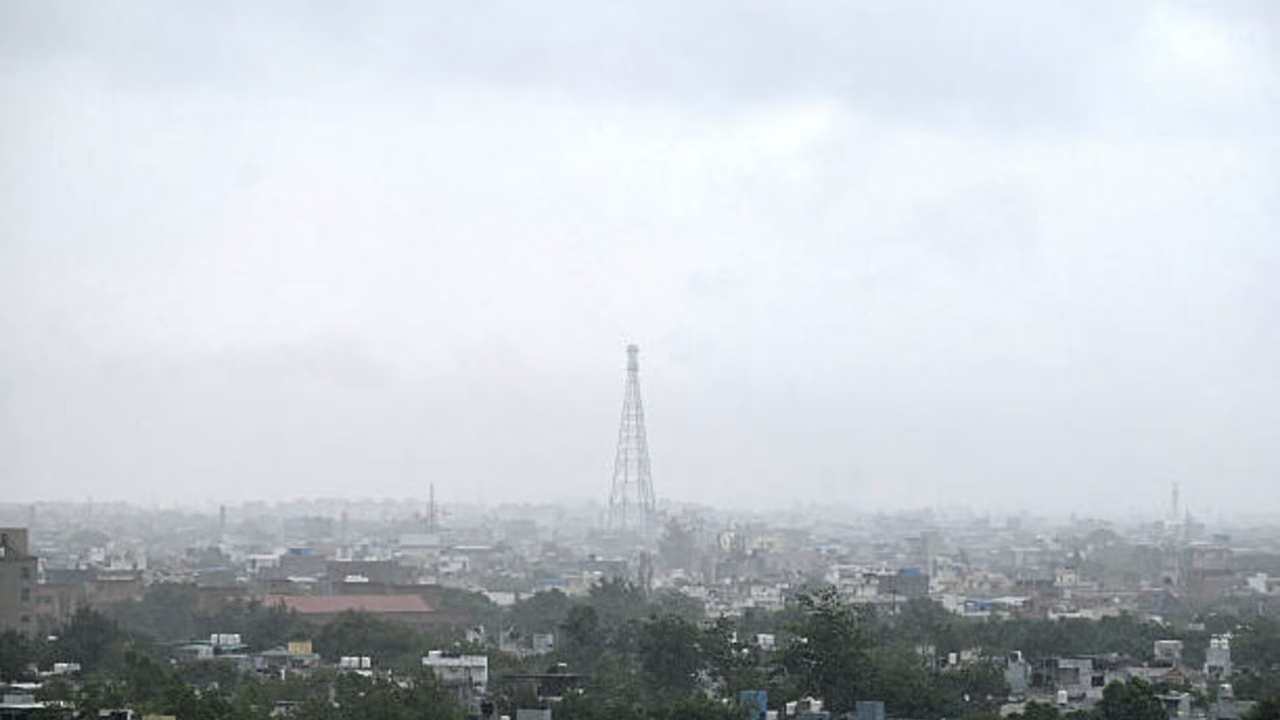
Delhi records coldest morning of season as AQI remains poor at 270
Delhi's air quality improved slightly on Friday, but the relief was limited as the Air Quality Index (AQI) remained in the 'poor' category at 270. The reading was 10 points lower than Thursday's 280. Delhi's morning AQI could spike to 350-500 over the next few days, even as the overall air quality shows marginal improvement, according to weather expert Navdeep Dahiya. The capital also recorded its coldest morning of the season so far, with the minimum temperature dropping to 10.5 degrees Celsius at the Safdarjung weather station.
Despite the marginal improvement in the overall AQI, morning pollution levels are expected to remain high over the next few days. Weather expert Navdeep Dahiya said temperature inversion, Delhi's landlocked location and its urban spread would continue to affect air quality, particularly during the night and early morning.
The Air Quality Early Warning System (AQEWS) has also warned of a possible deterioration. Delhi's air quality is expected to remain 'poor' on Saturday before slipping into the 'very poor' category on Sunday. It is likely to fluctuate between 'poor' and 'very poor' over the following six days.


Delhi AQI: 38 monitoring stations record poor air quality
Of the 57 monitoring stations that reported data at 4 pm on Friday, 38 recorded 'poor' air quality, while 15 were in the 'very poor' category. The remaining four stations reported 'moderate' air quality.
Siri Fort recorded the highest pollution level among the stations, with an AQI of 354, placing it in the 'very poor' category.
According to the Central Pollution Control Board (CPCB), an AQI of zero to 50 is classified as 'good', 51 to 100 as 'satisfactory', 101 to 200 as 'moderate', 201 to 300 as 'poor', 301 to 400 as 'very poor' and 401 to 500 as 'severe'.
Although Friday's citywide reading showed a small improvement, the distribution across monitoring stations indicates that several parts of Delhi continued to experience high pollution levels.
What is contributing to Delhi's pollution?
Secondary organic aerosols were the largest estimated contributor to Delhi's PM2.5 pollution on Friday, accounting for 27.2 per cent of the estimated load, according to real-time source apportionment data from the Air Quality Early Warning System.
Biomass burning contributed 21.2 per cent. This includes stubble burning as well as the use of domestic solid fuels such as wood and dung cakes. Waste burning accounted for another 19.4 per cent, while vehicular emissions contributed 16.6 per cent.
Secondary inorganic aerosols made up 10.4 per cent of the estimated pollution load. Coal combustion accounted for 2.5 per cent, road dust and soil for 2.3 per cent, and industrial sources for 0.3 per cent.
The estimates suggest that pollution in the capital is coming from several sources, rather than being driven by traffic or stubble burning alone.
Why could morning AQI remain high?
In a post on X, weather expert Navdeep Dahiya said the peak pollution days for Delhi-NCR appeared to have passed. He noted that afternoon air quality levels in the region were now only marginally higher than those in Mumbai, Chennai and Bengaluru.
However, he cautioned that the improvement during the day would not necessarily translate into cleaner air during the morning.
"Obviously, due to temperature inversion, landlocked geography and urban sizing, Delhi's AQI in night and mornings will stay worse off compared to other cities. The morning AQI spikes will remain in the 350-500 range for some more days before it gradually tapers down," he wrote in his post.
AQI in afternoon hours in Delhi NCR is only marginally higher compared to Mumbai, Chennai and Bangalore is when you know that the peak pollution days of NCR are over.
Obviously due to temperature inversion, landlocked geography and urban sizing Delhi's AQI in night and mornings will stay worse off compared to other cities. The morning AQI spikes will maintain 350-500 range for some more days before it gradually taper down.
— Weatherman Navdeep Dahiya (@navdeepdahiya55) November 20, 2026
Temperature inversion can restrict the upward movement of air, keeping pollutants closer to the surface. Combined with weak winds and unfavourable weather conditions, this can cause pollution to build up overnight and during the early morning hours.
Delhi weather forecast: Mixing depth and ventilation remain important
The AQEWS forecast indicates that atmospheric conditions will continue to influence how quickly pollutants disperse over the capital.
The predicted maximum mixing depth is around 1,100 metres on Friday. It is expected to increase to 1,400 metres on Saturday, 1,450 metres on Sunday and 1,400 metres on Monday.
Mixing depth refers to the height up to which pollutants can spread and mix in the atmosphere. When this layer is shallow, pollutants have less space to disperse vertically and can accumulate closer to the ground.
The ventilation index, which measures the atmosphere's ability to disperse pollutants, is forecast at 2,000 square metres per second on Friday. It is expected to rise to 3,000 on Saturday, 4,500 on Sunday and 6,000 on Monday.
The AQEWS considers a ventilation index below 6,000 square metres per second, along with an average wind speed of less than 10 kmph, unfavourable for pollution dispersion.
Delhi records coldest morning of the season
Alongside the pollution, Delhi experienced its coldest morning of the season so far on Friday. Safdarjung recorded a minimum temperature of 10.5 degrees Celsius, which was 1.8 degrees below the seasonal normal.
Ayanagar also recorded a minimum of 10.5 degrees Celsius, 2.2 degrees below normal. Palam registered 10.9 degrees Celsius, 2 degrees below normal, while Lodhi Road recorded 11.1 degrees Celsius, slightly above normal by 0.1 degrees. The minimum at the Ridge was 13.1 degrees Celsius, 0.4 degrees below normal.
Daytime temperatures were relatively higher. Safdarjung recorded a maximum of 28.9 degrees Celsius, 1.1 degrees above normal. Lodhi Road reached 28.1 degrees Celsius, also 1.1 degrees above normal.
Palam recorded a maximum of 24.9 degrees Celsius, 2.7 degrees below normal. The Ridge and Ayanagar registered maximum temperatures of 27.7 and 27.8 degrees Celsius, respectively, both 0.3 degrees above normal.
With colder mornings and pollution expected to remain elevated, Delhi is likely to see a continued contrast between relatively better afternoon air and much poorer conditions during the early hours over the coming days.
(With inputs from agencies)
Stay updated with the Breaking News Today and Latest News from across India and around the world. Get real-time updates, in-depth analysis, and comprehensive coverage of India News, World News, Indian Defence News, Kerala News, and Karnataka News. From politics to current affairs, follow every major story as it unfolds. Get real-time updates from IMD on major cities weather forecasts, including Rain alerts, Cyclone warnings, and temperature trends. Download the Asianet News Official App from the Android Play Store and iPhone App Store for accurate and timely news updates anytime, anywhere.