- Home
- India
- Will The Cockroach Survive Beyond The Internet? Can India's Viral Meme Rebellion Become A Real Political Force?
Will The Cockroach Survive Beyond The Internet? Can India's Viral Meme Rebellion Become A Real Political Force?
The viral Cockroach Janta Party began as an online satire movement after controversial remarks linked to CJI triggered outrage among young Indians. Started by PR student Abhijeet Dipke, the movement crossed 10 million Instagram followers within days.
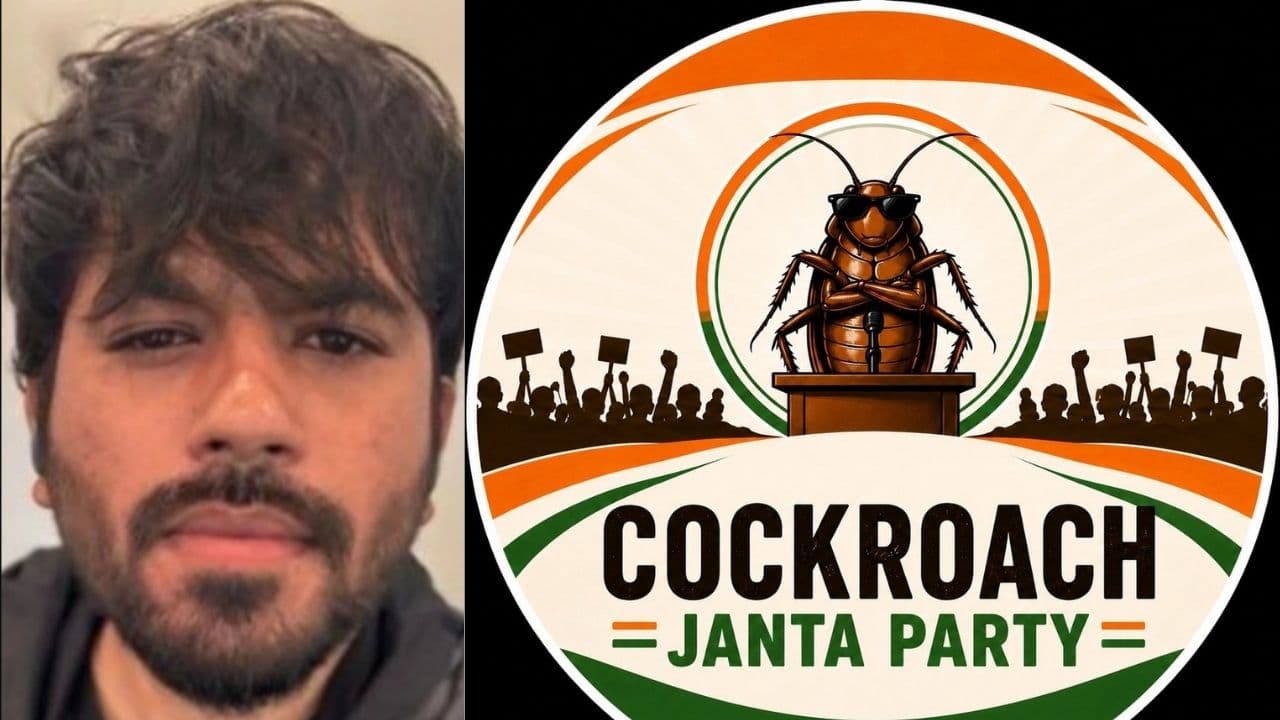
Cockroach Janta Party: Why millions are turning a meme into a political protest
What started as a sarcastic internet joke has now become one of India’s biggest viral political conversations. In just a few days, the 'Cockroach Janta Party' or CJP transformed from a meme page into a full-scale online protest movement followed by millions of people. The movement has especially connected with young Indians frustrated over unemployment, exam paper leaks, rising costs and growing distrust in institutions.
The Cockroach Janta Party has tapped into growing anger over unemployment, exam scams, corruption and political disconnect. Millions are engaging with its memes, slogans and satire, but the real challenge lies beyond social media.
Can a movement built on humour and viral outrage survive in the real world of politics, organisation and elections? Or will it slowly disappear once the internet finds its next big trend?
The movement first exploded on Instagram and X, where users began calling themselves “cockroaches” as a symbol of survival, anger and resistance.
As of May 21, the Instagram account of the Cockroach Janta Party had crossed 10 million followers. That number is higher than the official Instagram following of several established Indian political parties, including the Bharatiya Janata Party, which had around 8.7 million followers on Instagram at the same time.
The official Instagram account of the Indian National Congress had around 13.2 million followers, while the Aam Aadmi Party had roughly 1.9 million followers.
But despite its massive online reach, an important question remains: is the Cockroach Janta Party an actual political movement, or just another viral internet trend that will disappear after a few weeks?


How the controversy began
The controversy started during a Supreme Court hearing on May 15 linked to concerns over fake law degrees and people allegedly entering professions through fraudulent credentials.
During the hearing, Chief Justice of India Surya Kant reportedly used terms such as “parasites” and “cockroaches” while criticising certain individuals active on social media and public platforms.
Soon after, short clips and courtroom excerpts spread rapidly online.
Many social media users believed the remarks were aimed at unemployed youth, activists and people struggling with India’s job crisis. This interpretation triggered anger across platforms like Instagram, X and Reddit.
As criticism grew, the Chief Justice later clarified that his comments had been “misquoted” and were specifically directed at people using fake or bogus degrees rather than unemployed youth in general.
But by then, the internet had already turned the word “cockroach” into a political symbol.
How the Cockroach Janta Party started
The Cockroach Janta Party was reportedly created by Abhijeet Dipke, a public relations student based in the United States.
Shortly after the courtroom clips went viral, Dipke launched the satirical political campaign online.
The movement included a logo, slogan, manifesto, memes and a full social media strategy. The Instagram page described itself as “A political front of the youth, by the youth, for the youth.”
The account was launched on May 17, just one day after the campaign began spreading on X.
What started as parody quickly connected with frustrated young Indians.
Soon, users began posting slogans like “Main Bhi Cockroach” online. Many young people started using the word not as an insult, but as a symbol of survival in a system they believe ignores their struggles.
Why the movement became so popular
The success of the movement is closely linked to India’s ongoing unemployment crisis.
For years, many students and job aspirants have complained about delayed recruitment exams, paper leak scandals, limited government jobs and intense competition.
Social media users connected the “cockroach” remark to a feeling many young people already had, that those in power do not fully understand their struggles.
On Reddit and X, users described the movement as a release for frustration over unemployment, corruption, rising living costs and lack of accountability.
The timing also played a major role.
India’s internet culture, especially among Gen Z users, increasingly mixes humour with political commentary. Memes, sarcasm and satire have become powerful tools for expressing anger and disappointment.
The Cockroach Janta Party managed to combine all these emotions into one viral movement.
Is the Cockroach Janta Party a real political party?
No. At present, the Cockroach Janta Party is not officially registered with the Election Commission of India.
To become a recognised political party, the organisation would need proper leadership structures, verified membership, financial records, state-level units and legal compliance with Election Commission rules.
Currently, the movement remains decentralised and mostly internet-driven.
There is no evidence yet that the group plans to contest elections immediately.
However, supporters argue that the movement is less about elections and more about political awareness and public pressure.
The movement moves beyond memes
Even though the movement began online, some supporters have already attempted offline activism.
In Delhi, volunteers dressed in cockroach costumes were seen cleaning parts of the Yamuna riverbank. The symbolic act was widely shared online and became part of the movement’s message about accountability and civic action.
Supporters say the movement’s reported manifesto focuses on issues such as:
- Unemployment
- Education reform
- Corruption
- Transparency in governance
- Youth representation
While many users still see the movement as satire, others believe it reflects genuine public frustration.
Celebrities and influencers join the conversation
The movement received another major boost after several celebrities, influencers and public figures reacted to it online.
Filmmaker Anurag Kashyap, actresses Konkona Sen Sharma, Esha Gupta and Fatima Sana Shaikh were among the Bollywood personalities linked to discussions around the movement.
Television personalities and content creators including Umar Riaz, Abhishek Nigam, Uorfi Javed, Nagma Mirajkar and Purav Jha also helped push the trend further online.
Singer Himanshi Khurana also joined the conversation.
Political figures such as Mahua Moitra and Kirti Azad publicly interacted with the movement online, increasing its visibility further.
The rise of the National Parasitic Front
As the Cockroach Janta Party became viral, another satirical online group emerged as its meme 'opposition'.
The group calls itself the National Parasitic Front or NPF.
Unlike the CJP, which presents itself as the voice of unemployed and frustrated youth, the NPF openly mocks both mainstream politics and internet outrage culture.
The group became known for absurd parody promises such as creating a “Ministry of Rizz” and offering compensation for ghosting through UPI payments.
One of its most viral slogans stated:
“The name is intentional. We attach ourselves to a broken system, not to feed off it, but to force it to change from within.”
The online battle between the CJP and NPF soon turned into a larger Gen Z meme war, where political frustration mixed with internet humour.
Can the movement survive beyond social media?
That remains the biggest question.
India has seen many online movements rise quickly before disappearing once public attention shifted elsewhere.
Turning a viral hashtag into a long-term political organisation is extremely difficult. Real political movements require leadership, funding, organisation and consistent public engagement outside the internet.
Still, the Cockroach Janta Party has already achieved something important.
It forced a national conversation around unemployment, paper leaks, institutional trust and how many young Indians currently view politics.
For many supporters, the movement is not really about cockroaches at all.
It is about feeling ignored.
It is about surviving in a system where competition is growing, opportunities feel limited and many young people believe their voices are not being heard.
The movement’s rapid growth also shows how deeply internet culture now shapes political conversations in India. Memes are no longer just jokes. They are becoming tools of protest, identity and public expression.
Whether the Cockroach Janta Party eventually becomes a real political organisation or fades away as another internet trend, its message has already reached millions.
What began as satire is now reflecting something much larger, a generation trying to turn frustration into visibility.
And that may be why the movement continues to grow far beyond a simple meme. But the question: Will the cockroach survive beyond the internet? Well, only time will tell!
Stay updated with the Breaking News Today and Latest News from across India and around the world. Get real-time updates, in-depth analysis, and comprehensive coverage of India News, World News, Indian Defence News, Kerala News, and Karnataka News. From politics to current affairs, follow every major story as it unfolds. Get real-time updates from IMD on major cities weather forecasts, including Rain alerts, Cyclone warnings, and temperature trends. Download the Asianet News Official App from the Android Play Store and iPhone App Store for accurate and timely news updates anytime, anywhere.