Do You Know What the Yellow Line on Railway Platforms Means?
When you visit a railway station in India, you will notice a yellow line running along the edge of the platform. While many passengers see this marking every day, few understand its actual purpose.
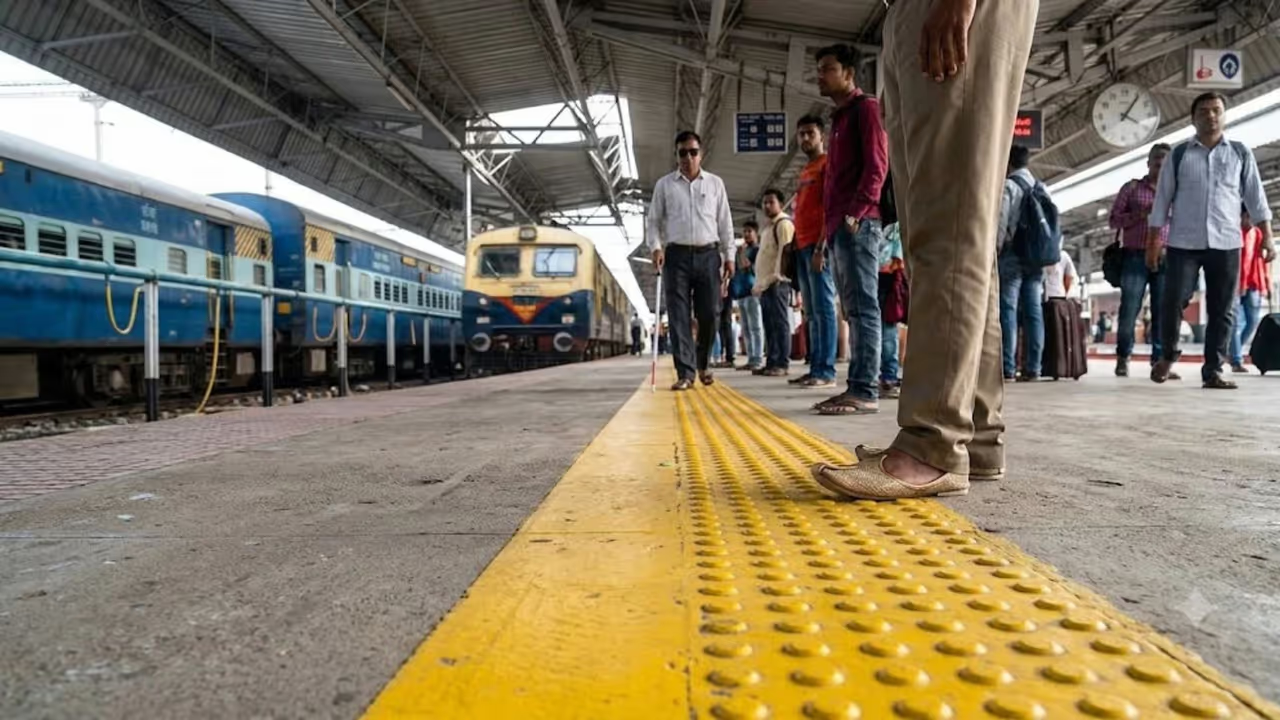
Why Is a Yellow Line Marked on Railway Platforms?
A yellow line is marked near the edge of railway platforms to alert passengers and help them maintain a safe distance from the tracks. Standing too close to the edge can be dangerous, especially when a train is arriving or passing through the station at high speed.
The line serves as a visual warning, reminding passengers to stand behind the designated safety marking while waiting for their train. Since yellow is a highly visible colour, it helps people identify the platform edge more easily. This is particularly important at crowded railway stations, where passengers may accidentally move too close to the tracks.
Passengers should always remain behind the safety line and avoid stepping beyond it while waiting for a train.


How Can Fast Moving Trains Cause Accidents?
When a train passes through a station at high speed, it creates changes in the airflow around it. Depending on the train's speed, shape and the distance between the train and the platform, these changes can create potentially dangerous conditions for people standing too close to the edge.
However, it is not accurate to say that a passing train will always pull a person towards it. The actual risk depends on several factors, including the train's speed and the surrounding conditions. A person standing too close could lose their balance or be struck by the train, leading to serious injuries. Passengers should be especially careful when a train passes through a station without stopping. Maintaining a safe distance from the platform edge is one of the simplest and most effective ways to reduce the risk of accidents.
How Far Should You Stand from the Yellow Line?
The yellow line is generally marked close to the edge of a railway platform. On some platforms, safety markings may be positioned approximately 1.8 metres from the edge. However, this distance is not uniform across all railway stations. The exact placement may vary depending on the platform design and applicable safety standards. The most important rule is to stay behind the designated safety marking and never move towards the tracks while waiting for a train. Passengers should remain alert when trains arrive or pass through the station.
What Are the Raised Dots Near the Yellow Line?
At some railway stations, passengers may notice raised dots or textured patterns on the floor near the platform edge. These are known as tactile paving. They are designed to help people who are blind or have low vision navigate public spaces more safely. The raised patterns can be identified through touch, either with a mobility cane or underfoot. They provide important information about the surrounding area and help visually impaired passengers recognise potential hazards.
Different types of tactile paving serve different purposes. Raised, dot-shaped patterns are commonly used as warning indicators near hazards, while elongated, bar-shaped patterns can help guide people along a route. These features improve accessibility and support safer movement through railway stations.
Railway Safety Rules Every Passenger Should Follow
Understanding the purpose of yellow lines and tactile paving is important, but passengers must also follow basic railway safety rules.
* Stand well behind the designated safety line when waiting for a train.
* Board or get off a train only after it has come to a complete stop.
* Never attempt to board or leave a moving train.
* Do not try to retrieve objects that have fallen onto the railway tracks. Seek help from railway staff instead.
* Avoid using your mobile phone while walking close to the platform edge.
* Keep your luggage away from the tracks and remain alert when trains approach or pass through the station.
Following these simple precautions can help prevent accidents and make railway journeys safer for everyone. The yellow line may appear to be a small marking on the platform, but understanding and respecting its purpose can make a significant difference to passenger safety.
Stay updated with all the latest Business News, including market trends, Share Market News, stock updates, taxation, IPOs, banking, finance, real estate, savings, and investments. Track daily Gold Price changes, updates on DA Hike, and the latest developments on the 8th Pay Commission. Get in-depth analysis, expert opinions, and real-time updates to make informed financial decisions. Download the Asianet News Official App from the Android Play Store and iPhone App Store to stay ahead in business.