
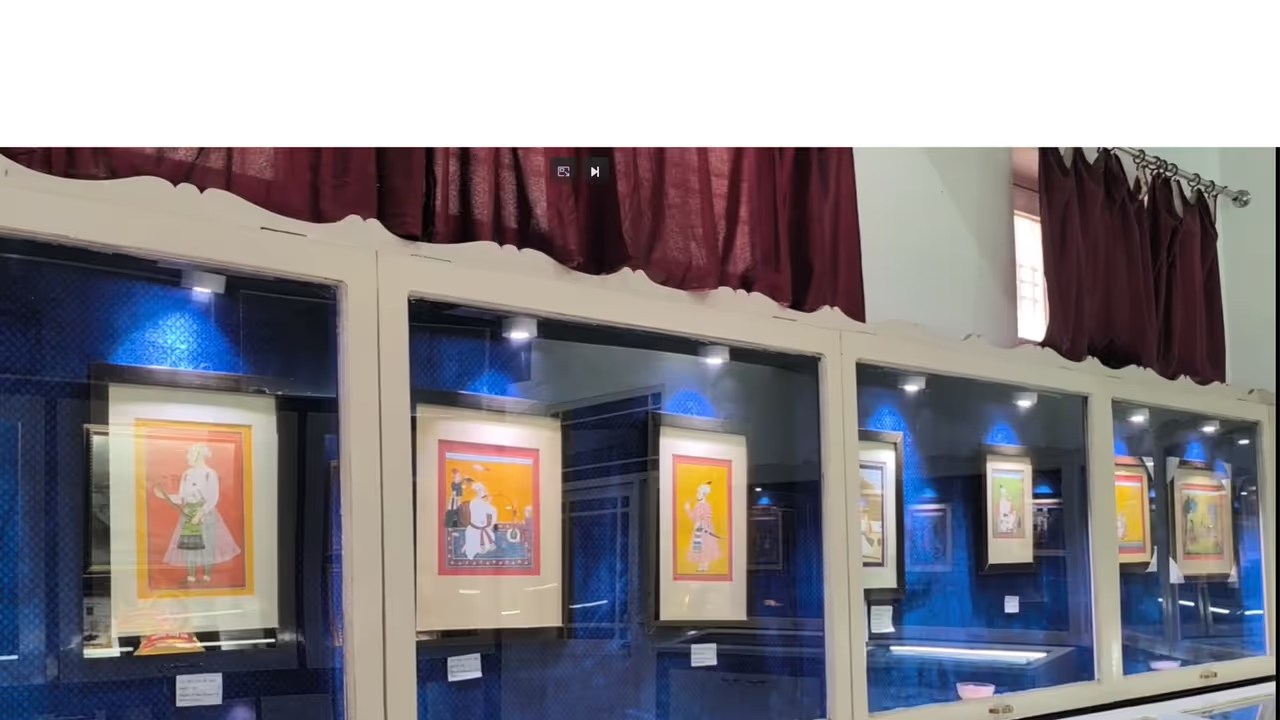
Basohli painting, a traditional J&K art form, gains global recognition and a GI tag. Efforts by local enthusiasts and institutions are ensuring this royal heritage survives through training programs and dedicated art galleries for the youth.
Preserving the Traditional Basohli Painting Art Form
Basohli (Jammu and Kashmir) [India], November 3 (ANI): Basohli painting, one of the most celebrated traditional art forms of Jammu and Kashmir, continues to reflect the region's rich cultural heritage, with local artists and institutions working to preserve and promote the centuries-old miniature painting tradition among younger generations. Known for its vibrant colours, intricate detailing and distinctive artistic style, Basohli painting has received recognition at national and international levels. The art form was granted the Geographical Indication (GI) tag in March 2023, further highlighting its historical and cultural significance.
Historical Background and Royal Roots
Speaking to ANI, local and art enthusiast Jagdish Brahmi highlighted the history of Basohli painting, its association with the region's royal heritage and the efforts being made to keep the traditional art form alive. Explaining the historical background of Basohli, Brahmi said the region was ruled by a succession of kings, from Raja Kishan Pal to Raja Kalyan Pal, who was the last ruler. He added that the tradition of Basohli painting and Pashmina developed during the reign of the royal family in the 17th century.
Overcoming Challenges and Modern Revitalization
Brahmi said the art form had gradually faced the threat of decline after India's Independence, as it did not receive adequate attention for several years. "After the country became independent, nobody paid much attention to this art form. In 1975, an SDM named Parvez Dewan came here and established a centre to promote it. However, after his departure, the centre continued to shift from one place to another," he said. He further said that an art gallery was established in 2019 with the efforts of Lieutenant Governor Manoj Sinha, giving the traditional art form a dedicated platform for preservation and promotion.
Techniques and Training the Next Generation
Brahmi also pointed out that diploma courses in Basohli painting have been introduced at Industrial Training Institutes (ITIs) in Jammu and Kathua, providing opportunities for young people to learn the traditional craft. He said the GI tag had further helped generate awareness about the art form and its distinctive techniques.
Explaining the traditional methods used in Basohli painting, Brahmi said artists were required to use stone-based colours instead of conventional watercolours and other commercially available colours. "After receiving the GI tag, the condition is that we cannot use watercolours or other colours. We use stone colours, which were traditionally used in ancient times," he said. He added that the institution was also training young artists, with around 20 to 25 girls currently receiving training. Some of the trained students have also started teaching the art form in schools.
Artistic Themes and Cultural Significance
Speaking about the paintings displayed at the gallery, Brahmi said it houses several traditional artworks based on religious and mythological themes, including the Bhagavata and Ramayana. He also highlighted a collection of 13 paintings, believed to be around 200 years old. "These paintings depict Sudama and Krishna, among other themes. Basohli painting traditionally has three important series -- Rasamanjari, Gita Govinda and Ragamala," he said.
Brahmi said the art form was increasingly being appreciated, with government departments and institutions in Jammu and Kashmir encouraging its use as a commemorative gift during official transfers and retirements. He said paintings were now often preferred over conventional gifts to make such occasions memorable, which was also helping promote the traditional art form. Expressing confidence in its wider recognition, Brahmi said Basohli painting had found admirers across different parts of the world. The centuries-old art form remains an important symbol of the cultural identity of Basohli and Kathua district, with continued efforts by local institutions, artists and families aimed at ensuring that its traditional techniques and artistic legacy are passed on to future generations. (ANI)
(Except for the headline, this story has not been edited by Asianetnews Editorial staff and is published from a syndicated feed.)



