Following the partial easing of US sanctions, Venezuela is re-entering the global oil market by exporting crude to India using large supertankers. This move allows Venezuela to boost export volumes and clear its stored crude backlog.
Venezuela is staging a significant comeback in the global oil market, with massive supertankers now transporting crude to India in a renewed push to expand exports. This shift comes after a partial easing of US sanctions, allowing Caracas to revive its oil trade and reconnect with key buyers like India.
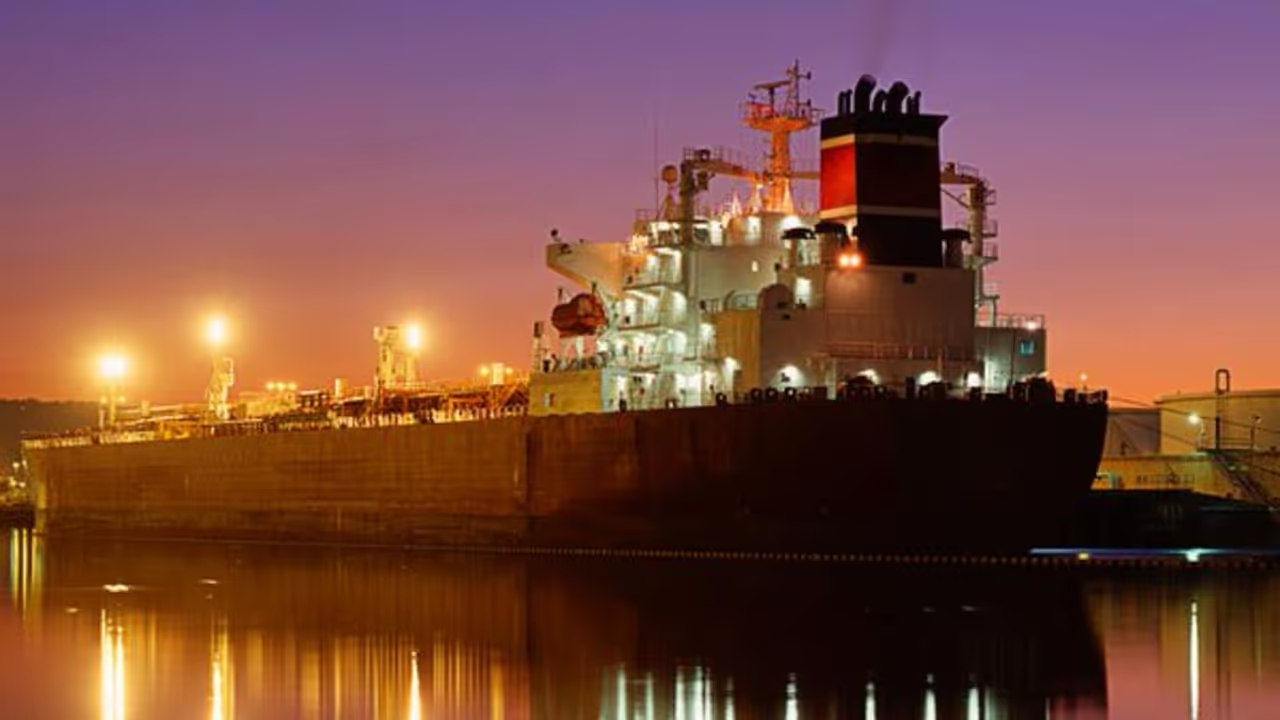
At the center of this resurgence is the deployment of Very Large Crude Carriers (VLCCs), capable of transporting up to two million barrels of oil per voyage. These vessels mark a major upgrade from the smaller tankers Venezuela previously relied on, enabling faster deliveries and reducing transportation costs. The move is expected to significantly boost export volumes and clear the backlog of crude that has accumulated in Venezuelan storage facilities.
India, one of the world’s largest oil importers, is emerging as a key destination for these shipments. Before US sanctions disrupted trade in 2019, India was among Venezuela’s top crude buyers. Now, with restrictions easing, Indian refiners are once again tapping into Venezuelan supplies—primarily attracted by the discounted rates of its heavy crude.
Related Articles

Major energy trading firms such as Vitol and Trafigura have already chartered multiple VLCCs for shipments scheduled in the coming months. Several of these tankers are bound directly for Indian ports, signalling a revival of energy ties between the two countries. Indian companies, including Reliance Industries, Indian Oil Corporation, Bharat Petroleum, and HPCL Mittal Energy, have either secured cargoes or are exploring fresh deals with Venezuela’s state-run oil company.
The renewed trade also aligns with India’s broader strategy to diversify its crude sourcing amid shifting geopolitical dynamics. With uncertainties surrounding Russian oil supplies and growing global pressures, India is increasingly looking at alternative suppliers to ensure energy security. Venezuelan crude, particularly the heavy Merey grade, offers a cost advantage, though it requires specialized refining capabilities available only at select facilities.
Despite the optimism, challenges remain. Venezuelan oil is heavier and more complex to refine compared to other grades, limiting the number of refineries that can process it efficiently. Additionally, the country’s production capacity and political stability continue to pose risks to sustained growth.
Even so, the arrival of supertankers signals a turning point. Venezuela’s oil exports, which recently climbed to around 800,000 barrels per day, are gaining momentum once again. For India, this presents an opportunity to secure affordable crude while strengthening supply resilience in an increasingly volatile global energy landscape.