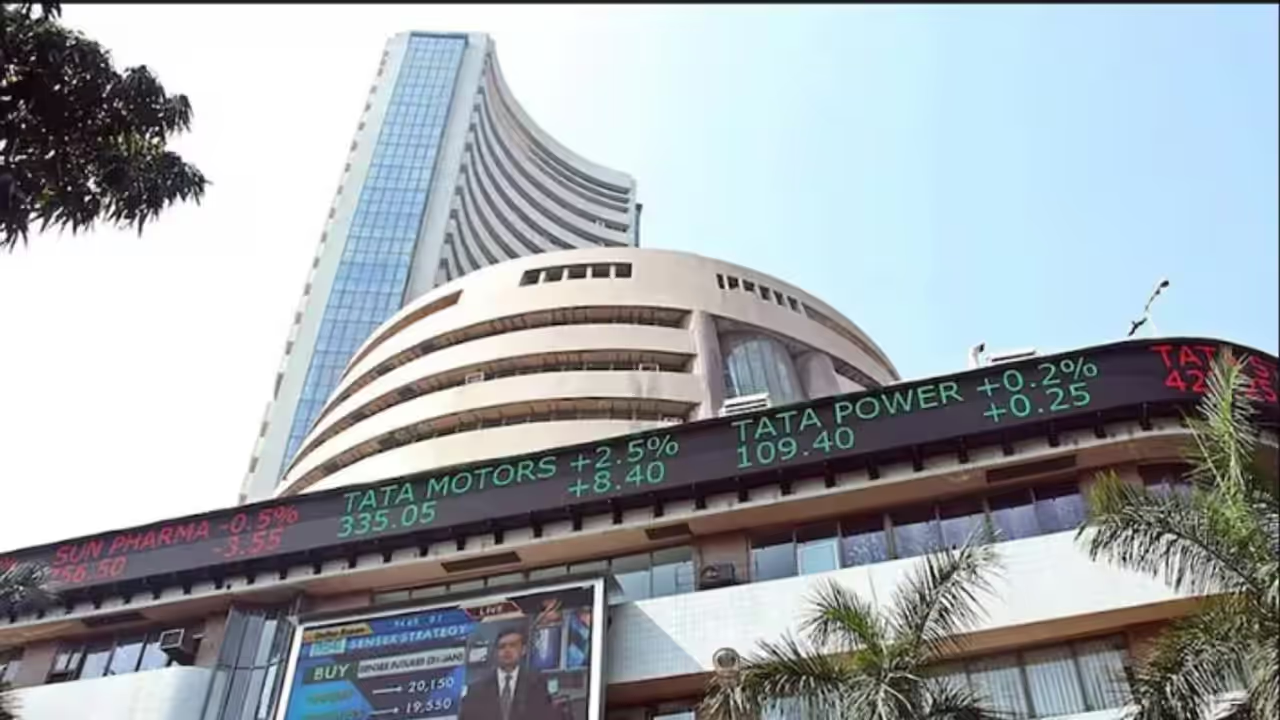
Indian stock markets will open on Sunday, February 1, 2026, for a rare trading session during the Union Budget, allowing investors to respond in real time. NSE and BSE will operate with regular weekday trading hours across segments.
Historic Weekend Trading Session for Budget 2026
For the first time in India’s history, the stock market will remain open on a Sunday — February 1, 2026 — to coincide with the presentation of the Union Budget 2026 by Finance Minister Nirmala Sitharaman. Normally, the National Stock Exchange (NSE) and Bombay Stock Exchange (BSE) remain closed on weekends; however, both exchanges have issued circulars confirming a special live trading session on this Sunday despite it being a non-working day. This marks only the second instance that Indian markets operate on a Sunday for a Budget event, following last year’s unusual Saturday session.
This rare decision reflects the importance of budget announcements — which often influence macroeconomic policy, investor sentiment and market direction — and aims to give market participants the ability to respond in real time to fiscal changes. Equity, commodity, and derivatives segments have all been included in this special session announcement.
Special Trading Timings and Settlement Rules
Although the session falls on a Sunday, the markets will follow their standard timing structure similar to a weekday. For equities, the pre-open session is scheduled from 9:00 AM to 9:08 AM, and the main trading hours will run from 9:15 AM to 3:30 PM. A trade modification window will remain open until 4:15 PM, as is typical during regular sessions.
Related Articles

The Multi Commodity Exchange of India (MCX) will also operate, with special commodity trading sessions beginning slightly earlier, followed by normal hours. The decision to maintain usual trading hours helps investors and traders react immediately to budget details as they’re released, rather than waiting until the following weekday.
Notably, while markets will open for trading, settlement processes — including T+0 settlement — may be affected because banks and clearing systems observe Sunday holidays. This means settlement obligations could shift to the next working day, impacting liquidity and short-term trading strategies.
What It Means for Investors
Opening markets on Budget day is expected to drive increased volatility, as traders digest fiscal policy outcomes, taxation changes, and sectoral allocations. Historically, Budget days trigger sharp sector moves, especially in finance, infrastructure, and commodities. Markets will react live as announcements are made — rather than waiting for Monday — creating opportunities and risks alike for both institutional and retail participants.
Investors are advised to stay informed of timing details and settlement impacts while preparing their portfolios for potential swings throughout the session.