
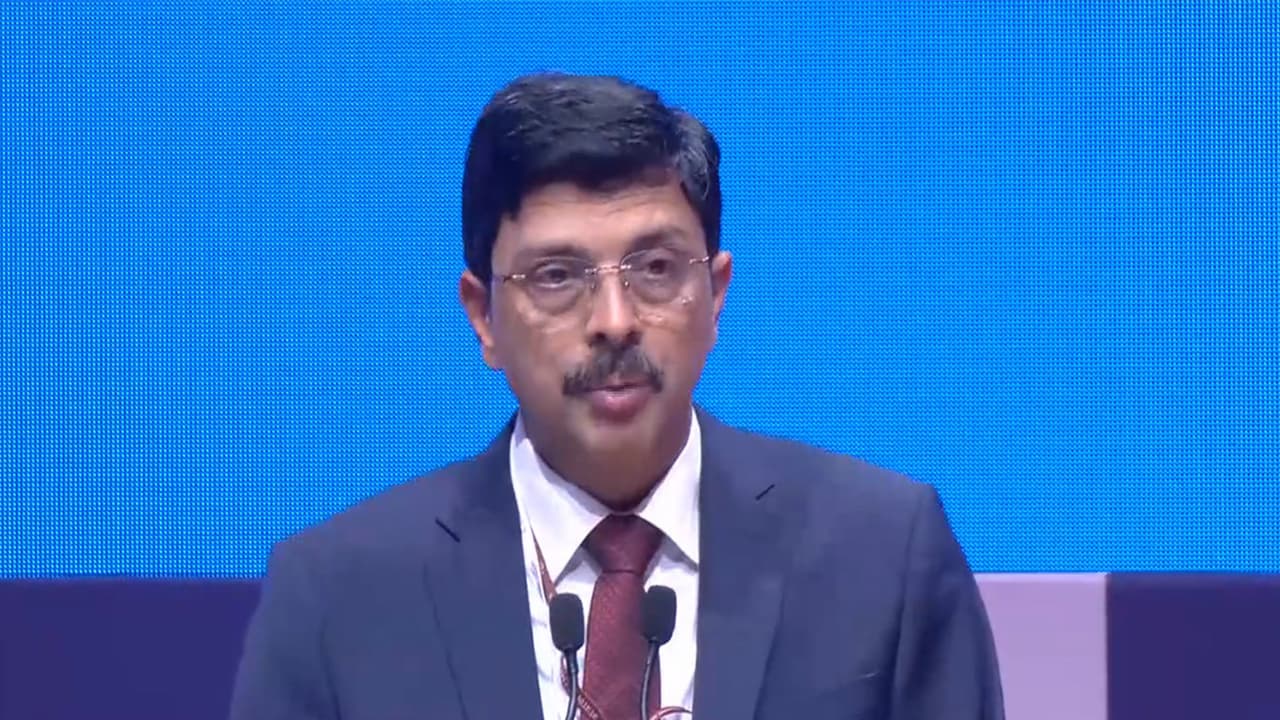
Power Secretary Pankaj Agrawal stated that India needs a USD 2.2 trillion investment in its power sector over two decades for energy transition. He highlighted progress in renewables and the need for a financially viable sector to meet rising demand.
India will require an estimated USD 2.2 trillion investment in its power sector over the next two decades to support the country's energy transition and rising electricity demand, Power Secretary Pankaj Agrawal said on Thursday.
USD 2.2 Trillion Investment for Energy Transition
"India itself will require an investment of about USD 2.2 trillion over the next two decades. This would require a financially viable power sector to achieve," Agrawal said while addressing Bharat Electricity Summit 2026 that began today in the national capital. Electricity today is "not merely an infrastructure service" but the backbone of economic growth, digital transformation, industrial competitiveness and social inclusion, adding that deliberations at the summit would help shape future energy systems.
Agrawal said that the global electricity sector is undergoing a structural transformation, with countries working to balance energy security, affordability and sustainability. India, he said, is also focusing on expanding access and inclusivity while delivering reliable and clean electricity at scale.
Progress in Renewable Energy
Highlighting India's progress, he said the power sector has expanded significantly over the past decade, with installed capacity growing to over 500 gigawatts, driven largely by renewable energy. He added that this growth has been supported by policy design and market mechanisms that have helped lower costs and accelerate adoption. Renewable energy, particularly solar power, has been central to this expansion, positioning India among the leading countries in clean energy deployment.
Agrawal said the country is also emerging in renewable energy manufacturing, supported by government initiatives and increasing private sector participation.
Grid Modernisation and Smart Meter Rollout
On the grid side, he said India operates one of the world's largest integrated electricity networks, with continuous efforts to strengthen resilience and reliability. He also pointed to the large-scale rollout of smart meters, which is expected to enable a more transparent and data-driven distribution system.
The Next Phase: Systemic Improvements and Innovation
Agrawal emphasised that while significant progress has been made in building physical infrastructure, the next phase will focus on systemic improvements, including market design, pricing mechanisms and institutional innovation. The shift from traditional centralised systems to more dynamic, data-driven models will be key as renewable energy penetration increases.
He said integrating higher shares of renewable energy would require new approaches such as storage solutions, demand response and flexible generation. These changes, he added, would also open up opportunities for innovation in business models and consumer engagement.
Fostering Global Partnerships and Actionable Outcomes
Referring to emerging trends, Agrawal said electric mobility could play a crucial role in improving system efficiency if charging patterns are aligned with renewable energy generation. He stressed that the scale of the transition would require strong global partnerships and sustained investment, adding that platforms like the summit can help foster collaboration and drive actionable outcomes.
"The true success of this summit will not be measured by scale. It will be measured by outcome," he said, calling for concrete progress on distribution reforms, infrastructure bottlenecks and investment gaps. (ANI)
(Except for the headline, this story has not been edited by Asianet Newsable English staff and is published from a syndicated feed.)