
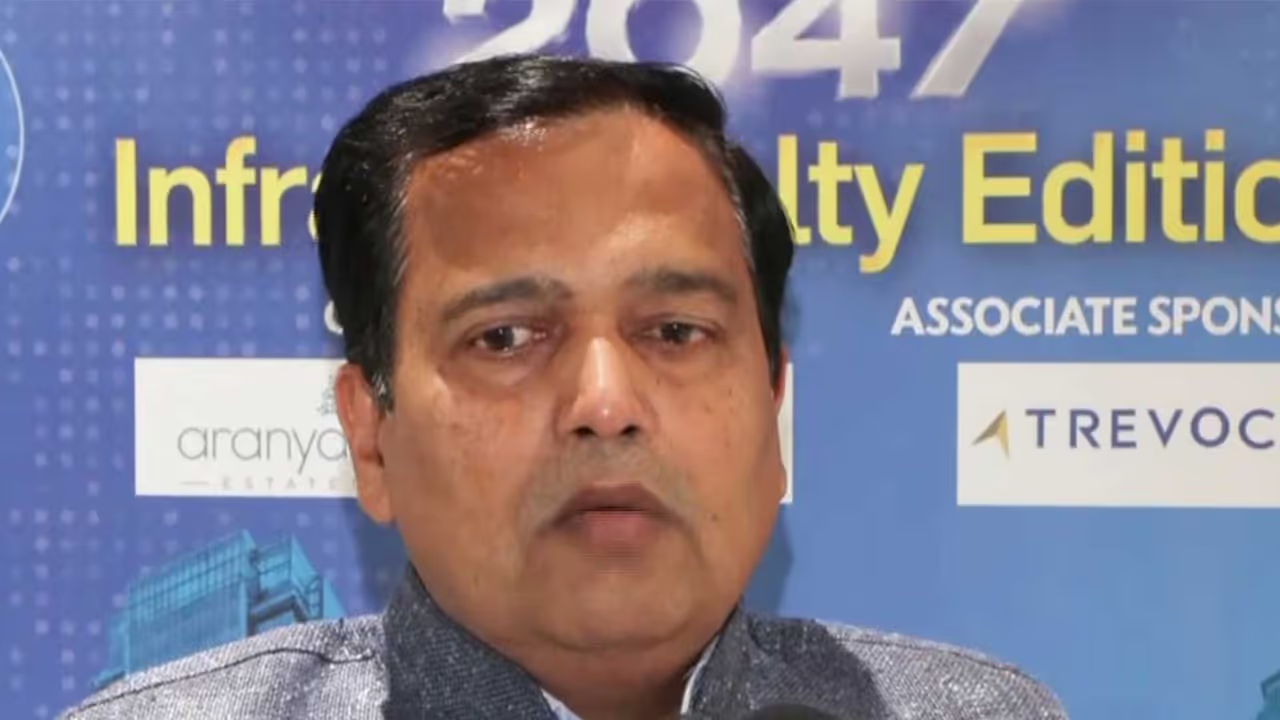
Former NHAI advisor Vaibhav Dange emphasized that India must integrate highways, railways, waterways, and airways. He said this multimodal approach is crucial for improving accessibility and efficiency for both passenger and commercial transport.
Emphasis on Multimodal Transport Integration
Former National Highways Authority of India (NHAI) advisor Vaibhav Dange on Thursday emphasised that India must move beyond developing isolated transport modes and focus on integrating highways, railways, waterways, and airways to boost accessibility and efficiency for both passenger mobility and commercial cargo.
Speaking to ANI on the sidelines of an infra realty event, Dange said, "We need multimodal transport accessibility and that is something that will define the coming days," adding, "...whether it is for commercial goods transport, we need multimodal highway, railway, waterways, inter-portability, multimodal hubs created for this infrastructure."
He stressed that while highways, railways, waterways and airways would all remain important to India's infrastructure growth, their integration would be critical to maximise the benefits of individual projects.
Ganga Expressway: A Case Study
Citing the Ganga Expressway in Uttar Pradesh as a prime example, Dange noted that improved road connectivity is unlocking economic opportunities, linking local markets, airports, and industrial clusters. "Ganga Expressway, in a way, can usher in the socio-economic development of the entire western region of Uttar Pradesh, and could become a major economic hub of Uttar Pradesh," said Dange.
Economic Impact and Private Sector Role
In another example, citing Moradabad's brass industry, Dange said lower logistics costs enabled by improved connectivity could help exporters become more competitive. He also noted that industrial townships and other investments are emerging along the Ganga Expressway and around the new airport in western Uttar Pradesh.
"The government will look at the projects that need to be built, infrastructure that needs to be built, but it is the private sector that will chip in with their expertise, their investment, their engineering expertise," he said.
Enhanced connectivity and lower logistics costs are expected to directly benefit traditional manufacturing hubs, such as Moradabad's brass industry, helping exporters compete globally. "Accessibility will automatically improve access to the market," he said.
Sustainable Development and National Capacity Building
While the government spearheads large-scale infrastructure planning, Dange highlighted that private sector investment, engineering expertise, and the adoption of resilient, green materials will be essential for achieving long-term national development goals. "If we really want to achieve a developed nation, then building our capabilities on everything... ushering in new resilient and sustainable materials, green materials, everything put together, we will have to build our capacities to build our infrastructure," he said. (ANI)
(Except for the headline, this story has not been edited by Asianetnews Editorial staff and is published from a syndicated feed.)