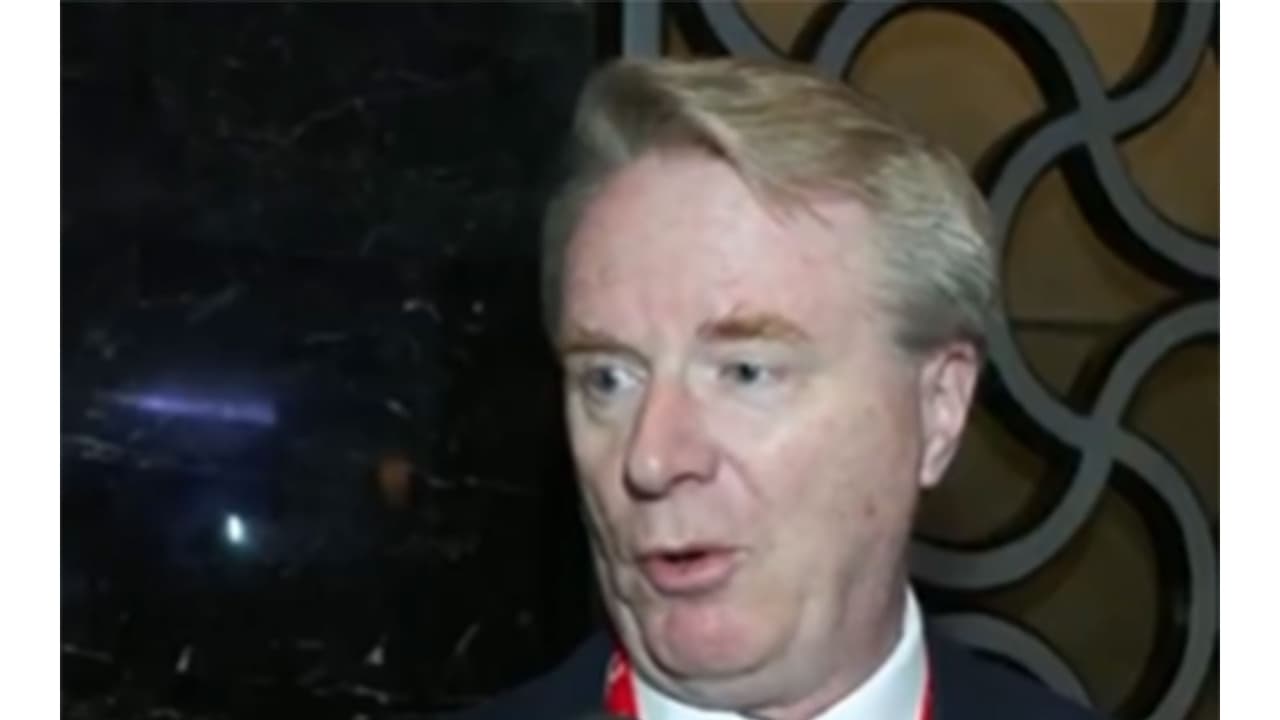
University of Waikato Professor of Economics John Gibson (Photo/ANI)
Professor John Gibson of Waikato University has advised India to focus beyond energy security and adapt its fertiliser pricing and subsidy policies to counter geopolitical disruptions, citing the country's significant reliance on Middle Eastern urea.
India needs to look beyond energy security and adapt its fertiliser pricing and subsidy mechanisms to emerging geopolitical disruptions, given its major dependence on the Middle East for urea and nitrogen fertilisers, said John Gibson, Professor, University of Waikato.Speaking to ANI on the sidelines of the 5th Kautilya Economic Conclave, Gibson highlighted the potential impact of geopolitical and economic shocks on trade routes, input availability and vulnerable households, stressing the need for policy frameworks to adjust to changing global realities.
Adapting to New Realities
“We shouldn't just focus on energy security. It's also really important for Indian farmers for fertiliser, because so much of India's urea and nitrogen fertilisers come from the Middle East,” he said.Apart from this, Gibson stressed that disruptions affecting the availability or cost of key agricultural inputs could have implications for Indian farmers, making it important for pricing and subsidy mechanisms to remain responsive to external shocks.“...it's really important for pricing mechanisms and subsidy regimes—the same with energy subsidies in Indonesia—to adapt to the new realities,” he said, adding, "There are other countries as well that are doing it, but India certainly serves as a flagship or as an exemplar of what could be followed."
Impact on Trade and Vulnerable Households
As per Gibson, economies are already responding to global uncertainty through changes in trade routes and the way production inputs are used, reflecting broader efforts to adapt to geopolitical disruptions.“Seeing lots of different ways of adaptation, changes in trade routes, we're seeing changes in input uses and so forth,” he noted.However, Gibson cautioned that such shocks could disproportionately affect households with limited financial buffers and a lower ability to absorb economic disruptions.“It's quite clear that these shocks are going to have very bad effects on households who have got the least resilience, the least ability to cope. Sometimes the policymakers who are initiating these kinds of big shocks probably aren't thinking about those kind of people..." he said.
Role of Policy Dialogue
Gibson also highlighted the importance of platforms such as the Kautilya Economic Conclave in bringing researchers and policymakers together to discuss responses to economic, geopolitical and climate-related challenges."It's a really great chance for researchers and policymakers to be in the same place and to talk... to see the exchange from former and current finance ministers, central bankers, and people now who have got a session on climate. It's just a really valuable opportunity where the researchers and the policymakers can be together...” (ANI)(Except for the headline, this story has not been edited by Asianetnews Editorial staff and is published from a syndicated feed.)
Stay updated with all the latest Business News, including market trends, Share Market News, stock updates, taxation, IPOs, banking, finance, real estate, savings, and investments. Track daily Gold Price changes, updates on DA Hike, and the latest developments on the 8th Pay Commission. Get in-depth analysis, expert opinions, and real-time updates to make informed financial decisions. Download the Asianet News Official App from the Android Play Store and iPhone App Store to stay ahead in business.