
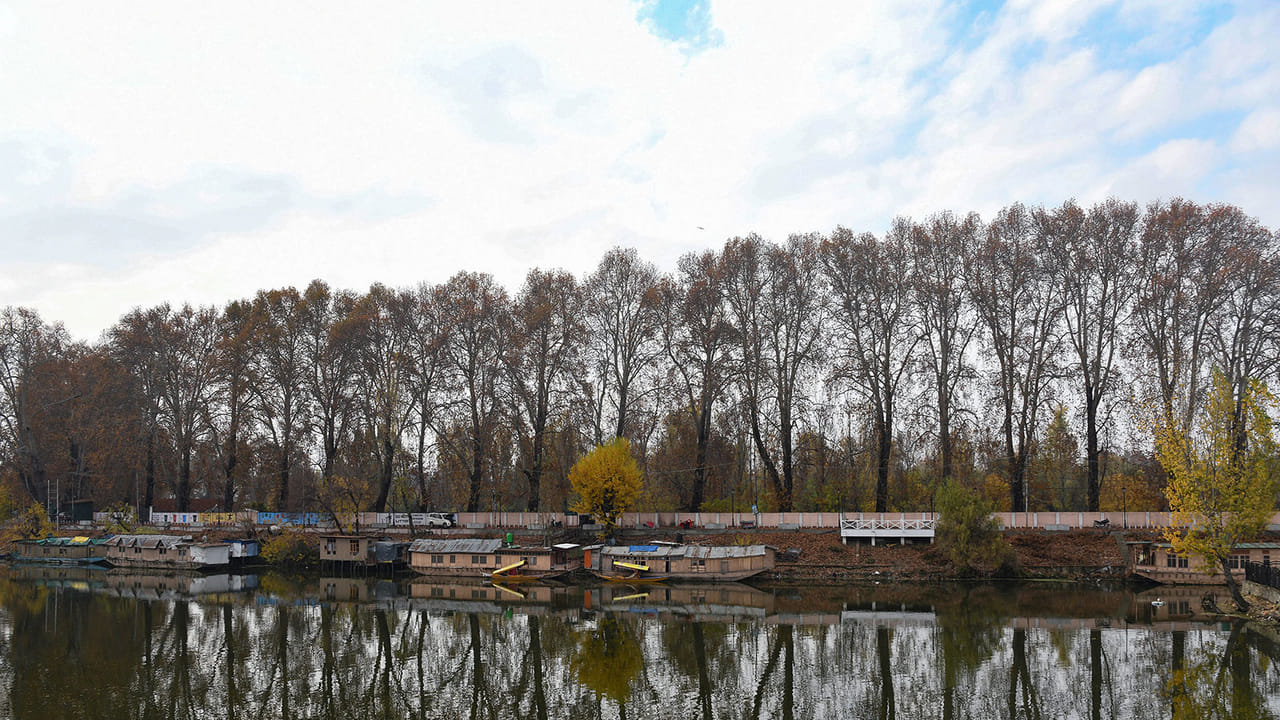
India's inland fish production could double to 30 million tonnes in a decade. This growth aims to add USD 40 billion to the economy and generate 1.8 crore new jobs, particularly benefiting women and rural households across the country.
India's Inland Fisheries Poised to Double Production and Create 1.8 Crore Jobs
New Delhi [India], November 17 (ANI): India's village ponds, tanks, lakes and reservoirs have the potential to double inland fish production from 15 million tonnes to 30 million tonnes over the next ten years, creating 1.8 crore new jobs and adding about USD 40 billion to the economy, according to a report by Jaljeevika and Change Engine. The report said improving the productivity of inland water resources could generate significant employment and additional income for rural households, with women expected to be among the biggest beneficiaries.
India is already the world's second-largest fish producer, with inland waters accounting for 75 per cent of the country's 19.78 million tonnes of fish production. However, despite contributing roughly half of the USD 45 billion that aquaculture and fisheries add to the economy, inland waters currently yield just 1.86 tonnes per hectare, against the government's target of 5 tonnes per hectare.
The report identified Bihar, Odisha, Telangana, Karnataka and Tamil Nadu as states with significant potential to increase inland fish production. These five states account for nearly half of India's inland water area but produce only a fifth of its inland fish. Their current yields range between 0.39 and 0.97 tonnes per hectare. Raising productivity in these states to 2.5 tonnes per hectare could deliver more than half the growth required to double inland fish production to 30 million tonnes by 2034-35. Andhra Pradesh has already crossed the government's target of 5 tonnes per hectare.
"Most programmes to raise rural incomes have focused on agriculture and livestock, while the waters in our own villages have been left to underperform. Unlike sea fishing, fish farming needs no big boats or heavy investment. It is work ordinary families can do in their own ponds, and doubling what these waters produce means jobs where people live, not in the cities they migrate to," Shubham Bansal, Co-founder, Change Engine, said.
The report noted that about 2.3 crore people are already engaged in inland fish farming, of whom 44 per cent are women. Households involved in the activity earn between Rs 60,000 and Rs 1.2 lakh annually, mostly as a second source of income. It also highlighted the employment potential of the sector, stating that every 10% increase in inland fish production brings an 8.2 per cent rise in jobs, compared with 4 per cent in agriculture.
To unlock the sector's potential, the report recommended that state governments establish Aquatic Livelihoods Missions bringing together fisheries, rural development, panchayat, revenue and water resources departments. It noted that the Centre has spent Rs 39,272 crore on fisheries since 2015, but support remains spread across departments. The report also estimated that Rs 7,000 crore would be required for hatcheries and nurseries. With bank loans and owner contributions, the government's share would be about Rs 3,600 crore over ten years through existing schemes, including PMMSY and FIDF. Other recommendations include strengthening cold-chain infrastructure, providing communities with secure and longer-term rights to village ponds and tanks, prioritising local women self-help groups and fisher groups in leasing arrangements, and building a cadre of local extension agents to provide technical support to fish farmers. (ANI)








