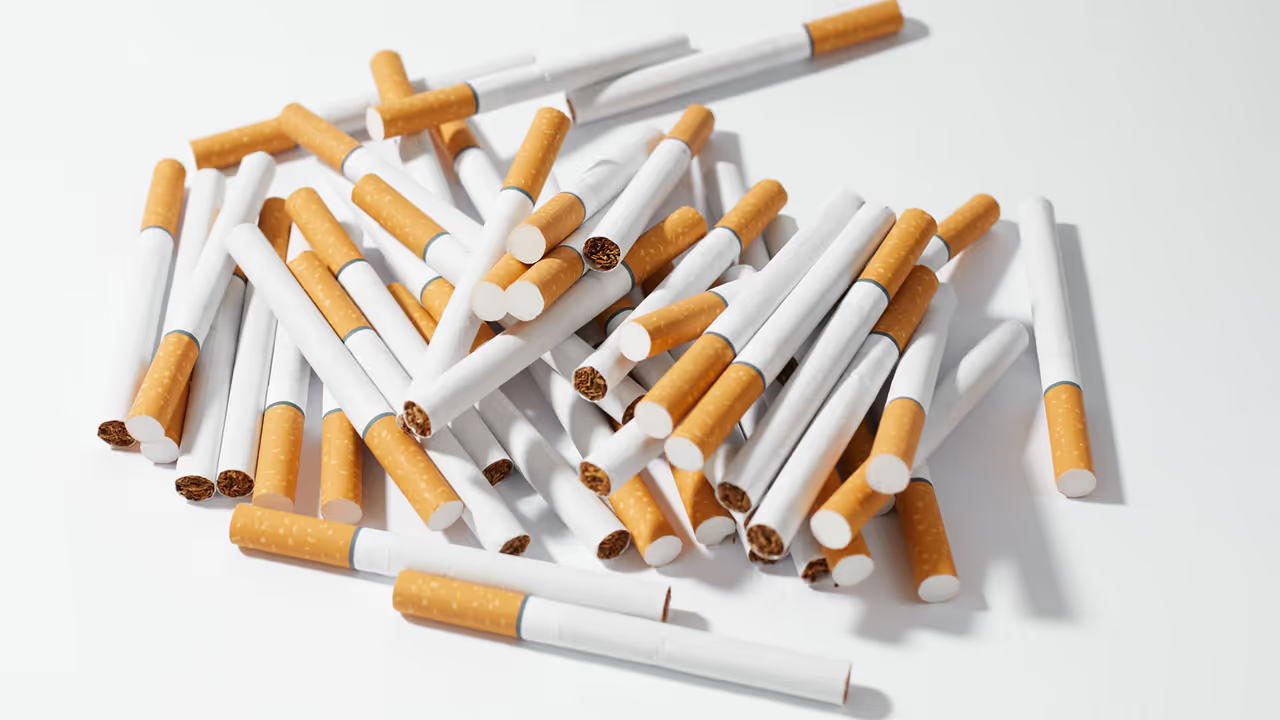
From February 1, a new tax structure will increase all cigarette prices. The government is reintroducing a central excise duty alongside the existing GST.
From February 1, the government will roll out a new tax structure for cigarettes, bringing back a separate central excise duty in addition to the existing Goods and Services Tax (GST). The move marks the first major shake-up in cigarette taxation since the introduction of GST in 2017 and is expected to hit longer and premium cigarettes the hardest.
Why cigarette prices are going up
Until now, cigarettes were largely taxed through GST along with a value-based levy. Under the new framework, the Centre has reintroduced a specific excise duty that will be charged per 1,000 cigarettes.
Unlike earlier systems that focused on the brand or retail value, the fresh duty will mainly depend on two factors, whether the cigarette is filtered or non-filtered, and its length in millimetres, including the filter. In simple terms, the longer the cigarette, the higher the tax.
Related Articles

How the new excise duty will work
The excise duty has been fixed in slabs ranging from Rs 2,050 to Rs 8,500 per 1,000 sticks. Here is what that means for smokers:
- Short non-filter cigarettes (up to 65 mm): Around Rs 2.05 per stick
- Short filter cigarettes (up to 65 mm): About Rs 2.10 per stick
- Medium-length cigarettes (65–70 mm): Roughly Rs 3.6 to Rs 4 per stick
- Long cigarettes (70–75 mm): Close to Rs 5.4 per stick
There is also a higher slab of Rs 8,500 per 1,000 sticks, but this applies to non-standard or unusual designs, which most popular brands are unlikely to fall under.
Which cigarettes will feel the pinch
Smokers of longer and premium cigarettes should brace for the biggest jump in prices. King-size and filter variants such as Gold Flake Premium, Red & White King Size, Classic and Marlboro lines, longer Navy Cut sticks and flavoured options like Ice Burst are expected to become noticeably costlier.
Shorter cigarettes and non-filter variants are likely to see smaller hikes in comparison.
What happens to GST and overall tax burden
The new excise duty will be charged over and above GST, which continues at either 18% or 40%, depending on the product category. At the same time, the GST compensation cess on tobacco has been withdrawn.
Even after the change, total taxes on cigarettes in India will account for about 53% of the retail price, still well below the 75% level recommended by the World Health Organisation to discourage smoking.
When the new prices will kick in
All the changes will take effect from February 1, 2026. Cigarette makers now have a short window to revise prices, tweak systems and make adjustments to production and packaging before smokers begin seeing higher bills at neighbourhood shops.