Do you leave mobile data on while sleeping? Discover what overnight connectivity can mean for battery use, data consumption and sleep habits, plus what science actually says about potential health concerns.
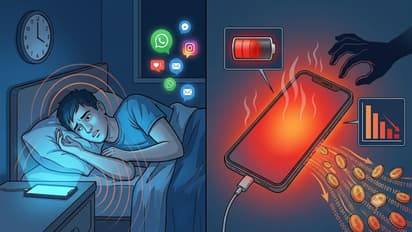
When data is on, notifications keep buzzing all night from WhatsApp, Instagram, and emails. Even if you don't look, the screen lights up and your subconscious mind gets disturbed. Studies show that blue light from the screen can reduce melatonin, our sleep hormone, by up to 5%. This hormone helps us fall asleep. As a result, you'll find it harder to sleep, wake up often, and won't feel fresh in the morning.
With data on overnight, about 20 to 30 apps keep running in the background. Apps like Facebook, Google Photos, and the Play Store will auto-update. This keeps the phone hot all night. This excess heat is the biggest enemy of lithium-ion batteries. It can cause the battery to swell, reduce its capacity, and in some cases, even explode. While you're asleep, an app might update itself using 500 MB of data. You'll wake up to find 1 to 2 GB of data gone! For people on limited data plans, this is a waste of money. Plus, unnecessary temporary files will fill up your phone's storage.
Cyber experts say that hackers are most active at night when you aren't using your phone. If your data or Wi-Fi is on, they can easily use malware to steal your photos, passwords, and even bank OTPs. The risk is 10 times higher if you've been using a free or public Wi-Fi network. A report in the 'Journal of Environmental Health' also states that sleeping with your phone nearby can cause headaches and poor concentration.
So, what's the right way? Switch to Airplane Mode and turn off Wi-Fi. Keep the phone at least 3-4 feet away. Also, disable 'Background App Refresh' in settings and unplug after a full charge. Your phone needs rest too!