RO Water or Bottled Water: Which Is Better For Daily Drinking? Know Key Differences

Published : Sep 27, 2026, 04:26 PM IST

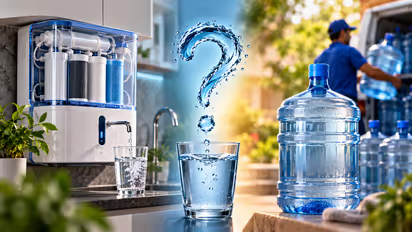
RO water or bottled water—which is better for everyday drinking? Compare their purification, mineral content, safety, convenience and other key factors before choosing your daily drinking water.
PREV
16
RO water or can water? Know the real truth first!

You cannot simply say RO is good and can water is bad, or vice versa. You must check the water source, purification method, maintenance, and storage to decide if your drinking water is safe.

People using RO at home can choose the right filter only if they know their source water quality. Similarly, can water quality depends entirely on how the supplier purifies and handles it.

The WHO also says you must consider your source water quality first before choosing a home purification system. So, you need to track the water from its source to your glass to know which is better.

Read this also: Having Joint Pain or Weak Bones? 7 Foods Packed With Nutrients Your Body Needs

26
RO water gives you full control over home purification.

Reverse Osmosis (RO) reduces dissolved solids and certain germs in your water. RO systems can remove specific bacteria, viruses, and parasites, along with chemicals like lead, copper, chromium, and sodium. But you cannot expect every RO machine to remove everything equally. The performance changes based on the filter and its certification.

The biggest advantage of an RO system is that you control the purification process right at home. But you must follow one strict condition. You need to maintain the RO properly. The machine will fail if you do not replace the filters on time as per the manufacturer's advice. The CDC clearly states that regular maintenance is mandatory for any water purification device.

Read this also: Kidney Stones: 7 Early Signs And Symptoms You Should Never Ignore Before Pain Gets Worse

36
Can water needs clean cans, not just clean water.

We usually only see the 20-litre can when we buy can water. But we do not know the full story behind the water inside it.

For example:

  • Where did they source the water?
  • How did they purify it?
  • Do they maintain the purification system properly?
  • Do they clean the can thoroughly before every refill? How old is the can?
  • How do they store it after filling?
  • Do they leave it out in the hot sun?
  • Do you keep the can and dispenser clean after it reaches your home?

You cannot blindly trust can water as safe without knowing these details. India's FSSAI rules clearly state that suppliers must pack drinking water in clean, hygienic, food-grade, and tamper-proof containers. This means the hygiene of the can is just as important as the water quality.

Read this also: Goa Travel Guide: Palolem To Butterfly - 5 Beaches For Stunning Clear Blue-Water Escape

46
Does RO water really lack essential minerals?

People often say RO water lacks minerals. The RO purification process can indeed reduce certain minerals in the water. You might lose calcium, magnesium, and potassium during the RO process. But you cannot label RO water as bad for health just because of this.

You must look at multiple factors, including germs and harmful chemicals, when checking water safety. The latest WHO drinking water guidelines also stress complete water safety management from the source to the consumer. So, asking if minerals are present is not the only right question. You must ask if the water is safe to drink.

Read this also: Goa Guide: Not Seafood Fan? Cafreal To Bebinca, 5 Goan Foods You Should Try For True Local Taste

56
RO vs Can water: Which one should you finally choose?

Here is the most important answer.

If you have an RO at home:

You have a highly controllable setup, provided you know your source water quality, use the right RO machine, and maintain it properly.

If you buy can water:

You must ensure you get it from a reliable, compliant company that uses clean cans, proper storage, and a clean dispenser.

The current FSSAI packaged drinking water testing scheme also includes strict rules for testing the quality of containers, including plastic jars.

So, there is no single permanent winner in the RO vs Can debate. RO is a great option if your source water needs it and you maintain the machine well. Can water is equally good if you buy it from a trusted company that purifies and handles it hygienically.

Read this also: Which Came First - Chicken Or Egg? Scientists Finally Reveal Answer To Age-Old Mystery

66
Check these 6 things before you drink a glass of water!

You will find this checklist useful no matter which water method you use.

1. You must know your home water source first, whether it is tap water, borewell water, or something else.

2. You must replace RO filters on time. Do not blindly trust an unmaintained RO machine.

3. You must research the company if you buy can water. Do not choose based only on low price or taste.

4. You must inspect the can. Check if it is clean, undamaged, and properly sealed.

5. You must clean your dispenser regularly. Even good water can cause problems if your home equipment is dirty.

6. You cannot judge water safety just by its taste or smell. The CDC notes that you cannot evaluate water safety based purely on taste, smell, or appearance.

The real question is not just RO vs Can water. You need to ask where it came from, how they purified it, how they maintained it, and how they stored it. The answers to these four questions will help you understand the quality of your daily drinking water.

Read this also: Gardening Tips: Marigold to Pansy, 5 Flowers to Plant Now for Stunning Winter Garden

Read more
Read more Photos on

Recommended Stories