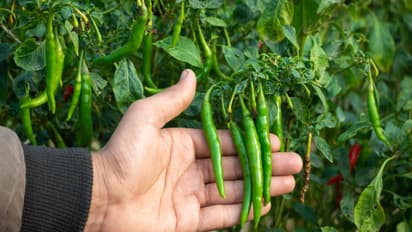
Learn how to grow green chillies in containers at home with simple tips on pot size, soil, sunlight, watering, feeding, pest checks and harvesting for a healthy chilli plant.
It is not necessary to have an expansive garden to cultivate green chillies at home as they do not take much space if grown in the right container, with proper soil, sunlight, and water. They can be grown on balconies or terraces where there is ample sunlight and the availability of water. They are relatively easy to maintain, thus making them ideal for home gardens. This is how you can cultivate green chillies from the comfort of your own house using containers.
It is always advisable to begin with selecting an appropriate container that has drainage holes on the bottom. Ideally, the height of the container may be about 10–12 inches in diameter for a single chilli plant.
Containers should avoid those which retain excessive amounts of water since wet soil will harm the roots.
Chilli plants should ideally be planted in fertile soil which provides good drainage. The basics of a container growing mix are the use of garden soil along with compost and cocopeat or other material which provides drainage.
The growing mix must contain sufficient moisture but at the same time allow any excess to drain out.
Chillies can be grown from seeds or a seedling bought from a nursery. If you choose to plant the seeds, plant them just below the soil surface in a moist growth medium. The planting should be done in a warm and sunny area.
When the seedlings have developed several healthy leaves, they can be transplanted to their final container. This is the case when they are initially planted in a small container.
The chilli plant will thrive when provided with ample sunlight. This means 6–8 hours of sunlight per day. The plant should be placed in a location where there is strong sunlight. However, this should only be done if high temperatures stress the plant.
The plant container can be rotated to enable it to get more sunlight.
Watering should be done whenever the top layer of the soil becomes dry. It should not be done on a fixed daily basis. Ensure that some water is drained out of the bottom when watering.
Hot weather can lead to faster drying of soil while rainy and humid weather requires less watering.
After the growth of the plant has begun, feed it with fertilizers, which can be either chemical in nature or organic fertilizers based on the instructions that come with the fertilizers. Over-fertilization can cause lush growth of foliage but not necessarily of fruits.
Damaged leaves should be removed and the plant checked for any signs of pests like aphids or whiteflies.
Green chillies are ready to harvest when they attain a size that is usable and have a firm texture. Regular harvesting will prompt the plant to continue producing. Mature chillies should be harvested using scissors or by pulling them out from the plant without harming the stems.
The right container, along with other growing conditions, can turn your balcony into an excellent place for growing green chillies.