
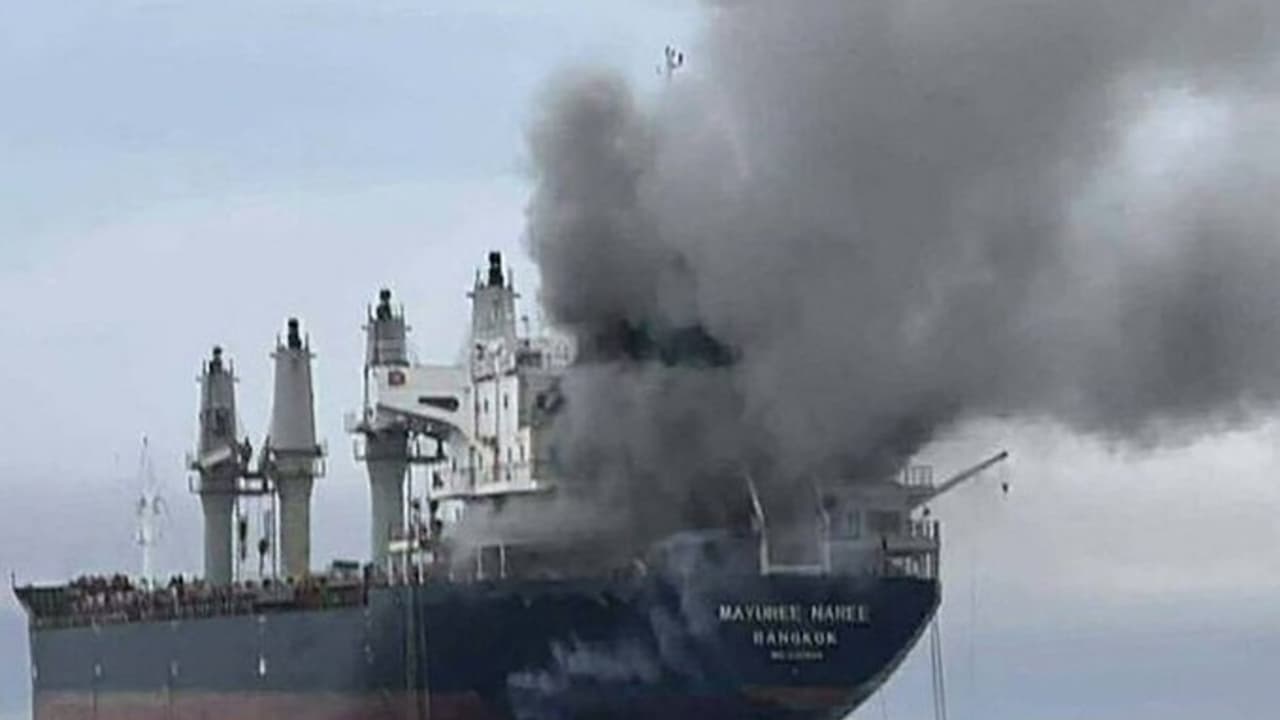
An Indian oil tanker, the Sanmar Herald, was fired upon by Iranian patrol boats in the Strait of Hormuz despite having prior clearance for safe passage. A distress call revealed the crew's confusion as they were forced to retreat. The incident, which involved another Indian vessel, caused no injuries but heightened regional tensions.
A dramatic distress call from an Indian-flagged oil tanker caught in gunfire in the Strait of Hormuz has revealed the confusion and fear that unfolded after Iranian patrol boats reportedly opened fire despite earlier assurances of safe passage for Indian vessels.
The audio, now circulating widely, captures a crew member aboard the tanker Sanmar Herald urgently pleading with Iranian forces after shots were fired near the ship in one of the world’s most sensitive maritime chokepoints. In the recording, the officer can be heard saying: “Sepah Navy. Sepah Navy. This is motor tanker Sanmar Herald. You gave me clearance to go. My name is second on your list. You are firing now. Let me turn back.”
The incident occurred as two Indian-flagged commercial vessels attempted to transit the Strait of Hormuz, the narrow shipping route through which nearly one-fifth of the world’s oil and gas supplies pass. Reports indicate that both Sanmar Herald and another vessel, Jag Arnav, were forced to retreat after Iranian gunboats allegedly fired warning shots near them. No injuries were reported and neither ship suffered major damage, but the confrontation has heightened concern over the safety of merchant vessels in the region.
The timing of the episode has intensified diplomatic unease because it came shortly after Iranian officials had reportedly reassured India that its vessels would be allowed to move through the strait safely. The captain’s repeated reference to having prior clearance has raised questions over whether the firing stemmed from miscommunication within Iranian security forces or a sudden shift in operational orders.
India responded swiftly to the incident. The Ministry of External Affairs summoned Iran’s ambassador in New Delhi and conveyed what officials described as “deep concern” over the firing involving Indian merchant ships. Indian authorities also stressed the importance of protecting civilian shipping and ensuring the safe movement of vessels carrying critical energy supplies through the strategically vital waterway.
Also Read: India summons Iran's envoy over shooting at its ships in Hormuz Strait
The Strait of Hormuz has become increasingly volatile in recent weeks amid rising tensions involving Iran, the United States and regional powers. Commercial shipping has faced repeated disruptions as military activity in the Gulf has intensified, leaving shipping companies, insurers and governments on alert.
Maritime tracking data suggests multiple ships in the area altered course or paused their journeys following the latest firing. Some vessels reportedly turned back rather than risk entering the contested waters, underscoring how rapidly security concerns can disrupt one of the world’s busiest energy corridors.
The distress recording has become a focal point of the crisis because it offers a rare real-time glimpse into the confusion faced by civilian crews operating in conflict-prone waters. For many observers, the captain’s words reflect the uncertainty now surrounding navigation through the Strait of Hormuz.
The phrase — “You gave me clearance to go. You are firing now.” — has emerged as the defining line from the encounter, highlighting the dangerous unpredictability facing international shipping in the Gulf.
As investigations continue, India is expected to seek stronger guarantees for its vessels in the region, while the incident may add pressure on all sides to prevent further escalation in a waterway that remains central to global trade and energy security.
Also Read: Iran envoy hails strong ties with India after Hormuz ship incident
