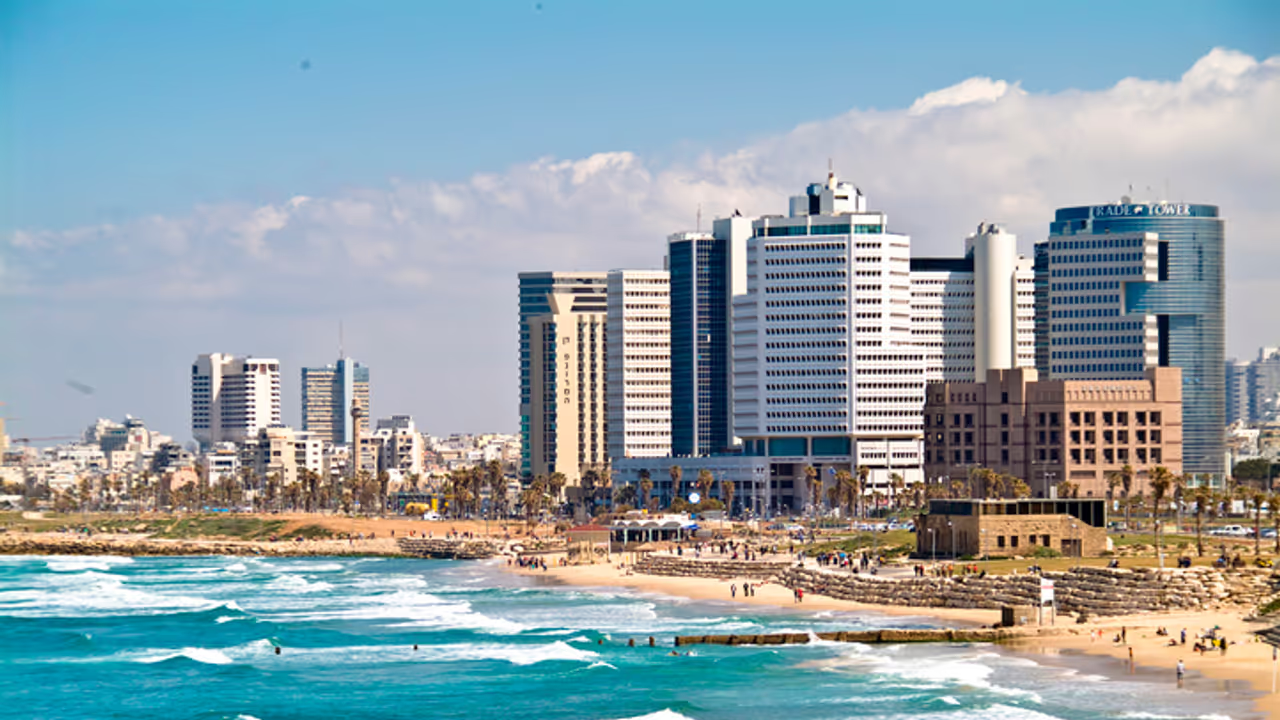
Tel Aviv is nicknamed the 'White City' due to over 4,000 Bauhaus-style buildings constructed in the 1930s-50s by Jewish architects who had fled Europe. This unique architectural collection, adapted for the local climate with its light colors and functional design, led to its designation as a UNESCO World Heritage Site.
Tel Aviv, one of Israel's most well-known cities, is nicknamed the 'White City'. But this moniker is about more than simply hue; it recounts the tale of how the city was constructed and how individuals from all over the world helped build it. In the 1930s, numerous Jewish architects from Europe, particularly Germany, immigrated to Israel. At the time, Europe was experiencing political upheaval, and many were compelled to flee.
What Is White City? Why Is Tel Aviv Called White City?
These architects had studied contemporary architecture, particularly the Bauhaus style, which emphasised basic, functional, and clean structures. When they landed in Tel Aviv, they began developing a new type of metropolis. Over time, thousands of buildings with light colours, simple shapes and open designs were constructed. This is how Tel Aviv got the name 'White City', and today it is one of the most important architectural sites in Israel.
The 'White City' is Tel Aviv's center neighbourhood, with almost 4,000 Bauhaus or International Style structures. The majority of these were erected between the 1930s and 1950s. In 2003, UNESCO designated it as a World Heritage Site due of its distinctive architecture and planning. Tel Aviv, Israel has the world's greatest collection of Bauhaus-style buildings. The location is significant not just for Israel, but also for world architecture.
Related Articles

The Bauhaus style originated in Germany. When the Nazi dictatorship rose to power, many Jewish architects were forced to flee Europe. Some of them visited Tel Aviv, which was still emerging at the time. They carried their contemporary design concepts with them and began constructing houses, workplaces, and public areas. This is how Tel Aviv, Israel, became a hub for modern architecture. Although the concepts originated in Europe, the structures were modified to meet local demands. As a result, the White City combines global design with local life.
Why Does Tel Aviv Have White Buildings?
The white hue was selected for practical purposes. Light hues reflect sunlight and help keep buildings cool in hot weather, which is critical in Tel Aviv's environment. Architects also included balconies, thin windows, and open areas to allow air to move freely. Flat roofs were utilised as communal areas where people might rest, particularly in the nights. That is why the White metropolis is sometimes referred to be a metropolis created for its climate. So the design was not only contemporary, but also practical and appropriate for living in Israel.